Introduction
New York City is at a critical moment in its clean energy transition. Rising electricity demand, aging infrastructure, affordability pressures, and increasingly severe weather are converging as the City works to decarbonize its economy. The first week of July 2026 offered a reminder of why local energy resilience matters. An extended heat wave pushed the electric system under significant strain, prompting localized outages, voltage reductions, and emergency conservation measures as utilities worked to prevent more widespread disruptions.
These events underscore the need for a comprehensive New York City strategy to deploy distributed energy resources (DER). Solar, battery storage, and virtual power plants provide electricity and flexibility closer to where it is consumed, helping reduce peak demand, relieve pressure on local distribution infrastructure, and strengthen neighborhood resilience during periods of extreme heat.
For the New York City Comptroller, this is a significant fiscal issue. Power disruptions, volatile energy prices, and delayed infrastructure investments impose significant costs on taxpayers, while strategic investments in DER can reduce long-term operating expenses, attract private capital, and strengthen the City’s energy security.
Major transmission projects such as the Champlain Hudson Power Express (CHPE), which remains offline as of publication of this report, and the forthcoming Empire Wind offshore wind project are projected to bring unprecedented quantities of clean electricity into New York City and remain foundational to the State’s energy transition. Yet transmission alone, as the CHPE outage illustrates, cannot eliminate localized grid constraints or meet every reliability challenge during periods of extreme demand.
As buildings and transportation electrify, energy-intensive industries expand, and extreme weather drives more frequent heat waves, New York City must complement large-scale regional infrastructure with a coordinated local strategy for deploying DER across public and private assets throughout the five boroughs.
In terms of the City’s overall power generation, solar is a small piece constituting roughly 1–1.5% of NYC’s total electricity consumption. Battery storage is only starting to take off with 84 facilities totaling about 115 MW. The challenge facing New York City today is less about setting goals and more about accelerating and scaling deployment.
This report recommends that New York City adopt a comprehensive distributed energy strategy. The City should treat parking lots, fleet depots, public buildings, and other municipal properties as a coordinated portfolio of energy assets capable of generating electricity, storing energy, supporting electric vehicle charging, participating in energy markets, and strengthening neighborhood resilience.
The City is well positioned to lead. City analyses have previously identified approximately 400 MW of battery storage potential on City-owned parking lots and vacant land, with roughly 300 MW already passing initial agency review[1].
By treating DER projects as a coordinated portfolio rather than a series of stand-alone installations, the City can attract long-term institutional investors, lower financing and procurement costs, and deliver greater value for taxpayers.
The policy framework is largely in place, the economics of solar and battery storage continue to improve, and market demand remains strong. Achieving this vision will require coordinated planning across agencies, streamlined permitting and interconnection, modernized regulations, strategic use of federal and state incentives, and procurement models that maximize long-term value for the City budget and taxpayers.
Key Findings
- New York City faces a growing energy reliability, affordability, and economic competitiveness challenge.
- Electrification, projected long-term data center growth (currently under a one-year pause in New York State)[2], and building decarbonization are increasing electricity demand faster than major infrastructure can be deployed.
- Grid planners increasingly identify smaller reliability margins (the extra power-generating capacity a power grid keeps running above the maximum expected consumer demand) and growing exposure to extreme weather, while rising energy costs underscore the need for affordable and resilient local solutions.[3]
- Energy prices, in particular electricity prices, have been a major driver of local inflation: energy prices overall were up 6.1% locally over the 12 months ending December 2025, versus just 2.3% nationally, according to the Office of the Comptroller.[4]
- Distributed energy resources are essential to maintaining a reliable and resilient electric grid in a dense urban environment.
- Solar, battery storage, and virtual power plants are particularly relevant in a land-constrained dense urban environment. These resources can reduce peak demand, relieve localized grid constraints, improve resilience during outages, and reduce reliance on peaker plants, particularly given the current reliability constraints identified by NYISO.
- Solar and battery storage can turn community institutions into resilience hubs that protect vulnerable New Yorkers during power outages and extreme weather.
- The City is underutilizing its public assets.
- There are 14,900 City owned parcels in New York City. Together, these parcels make up a total area of around 14% of the city overall. Municipal rooftops, parking lots, fleet depots, wastewater facilities, and other public properties represent significant opportunities for solar generation, battery storage, resilience hubs, and revenue-generating public-private partnerships.
- Developing these assets as coordinated portfolios rather than individual projects can attract institutional investment, reduce costs through economies of scale, and accelerate deployment.
- Permitting and interconnection reform represent the greatest opportunities to accelerate deployment and meet city climate goals.
- New York City has developed one of the nation’s most rigorous safety frameworks for solar and battery energy storage systems and maintaining those standards should remain a top priority. At the same time, operational improvements at FDNY can preserve public safety while reducing unnecessary delays.
- Lengthy agency permitting processes at FDNY in some battery storage cases, interconnection delays with Con Edison, and limited transparency on these processes continue to slow projects and increase development costs.
- Coordinated reforms, including clearer standards and streamlined reviews at FDNY, support for staffing levels to review applications, and greater accountability, could accelerate deployment while making New York City more competitive for clean energy investment.
- Distributed solar and storage can lower costs for ratepayers and taxpayers.
- Expanded deployment of distributed solar and storage is projected to generate approximately $1 billion annually in avoided energy costs statewide by 2035 while lowering electricity bills and reducing exposure to volatile natural gas markets. [5]
- Maximizing available federal and state incentives, even with federal tax credit clawbacks, can further improve project economics and reduce long-term fiscal costs.
- Strategic and equitable public-private partnerships can reduce long-term fiscal and infrastructure risks.
- Partnerships that leverage City assets, incorporate community benefits, and attract private capital can expand clean energy deployment while minimizing public expenditures and support environmental justice objectives.
- A predictable clean energy pipeline is essential for local workforce development and economic mobility.
- A reliable, long-term rollout of solar and battery storage, as well as grid upgrades, is critical to unlocking New York City’s economic potential and creating stable, middle-class careers.
- With a predictable project pipeline, unions can expand advanced apprenticeships and re-training, equipping workers with transferable skills that strengthen the city’s broader infrastructure and non-profits and universities can introduce clean energy career pathways to students.
- The clean energy transition requires both large-scale infrastructure and neighborhood-scale solutions.
- Projects such as CHPE and Empire Wind will be essential to supplying clean electricity, as well as statewide transmission upgrades, but distributed energy resources are equally important to ensuring that power is delivered reliably, affordably, and equitably where it is needed most. As evidenced through the recent heatwave, projects like CHPE cannot by themselves eliminate every reliability challenge.
Section I:
The Case for A Citywide Distributed Energy Strategy
Electrification of buildings and the City’s transportation system is increasing electricity demand at the same time as we transition increasingly towards renewable energy sources. New energy-intensive industries, including data centers and advanced manufacturing, are placing additional pressure on the grid. At the same time, the frequency and severity of extreme heat events is driving higher peak electricity demand during periods when the system is already under stress. State grid operators have warned that reliability margins are diminishing as demand grows and aging infrastructure faces increasing operational pressures.
These pressures are already becoming visible in utility planning. In its fourth-quarter and full-year 2025 earnings report, Con Edison reported that approximately 44 percent of new business load requests received between May 2024 and April 2025 were related to electric vehicle charging or electric heating, while newly connected buildings required 20 to 25 percent more electricity than comparable projects in previous years. [6]
Con Edison has paused new large-scale battery projects across 85% of its territory due to an overwhelming surge in developer requests that the current grid cannot handle. To manage this, the utility is restricting large connections and shifting focus toward smaller “behind-the-meter” batteries located inside buildings to reduce stress on the infrastructure.[7]
These challenges are particularly significant for New York City. Structural grid and transmission bottlenecks, such as land constraints downstate, transmission congestion between upstate/downstate, and aging infrastructure continue to create vulnerabilities. As more New Yorkers rely on electricity to power their homes, vehicles, and businesses, the consequences of disruptions become more severe.
At the same time, energy has never been less affordable for New York City residents. New York State defines households spending more than six percent of income on energy costs as energy burdened, yet more than 2 million households statewide exceed that threshold. In New York City, approximately one-quarter of households are energy burdened.[8] Rising electricity costs also place pressure on municipal budgets and can undermine the City’s economic competitiveness as businesses increasingly seek locations with reliable and affordable energy supplies.
The cost of inaction is substantial. Power outages can impose significant economic, public safety, and quality-of-life impacts on residents and businesses. Following the 2003 Northeast blackout, the New York City Comptroller’s Office estimated that the outage resulted in approximately $1.1 billion in economic losses ($2 billion in today’s prices) through lost productivity, spoiled goods, lost tax revenue, and emergency response costs.[9] More recently, research examining electric outages across New York State found that nearly 40 percent of outages were associated with severe weather events, with parts of New York City, including eastern Queens, upper Manhattan, and the Bronx, experiencing some of the highest burdens of weather-related disruptions.[10]
New York City has established an ambitious framework to accelerate clean energy and reduce emissions through a series of progressive local laws targeting solar deployment, green roofs, building electrification, and battery storage.
These accomplishments provide a strong foundation, but the City’s role must continue to evolve. The City can play a larger role by using public buildings, parking lots, and other municipal assets to generate and store energy, reducing demand during peak periods, and partnering with utilities and private developers to strengthen the electric system, improve affordability, and build long-term resilience.
Section II:
New York City’s Grid Under Growing Strain
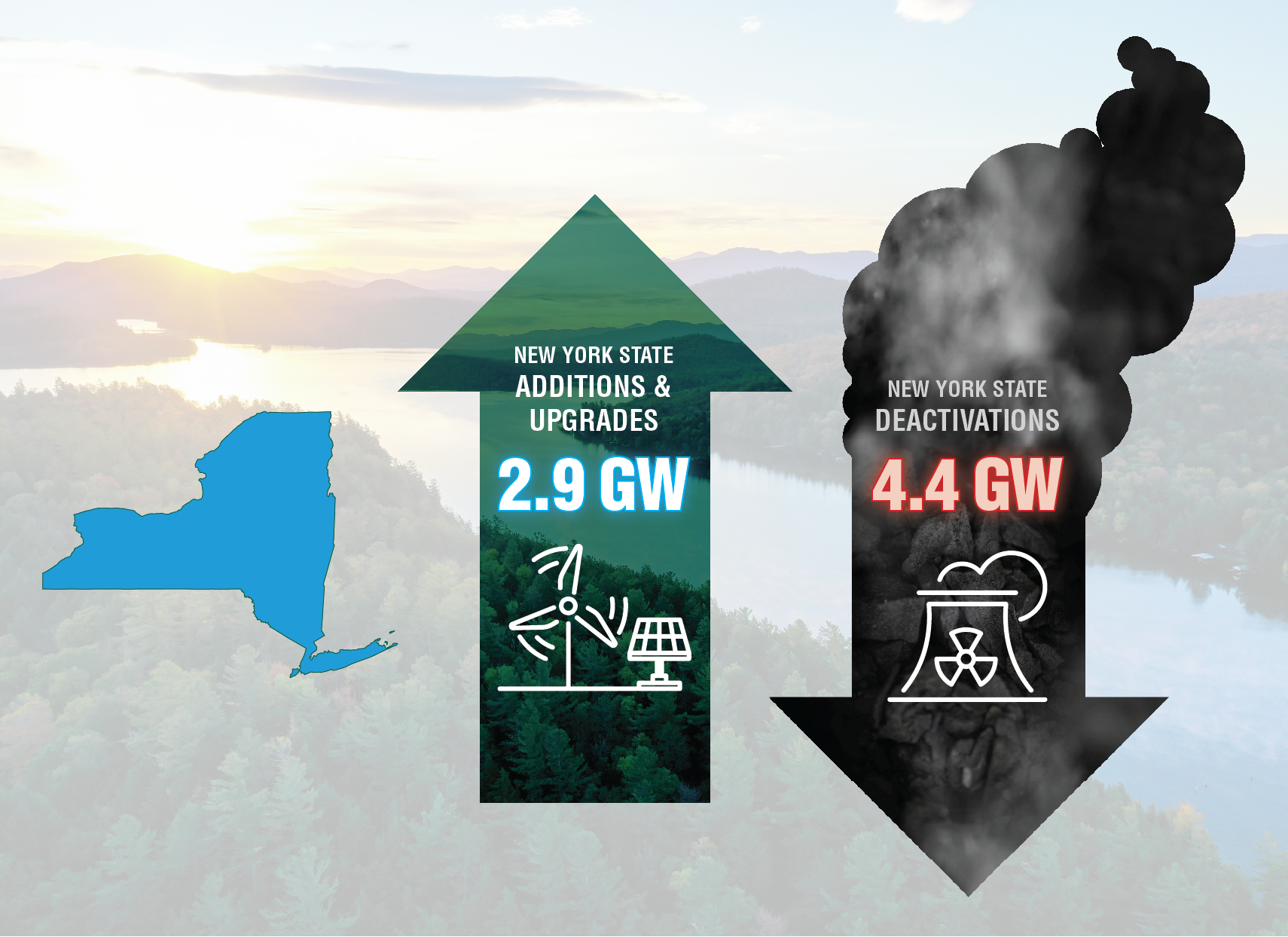
NYISO projects that annual electricity demand in Zone J / New York City could approach 65,000 gigawatt-hours by 2050, a 25-30% increase from the approximately 50,000 gigawatt-hours today. (Figure 1). At the same time, the electric system is becoming increasingly constrained. Since 2019, more than 4,300 MW of generation capacity has retired statewide while only about 2,300 MW has been added, resulting in a net loss of more than 2,000 MW of supply (Figure 2).
During an extreme summer heat wave, New York City alone can require more than 10,000 MW of electricity at peak demand. By comparison, NYISO projected that the entire statewide electric system will have a Summer 2026 reliability margin of only 417 MW after accounting for forecast demand and required operating reserves.[11] While these figures are not directly comparable, they underscore how little additional flexibility remains on the grid during periods of peak demand and why distributed energy resources are becoming increasingly important to maintaining reliability.
Figure 1: Annual energy demand in New York City (NYISO Zone J)
Source: NYISO 2026 Load & Capacity Report: https://www.nyiso.com/load-capacity-data-report-gold-book-
Figure 2: New York State Additions and Deactivations since 2019
Source: The New York Independent System Operator (NYISO) Power Trends (May 2026): https://www.nyiso.com/documents/d/guest/2026-power-trends
While many proposed data centers and other large-load facilities are expected to be located outside New York City, their growth has implications for the entire state electric system. New large loads increase demand for generation, transmission, and reliability resources, potentially placing upward pressure on costs and reducing planning flexibility. These trends strengthen the case for local solutions within New York City that can reduce reliance on constrained portions of the grid and improve reliability where electricity demand is highest.
Compounding these challenges is the age of New York’s generation fleet. According to NYISO, New York City’s steam turbine fleet has an average age of approximately 65 years. Older generating units are generally less efficient, more polluting, and more expensive to operate, increasing costs for consumers while creating additional reliability concerns during periods of peak demand. To maintain reliability today, utilities frequently rely on fossil-fuel peaker plants that operate during periods of exceptionally high electricity demand. While these facilities provide important reliability services, they are among the most expensive and emissions-intensive resources on the grid.
Section III:
Distributed Energy Can Meet Local Demand at Lower Cost
These reliability challenges are closely tied to affordability. New York City remains heavily dependent on natural gas-fired generation, which frequently sets wholesale electricity prices. As global and domestic natural gas markets fluctuate, New York City’s electricity prices have followed. Wholesale power prices in the state hit a peak of $89.23 per megawatt-hour (MWh) in 2022, dropped to $41.81/MWh in 2024, and then surged back up to $74.40/MWh in 2025. The New York Independent System Operator (NYISO) warns that this volatility will persist.[12]
Addressing these challenges will require both large-scale infrastructure investments and local energy solutions. [13] Major projects such as CHPE, Propel NY transmission line, and Con Edison’s Clean Energy Hub are designed to relieve transmission and grid constraints, improve reliability, and deliver larger quantities of clean energy into New York City. CHPE, for example, can supply up to 1,250 MW of clean hydropower to New York City. However, new, large-scale projects require significant time and significant investment to complete. In the near term, expanding distributed solar, battery storage, and other distributed energy resources can provide a faster solution.
According to Lazard’s most recent Levelized Cost of Energy (LCOE) analysis, utility-scale solar and wind generation are among the lowest-cost sources of new electricity generation available today and are often less expensive than newly built fossil-fuel generation.[14] As Figure 3 illustrates, the cost of installing solar has fallen dramatically over the past decade by 64% for residential systems up to 69% for commercial systems. As battery storage costs continue to decline, despite the near term tariff and inflationary pressures hitting all technologies, distributed energy resources offer a pathway to improve reliability while reducing long-term exposure to fuel price volatility and costly infrastructure investments.
Figure 3: Typical cost of solar installation at commercial & residential scale by year
Figure 3A
Figure 3B
Source: National Laboratory of the Rockies https://www.nlr.gov/solar/market-research-analysis/solar-installed-system-cost
Falling technology costs have significantly improved the economics of distributed solar and battery storage, with LCOE analyses showing these resources are increasingly competitive with new fossil fuel generation in many applications. However, as the 2025 New York State Energy Plan recognizes, declining equipment costs alone do not ensure project viability. Many projects continue to depend on federal and state incentive programs, while existing wholesale and retail market structures do not fully compensate distributed energy resources for the reliability, resilience, capacity, and grid services they provide.
Section IV:
Momentum is Building but New York City Lacks a Coordinated Strategy
New York City has already established an ambitious framework to accelerate clean energy deployment.
- Local Laws 181 and 99 of 2019 reviewed planning and deployment targets for battery energy storage systems
- Local Laws 92 and 94 of 2019 require most new construction and major roof replacements to include either solar panels or green roofs.
- Local Law 97 of 2019 is designed to drive building emissions reductions that often lead owners to pursue electrification.
- More recently, Local Law 63 of 2024 established a pilot program for solar canopies on city-controlled parking lots
These local efforts coincide with significant progress at the state level. New York State has exceeded its original distributed solar target ahead of schedule, with more than 8,000 MW of distributed solar installed and another 2,700 MW in active development.[15] Behind-the-meter solar deployment, including rooftop and community solar projects, has been one of the state’s most successful clean energy initiatives. According to NYISO, solar generation supplied 29 percent of New York State’s electricity demand during midday hours on June 3, 2026, setting a new statewide record with more than 5,000 MW of solar generation online. New York State has also expanded its energy storage ambitions, with the Public Service Commission approving a roadmap to deploy 6,000 MW of storage by 2030.
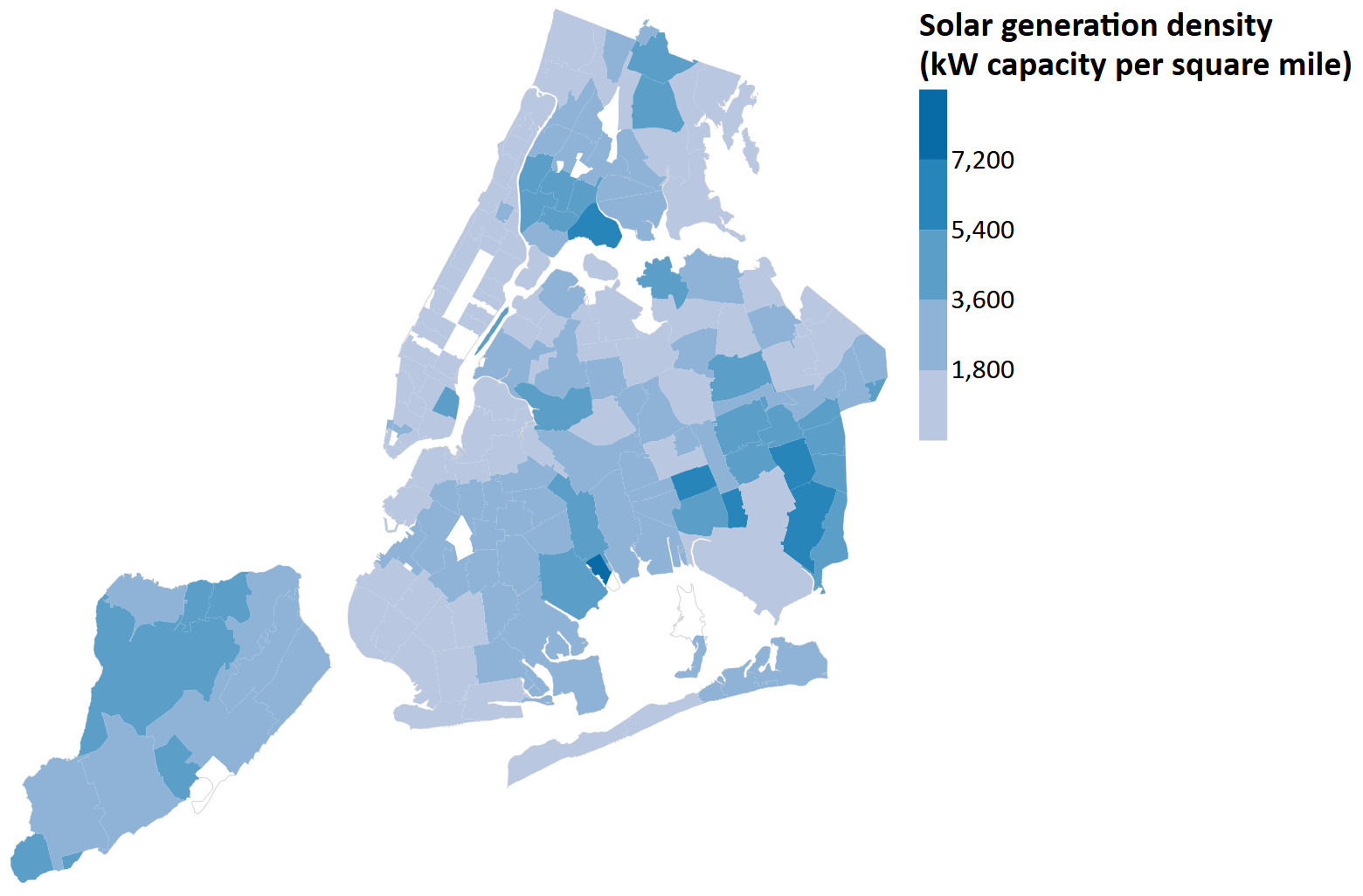
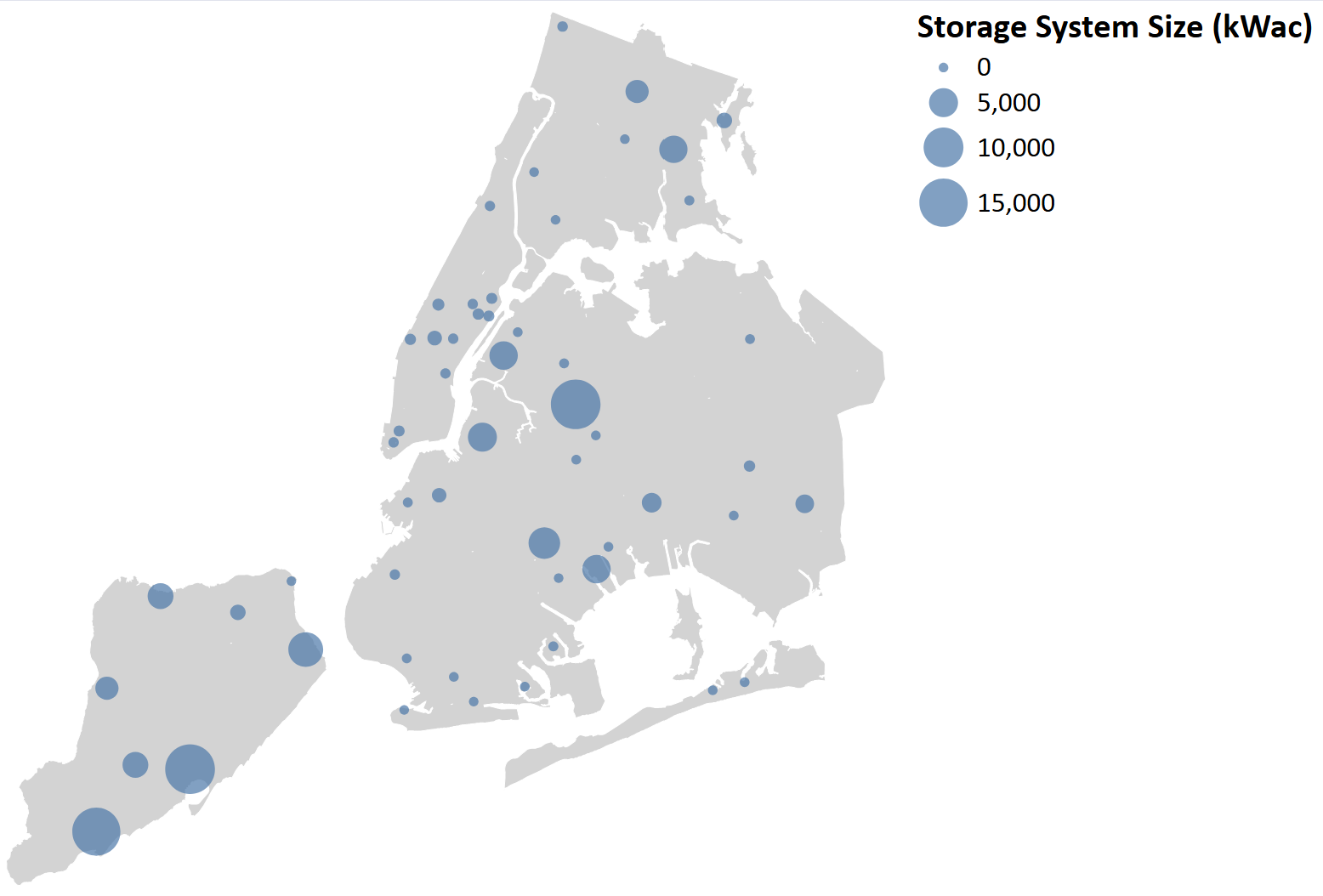
Figures 4A-4C reflect solar and battery storage proliferation across New York City neighborhoods. New York City has participated in this progress, installing approximately 641.5 MW of solar capacity citywide, roughly 64 percent of its 2030 target. This growth demonstrates that distributed solar has become an increasingly important part of the city’s energy landscape. However, municipal deployment remains comparatively limited. As of 2025, only about 31 MW of solar had been installed on City-owned buildings (187 facilities), indicating that the City has yet to fully leverage its own real estate portfolio as a clean energy asset.
The task ahead is scaling deployment quickly enough to meet growing reliability, affordability, and resilience needs while making fuller use of public assets and infrastructure.
Figure 4: Existing solar and storage capacity in New York City
Source: NYSERDA https://data.ny.gov/Energy-Environment/Statewide-Distributed-Solar-Projects-Beginning-200/wgsj-jt5f/
Source: NYSERDA https://data.ny.gov/Energy-Environment/All-Statewide-Energy-Storage-Projects/hspb-4n4p
Section V:
Distributed Energy is Critical Infrastructure
On hot summer afternoons, when air conditioning drives electricity demand sharply higher, utilities must immediately find additional power to meet that demand. This often means bringing expensive peaker plants online, importing electricity from other regions, or placing additional strain on local substations, transformers, and distribution infrastructure. As buildings, vehicles, and equipment increasingly electrify, these challenging peak demand events are expected to become more frequent in both summer and winter.
Distributed energy resources help address this challenge by generating, storing, and managing electricity closer to where it is needed. Solar panels can reduce demand on the grid during daylight hours, while battery storage can charge when electricity is abundant and discharge when demand is highest. By reducing peak demand, batteries can lessen reliance on costly peaker plants, defer infrastructure upgrades, improve local reliability, and provide a cleaner alternative to meeting short-term spikes in electricity use.
Rather than generating additional electricity, batteries improve reliability by storing energy when it is plentiful and discharging it when demand is highest. A municipal parking lot equipped with a solar canopy and battery system, for example, could store excess solar generation during the day and discharge power during late afternoon and evening peak demand periods. From the grid’s perspective, the result is similar to reducing demand. If a battery supplies 10 MW of power during a peak event, the electric system effectively avoids having to provide that same 10 MW from elsewhere, reducing strain on local infrastructure and limiting reliance on costly peaker plants.
The value of distributed energy grows when resources are connected and coordinated. Virtual power plants (VPPs) aggregate solar panels, battery storage systems, electric vehicles, and flexible building loads through software, allowing thousands of smaller resources to operate as a single grid asset.
Distributed energy resources can also deliver meaningful affordability benefits. By reducing peak demand and relieving congestion on the grid, solar and battery storage combined can lower wholesale electricity costs, defer expensive infrastructure upgrades, and reduce long-term costs for ratepayers in New York City where utility bills are highest in the State (Figure 5). A recent analysis by Synapse Energy Economics found that expanding distributed solar and storage across New York could generate approximately $1 billion in annual avoided energy costs by 2035, including nearly $481 million in downstate benefits. The study estimated average annual bill savings of approximately $46 for downstate residential customers, regardless of whether they personally own solar or battery systems.[16]
Figure 5: Average residential electric bill, Con Edison compared to other New York utilities
Note: Average residential bill for 600 kWh. Source: Data provided by individual utilities to New York State Department of Public Service. https://dps.ny.gov/electric-utility-ten-year-historic-average-monthly-bill-data-typical-customers
Section VI:
Removing Barriers to Deployment
Battery energy storage and distributed solar are expanding rapidly across New York City, reflecting growing market demand and strong public policy support. FDNY, the New York City Department of Buildings (DOB), and Con Edison have each played an important role in enabling this growth while safeguarding public safety and electric system reliability. FDNY, in particular, has emerged as a national leader in battery energy storage safety, approving more than 100 battery energy storage system projects and developing rigorous technical standards for fire prevention and emergency response. Its review process requires comprehensive hazard analyses, battery management systems, thermal management plans, gas detection, fire protection systems, and continuous remote monitoring designed to detect abnormal conditions well before they become safety incidents.
As deployment accelerates, however, permitting the systems are becoming a bottleneck. Industry stakeholders consistently cite lengthy review timelines, evolving technical requirements, limited transparency into application status, and sequential reviews across multiple agencies as factors that increase project costs, create uncertainty, and discourage investment.
Similarly, recent changes to Con Edison’s utility interconnection practices have raised concerns that projects may face higher costs and longer timelines, potentially slowing deployment at a time when battery storage is increasingly needed to improve grid reliability and lower customer costs. As of December 31, 2025, there were approximately 115 MW of operational battery energy storage systems and 865 MW of battery energy storage systems with executed interconnection agreements in Con Edison’s service territory. More than 2,700 MW of distributed battery storage projects have applied to interconnect in Con Edison’s territory, with over 1,000 MW already holding executed interconnection agreements.[17]
This is also a challenge for project certainty and viability whereby investors seek confidence that projects can be built, interconnected, and fairly compensated in a timely manner.
Section VII:
Unlocking the Value of City Assets for Distributed Energy Infrastructure
Distributed energy projects should be designed not only to maximize energy security, but also to maximize public value. To date, New York City’s distributed energy projects have largely been pursued on a site-by-site basis, with individual agencies evaluating opportunities independently and selecting procurement models tailored to each project. While this approach has produced successful installations, it has not fully leveraged the scale of the City’s real estate portfolio or captured the financing, procurement, and operational efficiencies that can be achieved through a coordinated portfolio strategy.
As one of New York State’s largest energy consumers, New York City has a significant financial stake in the affordability of electricity. Rising utility costs affect everything from schools and public housing to water treatment facilities and transit infrastructure. Figure 6 shows that the City’s total spending on energy costs is growing. Investing in DER is a fiscal strategy that can help municipalities manage long-term operating costs and reduce exposure to future energy price volatility.[18]
Figure 6: Total New York City Energy Spending Across Municipal Properties
Source: Office of the Comptroller analysis of FISA-OPA and OMB data. FY 2013-2025 actual spending from FISA-OPA FMS. FY 2026 is the FY 2026 June Plan, and FY 2027-FY 2030 are from the FY 2027 Adopted Budget, as of June 30, 2026. Note: Total spending includes only the costs borne directly by NYC government. It does not include energy costs associated with governmental entities, such as NYCHA and the MTA, that have a large presence in the City but operate outside of the City’s budget.
Many City fleets ranging from NYC Parks to NYPD and City ambulances are hybrid or electrified and would benefit from utility-scale battery storage that can act as a resilience policy for the electrical grid. By storing energy during normal times, it provides a dedicated, independent power source. This ensures that agencies like the NYPD, NYC Parks, and ambulance fleets can recharge and respond immediately during a blackout, when they might otherwise be unable to charge.
Distributed energy investments can also strengthen neighborhood resilience by supporting trusted community institutions such as houses of worship, senior centers, libraries, and community centers with solar and battery storage systems. During extended power outages or extreme weather events, these facilities can operate independently from the electric grid, providing residents with a safe place to charge phones, access heating or cooling, and receive emergency information and essential supplies. Solar plus storage systems can continue generating and storing electricity without relying on fuel deliveries, improving reliability during prolonged disruptions. Outside of emergencies, these systems reduce electricity costs for community organizations, allowing scarce resources to be redirected toward public services. As climate-related emergencies become more frequent, expanding community resilience hubs through distributed energy represents a cost-effective strategy to strengthen local emergency preparedness while delivering year-round economic and environmental benefits.
Section VIII:
Lessons from Cities Leading on Distributed Energy
A useful model comes from Austin, Texas, which recently launched a 30 MW municipal solar portfolio across City-owned properties. The initiative combines City-owned projects that generate direct energy savings with third-party-owned projects that leverage private capital and community solar participation. Austin estimates the portfolio will generate more than $20 million in net value over 25 years, illustrating how municipalities can use public assets to advance clean energy goals while creating long-term fiscal benefits.[19]
Across the Atlantic, in 2023, France enacted legislation requiring most large outdoor parking lots with at least 1,500 square meters (approximately 16,000 square feet) to be covered with solar canopies over a phased implementation period. The policy reflects a shift in how governments view paved public and commercial land as energy infrastructure capable of generating clean electricity without competing for open space. While New York City’s urban landscape differs from France’s, the law illustrates how parking facilities can become productive public assets. The highest profile project completed near Paris is the parking canopy at Disneyland Paris covering 11,200 parking spaces across 49 acres with total installed capacity of 36 MW.
Finally, the Croton-Harmon Train Station in Westchester County demonstrates how publicly owned parking facilities can be transformed into revenue-generating clean energy assets. Seeking to increase revenue without imposing additional costs on taxpayers, the Village of Croton-on-Hudson partnered with a private developer to install solar canopies over portions of the station’s commuter parking lots while retaining ownership of the underlying property.
The project includes approximately 4 MW of solar generation paired with a 3.5 MW battery energy storage system capable of storing 15 MWh of electricity. It also incorporates electric vehicle charging infrastructure and improved lighting. Approximately 40 percent of the electricity generated will serve municipal facilities, while the remainder will support local households through community solar subscriptions. [20]
Importantly, the project is expected to generate roughly $400,000 in annual lease revenue for the Village without requiring direct taxpayer investment, while avoiding an estimated 1,800 tons of greenhouse gas emissions each year.
For New York City, the project illustrates how municipal parking lots, transit facilities, and other public properties can simultaneously generate revenue, support local energy needs, improve grid reliability, and expand clean energy deployment.
Recommendations
Recommendation I: Build a Citywide Solar and Storage Portfolio
Recommendation II: Streamline Clean Energy Deployment
Recommendation III: Advance Clean Energy Legislation
Recommendation IV: Capture Available Dollars for Deployment
Recommendation V: Support the Workforce Behind the Transition
Recommendation I: Build a Citywide Solar and Storage Portfolio
New York City owns thousands of acres of land, parking facilities, fleet depots, wastewater treatment plants, and other public assets that remain largely untapped as energy infrastructure. Historically, municipal solar deployment has focused on individual rooftop projects pursued on a site-by-site basis. While these installations have delivered important benefits, they do not fully leverage the scale of the City’s real estate portfolio or address the growing need for distributed energy resources that can improve reliability, affordability, and resilience. As electricity demand rises and municipal fleets electrify, the City should shift from isolated projects to a portfolio strategy that treats public assets as a coordinated network of energy-generating and energy-storing infrastructure.
The opportunity is significant. The City’s PowerUp NYC plan identifies approximately 400 MW of battery storage potential on City-owned parking lots and vacant land, with additional opportunities at repurposed power plant sites. The recently adopted City of Yes for Carbon Neutrality initiative further supports this strategy by modernizing zoning rules for battery storage and other clean energy infrastructure. Every megawatt of battery storage deployed locally can help reduce peak demand and lessen reliance on fossil-fuel peaker plants during periods of greatest grid stress.
Moreover, unlike individual projects, a diversified portfolio of municipal solar and storage assets offers the scale, standardized contracting and predictable revenue profile that long-term infrastructure investors typically seek. Structuring projects this way can improve financing terms.
The City has already demonstrated what is possible. For example, at Wards Island, DEP is advancing a 10 MW solar and 10 MW battery storage project expected to become the world’s largest clean energy installation at a wastewater treatment facility. At Rikers Island, DCAS has installed a solar canopy that supports on-site electric vehicle charging while supplying clean electricity to the grid.
The next step is scaling these successes into a coordinated citywide strategy. Implementation will require coordinated planning among agencies including DCAS, NYCDEP, NYCEDC, FDNY and the local utility, Con Edison. Alongside site selection, the City should evaluate local hosting capacity and interconnection requirements, via Con Edison, to prioritize projects that deliver the greatest reliability and economic value. The sites highlighted in Figure 7 illustrate how existing municipal assets could anchor a citywide distributed energy portfolio that delivers measurable public benefits. These sites are for conceptual purposes only and have not undergone technical feasibility studies.
Figure 7: Proposed locations for solar and storage
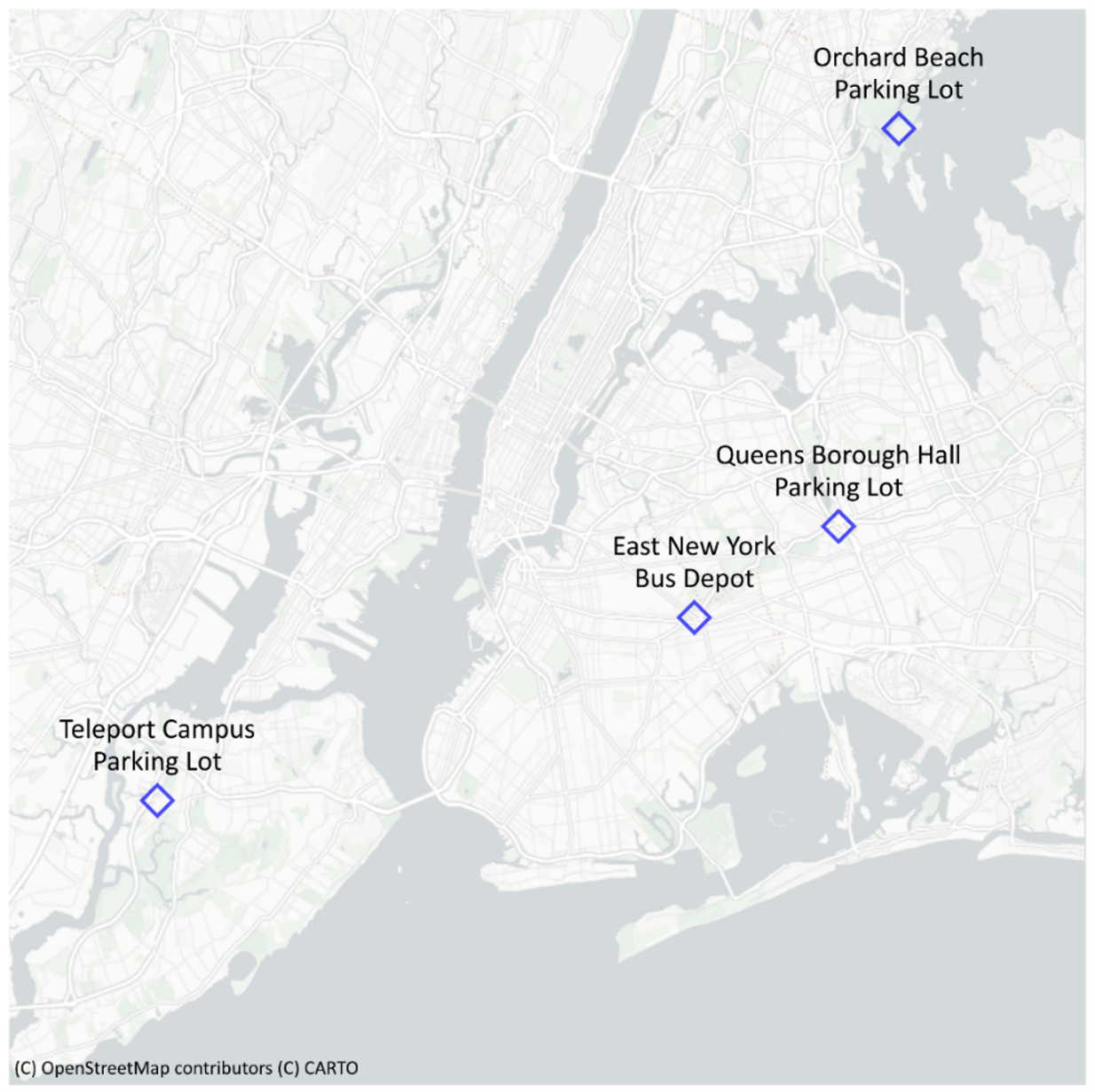
The scale of New York City’s municipal asset portfolio is substantial. The conceptual sites highlighted in this report, including Queens Borough Hall, NYC Parks Orchard Beach parking field, Staten Island Teleport campus, and MTA’s East New York Bus Depot, represent more than 3 million square feet (approximately 69 acres) of rooftops and parking areas suitable for evaluation. Collectively, these sites encompass nearly five times the footprint of the largest under development solar project in the five boroughs, the 12 MW solar canopy at JFK Airport’s long-term parking lot 9, which spans approximately 633,600 square feet, about the size of 11 football fields. While not every municipal site will be suitable for full buildout, the comparison illustrates the magnitude of the City’s untapped public assets and the opportunity to think beyond individual projects toward a coordinated citywide solar and storage portfolio.
Example 1: Queens Borough Hall Municipal Parking Lot
The municipal parking fields adjacent to Queens Borough Hall illustrate the untapped potential of public land to support New York City’s clean energy and reliability goals. The 300+ spaces occupy approximately 110,000 square feet, roughly the equivalent of nearly three acres of publicly owned space in Central Queens. While designed primarily to serve parking needs, sites such as this can also function as energy infrastructure.
A solar canopy installed above the parking fields could generate clean electricity without reducing parking capacity, while battery storage could help manage demand during periods of peak electricity use. During the day, solar panels would generate electricity and charge onsite batteries. In the late afternoon and evening, when electricity demand is highest and solar production declines, stored energy could be discharged to support Borough Hall or reduce strain on the local grid. This type of installation would transform a passive municipal asset into an active contributor to local reliability and resilience.
A portion of a municipal solar project’s value could be made available to nearby residents, affordable housing developments, and nonprofit organizations through New York’s Community Distributed Generation Program (community solar), which provides participating utility customers with credits on their Con Edison bills. Any such structure should be subject to legal, procurement, and financial review to ensure that benefits are distributed transparently, lawfully, and without reducing the fiscal value of the public asset.
This model offers a compelling example of how public assets can provide multiple benefits from a single investment. Rather than serving solely as a parking facility, the site could generate clean energy, support grid reliability, create a revenue stream through energy production or lease agreements, expand access to community solar, and help lower electricity costs for both taxpayers and local residents.
Example 2: NYC Parks Orchard Beach Parking Field
The NYC Parks Orchard Beach Parking Field is a massive publicly owned lot of more than 5,600 parking spaces and over 1.8M square feet. A solar plus battery storage project, even on a small percentage of this site, could:
- Generate lease revenues
- Support local residents who participate in community solar and lower their energy bills
- Reduce peak demand in the Bronx
- Provide resilience benefits during emergencies
In many ways, a large Orchard Beach solar plus battery storage project would resemble a modern power plant, except it would sit on land the City already owns, produce no emissions, provide community benefits, and strengthen reliability exactly where electricity demand is growing.
Currently, the City has a contract with a concessionaire to collect parking fees at this parking lot during the summer beach season. The parking operation is treated as a revenue-generating concession similar to other Parks facilities, with a private operator managing parking and remitting fees to the City under the concession agreement. This report recommends that concession agreements for parking fields take into consideration the possibility for infrastructure development when up for renewal. NYC Parks, DCAS, and other agencies should evaluate whether existing concession properties and municipal parking facilities can accommodate solar, battery storage, and EV charging infrastructure as secondary uses that generate additional public revenue and strengthen local energy resilience without displacing their primary public function.
Example 3: Staten Island Teleport campus
The Staten Island Teleport campus presents one of New York City’s most significant opportunities to leverage public land for clean energy deployment. Following the transfer of the approximately 81-acre campus from the Port Authority of NYNJ to NYCEDC (currently in progress), the City will control a site that includes an electrical substation, existing data center infrastructure, extensive surface parking areas, and approximately 31 acres of undeveloped land suitable for future development.
As NYCEDC evaluates future uses for the campus, the City should consider incorporating solar generation, battery storage, electric vehicle charging infrastructure, and other distributed energy resources into any future solicitation or development strategy. The site’s existing electrical infrastructure, Con Edison hosting capacity, and large development footprint make it particularly well suited for a utility-scale clean energy project capable of supporting both onsite operations and broader grid reliability objectives.
NYCEDC has precedents for structuring projects of this nature including Sunset Park Solar. The 725 KW solar array, co-owned by Uprose and Working Power, is the City’s first community-led solar project and over its lifetime will deliver $1.24 million in energy bill savings to approximately 150 households.
Such an approach would align economic development, energy resilience, and fiscal stewardship in a manner that could serve as a model for other community owned properties.
Example 4: MTA East New York Bus Depot
As the MTA advances its commitment to transition its 5,800-bus fleet to zero-emission vehicles by 2040, facilities such as the East New York Bus Depot demonstrate how transportation infrastructure can also serve as energy infrastructure. While technically not under the authority of any City agency, some of the MTA’s assets are well suited for DER deployment. MTA’s Zero-Emission Transition Plan estimates that bus depots across the system will require approximately 262 MW of additional electric supply to support fleet charging and identifies on-site battery storage and solar generation as potential strategies to reduce grid impacts and manage costs.[21]
In addition to the East New York Bus Depot’s large maintenance facility with available rooftop area, the depot includes an outdoor bus parking area that could support battery energy storage systems and solar canopies. As electric bus adoption expands, charging hundreds of buses simultaneously could create substantial peak electricity demand, requiring costly utility upgrades and increasing operating expenses.
Research conducted by the National Renewable Energy Laboratory for the MTA found that pairing electric bus charging infrastructure with appropriately sized battery storage and solar generation could reduce utility costs by more than 35 percent and generate approximately $15 million in lifecycle savings at a bus depot over a 20-year period.[22]
New York City and the MTA should view facilities such as East New York Depot as strategic energy assets. Integrating battery storage, smart charging, and distributed energy resources into future depot upgrades can lower operating costs, improve local grid reliability, and support the broader transition to a cleaner and more resilient energy system.
Recommendation II: Streamline Clean Energy Deployment
While permitting for DER is governed by the New York City Department of Buildings (DOB) and the Fire Department of the City of New York (FDNY), interconnection to the electric grid is primarily regulated by the New York State Public Service Commission (PSC) and administered by Con Edison. Although the City does not oversee the interconnection process, it has an important role to play as an advocate for reforms that support the timely deployment of distributed energy resources. The City should actively participate in PSC proceedings, convene regular discussions with Con Edison and State agencies, and leverage its position as a major energy customer and owner of public infrastructure to advance greater transparency, clearer cost-allocation rules, improved hosting capacity information, standardized communication with developers, and more predictable interconnection timelines while maintaining grid reliability.
Permitting:
New York City has developed one of the nation’s most rigorous safety frameworks for battery energy storage systems and maintaining those standards should remain a top priority. At the same time, operational improvements at FDNY can preserve public safety while reducing unnecessary delays.
Faster and more predictable permitting reduces financing costs, shortens development timelines, and strengthens New York City’s competitiveness for clean energy investment. Opportunities exist to modernize the permitting process. Publishing comprehensive application checklists, conducting concurrent rather than sequential reviews where appropriate, establishing predictable review timelines, and providing applicants with a single point of coordination at an agency could significantly reduce permitting uncertainty without compromising technical review. Likewise, publicly reporting permitting performance and application status would improve accountability and give developers greater confidence when investing in New York City.
On the residential side, residential battery deployment remains extremely limited in New York City due in large part to a complex permitting framework that emphasizes safety but can also increase costs, lengthen approval timelines and create uncertainty for homeowners. New York City’s fire code currently applies a 24/7 remote monitoring requirement to virtually all battery storage systems including small residential installations, on top of the already robust monitoring included in these systems. Targeted reforms that preserve safety while tailoring requirements can help with wide adoption of the technology.
Permitting reform represents one of the most cost-effective opportunities available to policymakers. Research suggests that permitting and inspection requirements can add $6,000 to $7,000 to the cost of a typical residential solar installation.[23] At the same time, nearly one-quarter of residential solar projects that enter permitting, interconnection, or incentive approval processes are never ultimately completed, underscoring the need for more efficient and predictable permitting pathways.
Interconnection:
Con Edison has an obligation to ensure that new energy projects connect to the electric grid safely and reliably. However, recent changes to battery storage interconnection studies, cost allocation, and technical requirements have created significant uncertainty for developers, increasing project costs, delaying investment, and slowing deployment of resources that can strengthen grid reliability and reduce long-term energy costs. Stakeholders consistently report that the current process lacks transparency and predictability, making it difficult to finance otherwise viable projects.
Con Edison’s own July 2026 Reliability Needs Report underscores why these barriers matter. The utility found that New York City’s projected transmission reliability needs have improved since the beginning of the year, in part because battery storage projects have advanced through the interconnection process and are now expected to provide reliability benefits to the grid. While Con Edison concludes that additional resources will ultimately be needed to meet long-term reliability challenges, its analysis also demonstrates that bringing battery storage projects online can reduce and defer near-term reliability needs.
Given these findings, Con Edison should work with the Public Service Commission and stakeholders to improve the transparency, predictability, and efficiency of its interconnection process. As the utility’s own planning analysis shows, delays in connecting viable battery storage projects can delay reliability benefits for the electric system.
Finally, New York State should continue evaluating the Value of Distributed Energy Resources (VDER) framework to ensure that compensation more accurately reflects the reliability, resilience, and grid benefits provided by distributed solar and battery storage. A transparent, predictable, and durable compensation framework will complement interconnection reforms by providing developers and investors with greater certainty that projects delivering measurable public benefits can be financed and deployed at scale.
Recommendation III: Advance Clean Energy Legislation
The Office of the Comptroller will continue to advocate for policies that accelerate distributed solar deployment and reduce barriers to participation. The Comptroller has supported the incorporation of key elements of the Accelerate Solar for Affordable Power (ASAP) Act into the adopted FY27 New York State Budget, including additional funding for NYSERDA’s NY-Sun Program and reforms to improve utility interconnection processes.
This Office also supports State legislative measures such as the Automated Solar Permitting Act, the Affordable Solar for Affordable Housing Act, and the Solar Up Now New York (SUNNY) Act. Together, these reforms address some of the most persistent barriers to solar adoption: lengthy permitting timelines, regulatory barriers for residences, administrative costs, and limited access to incentives for nonprofit and affordable housing providers. Automated permitting can reduce project costs and accelerate deployment of residential systems, while expanded incentive eligibility can help affordable housing owners and mission-driven organizations lower utility expenses and improve long-term financial stability.
At the City level, the Comptroller supports proposed legislation to advance battery storage deployment as part of a broader strategy to strengthen the City’s energy security. Legislation introduced by Council Member James Gennaro would streamline permitting for certain residential battery energy storage systems by modernizing Fire Code requirements and directing FDNY to establish an expedited permitting process for small and medium-sized systems, while maintaining appropriate safety standards. Separately, legislation sponsored by Council Member Sandy Nurse would require the City to identify suitable municipal properties for battery energy storage and establish deployment targets for City-owned lots. Together, these proposals recognize that there are practical steps that can accelerate clean energy investment, reduce long-term energy costs, and strengthen the reliability of New York City’s electric system.
Recommendation IV: Capture Available Dollars for Deployment
New York City should move to maximize available federal and state incentives that can reduce the cost of deploying distributed energy infrastructure. Given the City’s extensive portfolio of properties, the City should establish a coordinated strategy to identify, prioritize, and advance projects that maximize available funding before incentives expire.
Battery energy storage presents one of the strongest remaining federal opportunities for municipalities. Eligible projects can generally receive tax credits of up to 30 percent of project costs through Direct Pay to municipalities, with additional bonus incentives available for qualifying projects. To maximize these opportunities, the City should establish a centralized “Direct Pay Dashboard” to identify eligible projects, coordinate applications, monitor incentive opportunities, and maximize federal reimbursements across agencies.
The City should also strategically evaluate partnerships with solar developers that have preserved eligibility for federal tax incentives through “safe-harbored” projects. Because these developers have already satisfied federal beginning-of-construction requirements, they may be able to offer lower financing costs, greater pricing certainty, and faster project delivery. Partnering with safe-harbored solar developers can reduce contract costs, increase lease revenue, accelerate deployment, and leverage private capital while preserving long-term value for taxpayers.
Capturing the full value of these investments will require careful attention to ownership and procurement structures. The City should evaluate whether direct municipal ownership, long-term leasing, or public-private partnerships provide the greatest fiscal return. While private development can generate lease revenue and transfer project risk, direct ownership may allow the City to retain long-term energy savings and fully leverage available federal incentives.
New York City should also deepen its strategic partnership with the New York Power Authority (NYPA) to capitalize on its expertise in municipal energy development, IRA-compliant procurement, and project financing. In parallel, the City should actively pursue NY-Sun incentives and other NYSERDA funding opportunities that support municipalities, private developers, and community solar projects. By combining federal incentives, state funding, and private capital, New York City can accelerate deployment while maximizing long-term fiscal savings, strengthening energy security, and creating greater value from public assets.
Recommendation V: Support the Workforce Behind the Transition
Renewable energy can be a driver for economic growth and New York City agencies and City Hall have a historic opportunity to create a more permanent, predictable jobs engine. While the City’s skilled workforce is completely ready to handle advanced solar and battery networks, grid modernization, and massive clean energy port hubs like the South Brooklyn Marine Terminal, their success hinges on policy certainty. South Brooklyn Marine Terminal, for example, has employed 3,200 onshore workers in the development of the port. When the City steps up with permitting certainty, stable local mandates, and prevailing wage protections, it secures a reliable career path for workers. By bridging the gap between early youth education from champions like Solar One and premier union training programs offered by IBEW Local 3, City agencies can ensure a highly skilled pipeline that protects workers from shifting political winds and helps advance communities into the middle class.
Conclusion
As electricity demand grows and the grid faces increasing pressure from electrification, aging infrastructure, and extreme weather, the risk and cost of major power disruptions will only increase. The City cannot afford the economic and fiscal consequences of a large-scale blackout.
This report’s central recommendation is that New York City should launch a Solar and Storage Portfolio Strategy that treats parking lots, fleet depots, and other municipal properties as a coordinated energy portfolio. Managed strategically, these assets can generate clean electricity, store energy, reduce peak demand, lower municipal operating costs, unlock federal and state incentives, attract private investment, lower utility bills, and/or strengthen neighborhood resilience – a comprehensive approach to fortifying the City’s energy security.
For generations, New York City has invested in the infrastructure needed to support its growth. Today’s energy challenges demand the same approach. By transforming underutilized public assets into clean energy infrastructure, the City can reduce fiscal risk, protect taxpayers from rising energy costs, create new economic opportunities, and build a more reliable, resilient, and affordable electric system for the future.
Acknowledgments
This report was primarily authored by Karen Imas, Director of Climate and Resiliency Policy, with research and writing support provided by Jordan Stockdale, Deputy Comptroller for Policy; Stephanie Fox, Strategic Climate Organizer; and Daniel Levine, Director of Data Analytics. Report design was completed by Archer Hutchinson, Creative Director and Danbin Weng, Multimedia Designer.
Thank you to the participants in a June 25, 2026 clean energy roundtable hosted by the Office of the NYC Comptroller representing advocates, developers, labor, industry trades, academia, and financial services whose thoughtful input contributed to the report.
Endnotes
[1] New York City Mayor’s Office of Climate and Environmental Justice, PowerUp NYC: A Roadmap to a Clean and Equitable Energy Future (New York: City of New York, 2023) https://www.nyc.gov/content/climate/pages/reports-and-publications/powerup-nyc
[2] Press Release: First Statewide Moratorium on New Hyperscale Data Centers Launched by Governor Kathy Hochul, July 14, 2026
[3] New York Independent System Operator (NYISO). Power Trends 2026: Annual Grid & Markets Report. Rensselaer, NY: New York Independent System Operator, 2026. https://www.nyiso.com/documents/d/guest/2026-power-trends
[4] Office of the NYC Comptroller, Monthly Economic and Fiscal Outlook No. 110 – February 2026.
https://comptroller.nyc.gov/newsroom/newsletter/new-york-by-the-numbers-monthly-economic-and-fiscal-outlook-no-110-february-2026/
[5] Sharaf, Selma, Pat Knight, and Deniz Karabakal. Sunlight and Storage into Savings: Evaluating Energy Cost Savings from Distributed Solar and Storage Additions in New York. Prepared by Synapse Energy Economics for the Coalition for Community Solar Access (CCSA), January 2026.
https://www.synapse-energy.com/new-york-distributed-solar-and-storage-savings
[6] Article: ConEd eyes $38B in capital spending through 2030, Feb 24, 2026
https://www.utilitydive.com/news/con-ed-capital-spending-rates-earnings/812981/
[7] NY-BEST and NYSEIA, joint letter to DPS on October 27, 2025
[8] Acadia Center and WE ACT for Environmental Justice, New York’s Household Energy Burden Imperative, 2025.
https://acadiacenter.org/resource/new-yorks-household-energy-burden-imperative-challenges-and-solutions/
[9] Teather, David, Blackout cost New York $36m an hour | Business | The Guardian August 19, 2003
[10] Nina M. Flores, Alexander J. Northrop, Vivian Do, Milo Gordon, Yazhou Jiang, Kara E. Rudolph, Diana Hernández, Joan A. Casey. Powerless in the storm: Severe weather-driven power outages in New York State, 2017–2020 https://journals.plos.org/climate/article?id=10.1371/journal.pclm.0000364’
[11] NYISO Summer Reliability Assessment (2026).
https://www.nyiso.com/-/press-release-new-york-electric-grid-faces-narrow-reliability-margin-heading-into-summer
[12] NYISO, Electricity Prices in New York (2025)
https://www.nyiso.com/documents/d/guest/costs-behind-rising-electricity-prices-whitepaper
[13] Kyle Mason, Robert Freudenberg, and Will Cao, “The State of the Grid in New York (2025),” RPA Lab, Regional Plan Association, November 19, 2025, https://rpa.org/news/lab/the-state-of-the-grid-in-new-york
[14] Lazard, Levelized Cost of Energy+ (LCOE+) Version 18.0, April 2025. https://www.lazard.com/news-announcements/lazard-releases-2025-levelized-cost-of-energyplus-report-pr/
[15] New York State Energy Research and Development Authority (NYSERDA), Eight Gigawatts of Distributed Solar Installed in New York, July 2026
https://www.nyserda.ny.gov/About/Newsroom/2026-Announcements/2026-07-2-Governor-Hochul-Announces-New-York-Has-Installed-Eight-Gigawatts-Distr-Solar
[16] Sharaf et al., Sunlight and Storage into Savings
[17] Consolidated Edison Company of New York, Inc., New York City Reliability Contingency Plan, filed in Case 25-E-0764, Proceeding on the Motion of the Commission to Address New York City Reliability Needs (July 17, 2026) https://documents.dps.ny.gov/public/MatterManagement/CaseMaster.aspx?MatterSeq=87805&MNO=25-E-0764
[18] Austin Energy, Municipal Solar Portfolio Program, City of Austin (2024). https://www.austintexas.gov/climate/news/here-comes-sun-austin-expand-solar-across-city-facilities
[20] Lindsay Audin, Status Report on Solar Canopies at the Croton-Harmon Train Station (presentation prepared for the Croton Sustainability Committee, January 2022), p. 3–4 https://www.crotononhudson-ny.gov/sites/g/files/vyhlif441/f/uploads/train_station_status_posting_022622.pdf
[21] MTA Zero-Emission Bus Transition Plan, 2024
https://www.mta.info/project/zero-emission-bus-fleet
[22] U.S. Department of Energy Joint Office of Energy and Transportation and National Renewable Energy Laboratory, Behind-the-Meter Generation and Storage Offer Cost Savings for MTA Bus Electrification, June 2024.
https://driveelectric.gov/news/mta-case-study
[23] Environment America Research & Policy Center and Frontier Group, The Solar Permitting Scorecard: Grading all 50 states on removing obstacles to rooftop solar and home batteries (March 2026).