Review of the NYC: ATWORK Program
Introduction
Background
According to the 2023 American Community Survey (ACS) 5-year data published by the U.S. Census Bureau, there were 986,074 people with disabilities living in New York City, representing 11.7% of the City’s population. A total of 234,269 (25.2%) people with disabilities were part of the workforce at that time. Of those, 198,919 (85%) were employed and 35,350 (15%) were unemployed.[1]
The following year, on July 9, 2024, the New York City Comptroller’s Office issued a report that analyzed the relationship between disability and employment in New York City. The “Spotlight-Disability and Employment in New York City” report found that the employment rate of people with disabilities in New York City is half the employment rate of non-disabled New Yorkers.
This review was started in response to concerns from disability advocates that the City’s efforts to support job seekers with disabilities are inadequate, with a focus on the NYC: ATWORK (ATWORK) program.
ATWORK was launched in 2017 as an employment program administered by the Mayor’s Office for People with Disabilities (MOPD) to recruit, pre-screen, and connect New Yorkers with disabilities to jobs and internships with established business partners in both the public and private sectors. The program was set up to offer guidance and support to participants, to improve chances of hiring and expanding professional networks and opportunities, internships, and access to training. Participation in ATWORK is voluntary.
ATWORK is currently staffed by six staffs. A Program Director oversees a Direct Service Team that consists of one Career Service Manager and two Career Service Advisors and the Employment Engagement Team that consists of one Community Relations Manager (focuses on 55-A Program) and one Business Engagement Associate (focuses on the private sector).[2]
The program received $543,822 in annual funding during FY2024 and FY2025, and is budgeted to receive $584,438 annually in FYs 2026 and 2027.
Program Eligibility and Enrollment
To be eligible for the program, job seekers must be 18 years of age or older, have a documented disability, reside in the City, have career goals, resumes and cover letters, basic interviewing skills, and must be motivated to conduct a job search independently. MOPD assesses potential program participants’ job readiness during the enrollment process: MOPD considers candidates who can edit their own resumes and cover letter and have a professional demeanor to be job-ready; MOPD refers those it considers not job-ready to partner organizations that it believes are better suited to meet candidates’ needs, such as Adult Career and Continuing Education Services-Vocational Rehabilitation (ACCES-VR) and Goodwill/GoodTemps.[3]
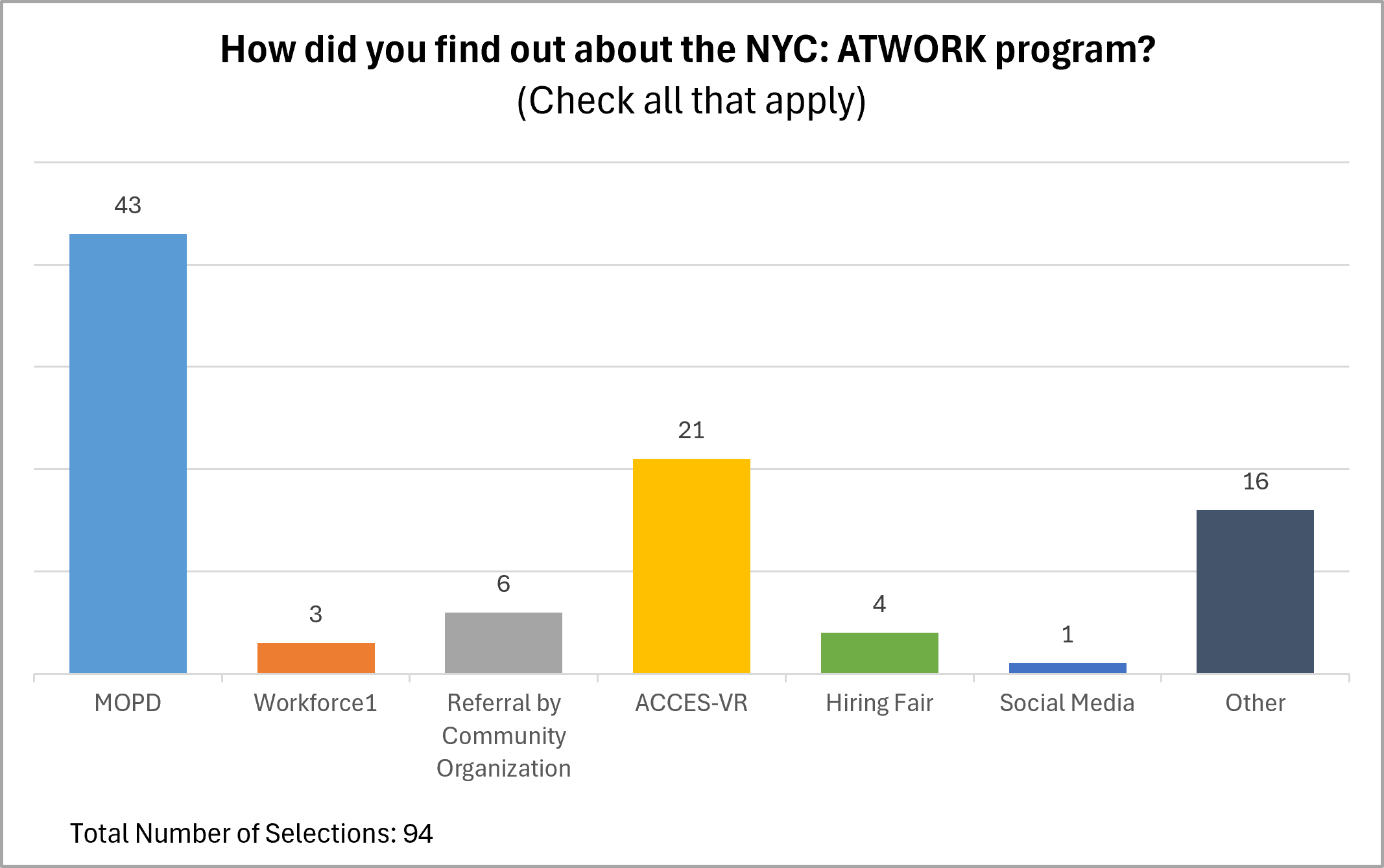
Job seekers enter the program primarily through referrals from community-based organizations (CBOs) and educational institutions such as City University of New York (CUNY) colleges. The program also accepts walk-ins at the Brooklyn Workforce1 Center (the only direct access location).[4] Interested individuals complete a referral form either online or in person and are placed on a waiting list for approximately four to six weeks.[5]
Once contacted, job seekers participate in “intake” in which Career Service Advisors/Relationship Managers discuss educational background, skills, and career goals with candidates. Candidates that are considered a good fit are sent a screening form. MOPD considers completion of the screening form a demonstration of initiative; it is used as a “gatekeeping mechanism” to assess program suitability. Candidates must also submit documentation confirming disability status.
MOPD invites qualified candidates to an orientation session (a group of 20 to 30 candidates). Upon enrollment, job seekers are granted access to a job board and may apply only for positions they fully qualify for. Candidates must meet 100% of the minimum qualifications and 75% of the preferred qualifications to apply for a job offered through the program.[6]
Program Services: Job Search, Job Matching, and Job Retention
ATWORK provides a range of job search support services such as reviewing resumes and cover letters, conducting interview preparation workshops and mock interviews, communicating with potential employers on application statuses, and maintaining regular contact with job seekers throughout the search process.
If MOPD has an existing relationship with an employer, the job seeker’s materials are forwarded directly to that employer. Mock interviews are conducted prior to scheduled interviews, often twice per candidate, and post-interview feedback is solicited from employers to improve candidate readiness.
If there is no existing relationship with a potential employer, job seekers are encouraged to continue their job searches both independently and using the program’s support services. MOPD’s career advisors may review materials for positions job seekers find on their own at employers the Program does not maintain relationships with. It is up to the job seeker to decide whether to apply for such positions.
ATWORK also provides up to one year of retention services post-employment, aimed at helping participants retain jobs, seek promotions, and obtain reasonable accommodations if needed.
Program Accessibility and Accommodations
Services are provided both in-person and remotely, depending on the individual’s needs. Accommodation is tailored by disability type. For deaf or hard of hearing individuals, the program uses in-house and external American Sign Language (ASL) interpreters. Candidates may also participate using their own interpreter. Blind or low-vision participants typically rely on assistive technology or email communication. Individuals who are non-verbal primarily communicate through written channels. ATWORK often coordinates these efforts with providers who offer additional career readiness and support services.
Program Evolution and Expansion
When first established in 2017, operations focused on bridging gaps between job seekers and employers who lacked access to or awareness of candidates with disabilities. Over time, the program expanded its scope to deliver direct services to job seekers. The team was restructured, adding dedicated staff for direct case management and employer engagement.
Since February 2024, the program has expanded its reach by embedding three additional ATWORK staff within Workforce1 Career Centers—beginning with the Brooklyn Workforce1 location, which now includes a Manager of Career Services and two Career Advisors. Partnerships with SBS and Workforce1 centers were strengthened in part by offering training for staff through the New York Systems Change and Inclusive Opportunities Network (NY SCION) team and making the Workforce1 system more inclusive and accessible.[7] This new operating model enabled MOPD to leverage resources of the Workforce1 system. Additionally, ATWORK job seekers were also enrolled in Workforce1, allowing them to take advantage of the workshops, individual training grants, on-site financial counseling, and other services offered by Workforce1.
Citywide Efforts to Improve Access to Employment Opportunities for Individuals with Disabilities
In July 2023, the City initiated a plan to connect 2,500 people with disabilities to employment within three years, allocating $8.8 million to support the plan via the Department of Small Business Services (SBS). MOPD leads this initiative in collaboration with other City agencies, including SBS and its Workforce1 Career Center.[8] According to MOPD, ATWORK did not receive direct funding under this allocation but benefited from the general increase in emphasis on employment for those with disabilities, including disability awareness training for staff and infrastructure improvements, such as access to Workforce1 locations.
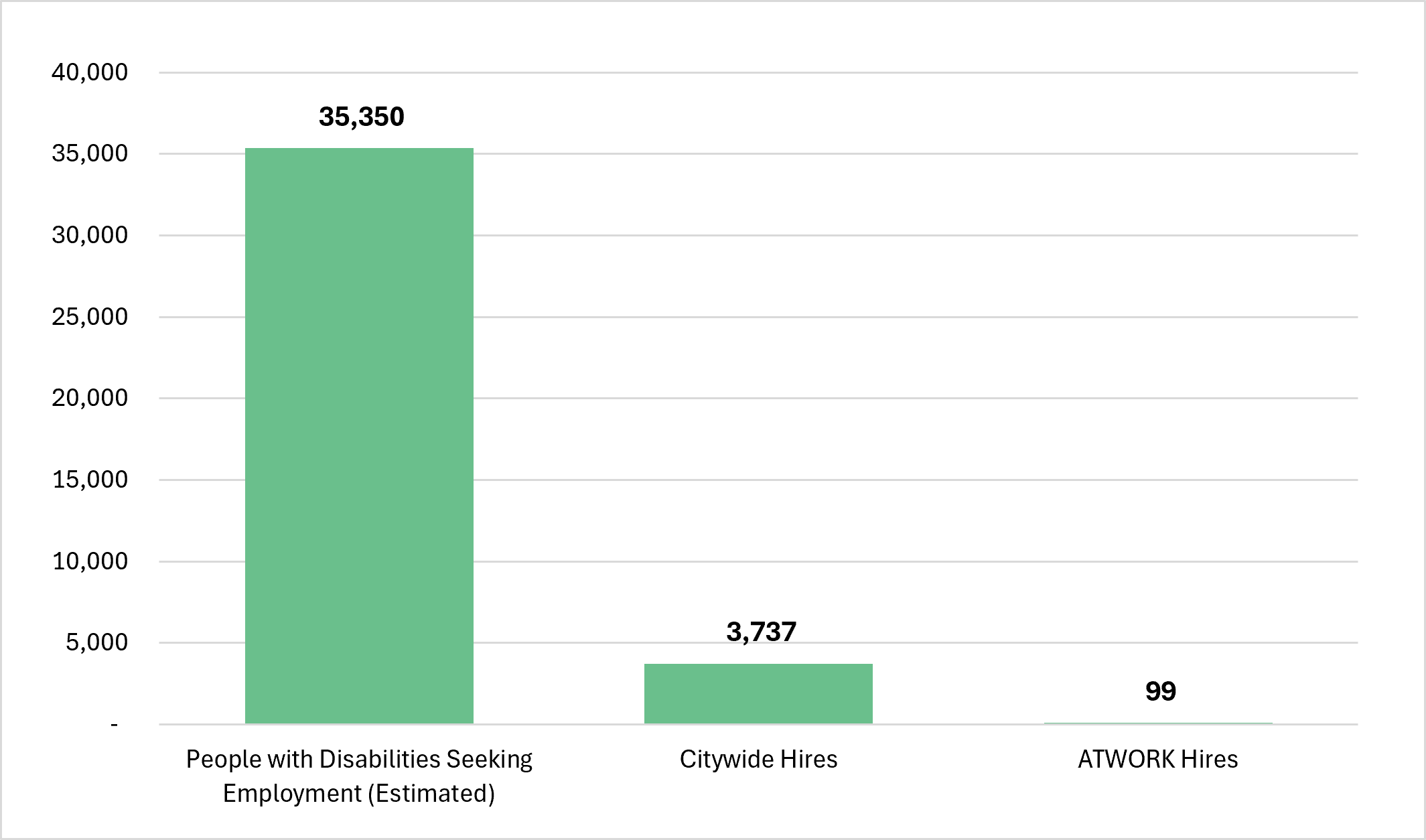
The Mayor’s Office of Talent and Workforce Development (NYC Talent) tracks numbers related to this initiative, which includes ATWORK, as well as SBS’ Workforce 1 and NYC Talent’s Partnership for Inclusive Internship Programs. According to a NYC Talent official, the City connected more than 3,700 individuals with disabilities to jobs during FYs 2024 and 2025, the first two years of this initiative. This included 99 individuals from MOPD’s ATWORK program, 1,242 from SBS’ Workforce1, 41 from NYC Talent’s Partnership for Inclusive Internships program, 169 from the Department of Youth and Community Development’s (DYCD) Youth Programs, and 2,183 from the Department of Social Services’ (DSS) WeCare program.[9]
NYC Talent also indicated they set internal yearly goals and plan to build momentum and capacity over the next three years; they are projecting an increased number of job placements each year. In total, their target for the initiative was to place 350 individuals by Year 1 (FY2024); 825 by Year 2 (FY2025); and 1,325 by Year 3 (FY2026).
Objective
The objective of this review was to determine the effectiveness of the Mayor’s Office for People with Disabilities’ (MOPD) ATWORK Program at helping job seekers with disabilities enter the workforce.
The scope of this review was July 1, 2023 through June 30, 2025.[10]
Discussion of Results with MOPD
The matters covered in this report were discussed with MOPD officials during and at the conclusion of this review. On March 10, 2026, we submitted a Draft Report to MOPD with a request for written comments. We received a written response from MOPD on March 24, 2026.
MOPD generally agreed with the review’s seven recommendations, stating that it has already begun implementing some of them.
The full text of MOPD’s response is included as an addendum to this report.
Key Takeaways
The ATWORK program has successfully supported job seekers with disabilities in preparing for and entering the workforce, despite significant challenges to its operations. During the review scope period of July 1, 2023 through June 30, 2025, ATWORK provided services to 1,268 people with disabilities and helped 99 individuals obtain employment. The program also hosted 62 workshops for job seekers and community partners; conducted 203 mock interviews for job seekers; and hosted/co-hosted seven job fairs. ATWORK considers the provision of program services, as well as job placements, when measuring program success.
However, ATWORK’s impact on the estimated 35,000 New Yorkers with disabilities seeking employment is very small and will remain small unless the City provides funding and resources commensurate with the size of the population the program was established to serve. The 1,268 people provided with services under the program represent less than 4% of those with disabilities reportedly seeking work. Similarly, the 3,737 individuals with disabilities connected to jobs citywide during FYs 2024 and 2025 through an unnamed July 2023 City initiative to connect individuals with disabilities to employment within three years, represent only 11% of those reportedly seeking employment. This shows that people with disabilities face challenges and have difficulties in finding jobs, even with the City’s support.[11] It is yet another indicator that current efforts are insufficient—a need for increased resource allocation remains.
According to a 2022 study by the Center for an Urban Future, the City’s per capita funding level for individuals with disabilities ranked lowest among six cities; during FY2022, funding per capita ranged from $2.80 (Houston) to almost $29 (Washington DC), while New York City allocated a mere $0.88.[12]
MOPD officials have also reported significant staffing shortages that prevent the program from meeting the demands of job seekers. MOPD’s inability to fill certain positions due to the lack of direct funding negatively impacts the number of people the program can serve.
During a City Council hearing held on October 23, 2025, where oversight of the ATWORK program was discussed, MOPD officials testified that the agency needs to more than double its staff by at least seven staff members—increasing staffing to 13 from the current six—to meet the current demand from job seekers. There exists an opportunity for the current administration to increase funding to support this need.
MOPD officials identified other obstacles to finding appropriate placements for job seekers with disabilities, including gaps between job seekers’ skills and available positions, particularly at entry-level and advanced levels, and a disconnect between job seekers’ expectations regarding the program and the realities of what ATWORK can provide, given its limited resources.
The review also found that MOPD did not have an effective tracking system to track the number of people who were: (1) enrolled in the program, (2) connected to jobs, and/or (3) in active status with MOPD at any given time. This hindered the agency’s ability to effectively monitor its program performance.
The impact of these constraints on ATWORK participants, particularly of staffing shortages, is best understood by the participants themselves. Auditors distributed a client satisfaction survey to all clients enrolled in the program during the review scope. Overall, opinions of the quality of services were mixed, with half of the respondents having a favorable opinion of services provided. Of those with unfavorable opinions, most concerns were related to ATWORK communication and insufficient staff to meet their needs.
Finally, auditors analyzed the demographic composition of individuals hired through ATWORK compared to the composition of individuals with disabilities citywide to assess whether the number of hires by ethnicity is proportionate with the City’s overall disabled population. They found that the proportion of hires by ethnicity does not fully align with the overall representation of disabled individuals citywide.
ATWORK Program Outcomes
The intent of ATWORK is to offer guidance and support to individuals with disabilities to improve their chances of being hired. According to ATWORK officials, success is primarily measured by the number of job seekers hired. Although the program has no requirement mandating a specific number of participants to be hired, the agency hoped to have 50 program participants hired into jobs during FY2025. ATWORK exceeded this soft target, with 55 participants hired by public and private employers during FY2025.
ATWORK efforts have led to the hiring of 99 individuals during FYs 2024 and 2025. This represents a very small percentage (3%) of the 3,737 individuals with disabilities hired for the same period (as tallied by NYC Talent) through the City’s combined efforts to support job seekers with disabilities. The City’s overall efforts represent the hiring of 11% of the total number of the estimated 35,350 people with disabilities seeking employment, as shown below in Chart 1.
ATWORK officials stressed that, while job placement remains the primary metric, any sustained employer involvement that supports job readiness or inclusion is also valued. The program considers broader indicators of impact, including employer participation in workshops, mentorships, hosting/co-hosting events such as job fairs and workshops, and guiding job seekers through the job search process. Officials stated that these indirect contributions are intended to strengthen the program employers’ network and provide practical benefits to participants; and therefore, they are also considered part of the program’s success.
Chart 1: Employment Outcomes for People with Disabilities (FYs 2024 and 2025)
224 Program Hires Since FY2021
MOPD defines program participants actively looking for jobs as “job seekers,” and those who obtain employment through the program are defined as “hires.” MOPD reports the number of hires to NYC Talent, which in return submits a report to the Mayor’s Office. It is possible for a single job seeker to account for multiple hires; for example, if a job seeker is hired, leaves that job, and obtains another one, it is reported as two hires.
According to the ATWORK database, from FY2021 through FY2025, there were 186 job seekers hired through the program, accounting for a total of 224 hires as reported by MOPD during the period.[13] A breakdown by program year and yearly budget are shown in Table 1 and Chart 2 below.
Table 1: ATWORK Funding and Number of Hires (FYs 2021–2025)
| Fiscal Year | ATWORK Budget | Number of Hires |
| 2021 | $323,000 | 51 |
| 2022 | $322,860 | 31 |
| 2023 | $347,400 | 43 |
| 2024 | $543,822 | 44 |
| 2025 | $543,822 | 55 |
| Total | $2,080,904 | 224 |
Chart 2: ATWORK Funding and Number of Hires (FYs 2021–2025)
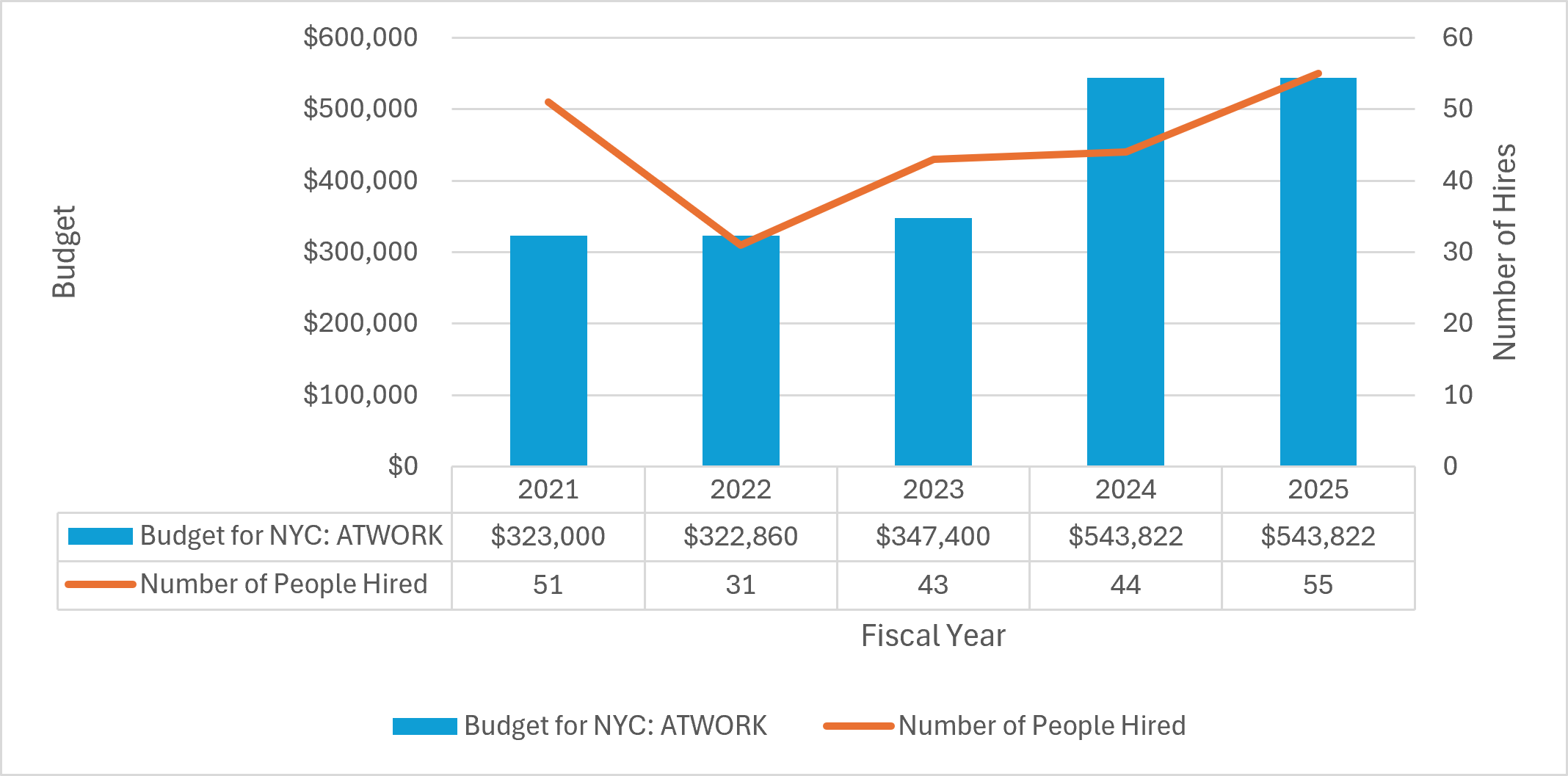
As indicated in the table and chart above, the program experienced a 57% funding increase going from $347,400 in FY2023 to $543,822 in FY2024. However, the number of people with disabilities connected to employment through ATWORK has fluctuated during the period and does not correlate directly to funding level. For example, the number of hires dropped significantly in FY2022, steadily recovered through subsequent years, and peaked in FY2025.
Funding increases between FY2023 and FY2025 did not translate to more hires. This may be due to the hiring freeze implemented by the City for filling vacancies, as the City is the primary source of potential placements.
MOPD attributed these fluctuations to internal and external factors. By the beginning of FY2020, ATWORK was fully staffed and had well-established operations, processes, and employer partners. The COVID-19 pandemic, which began in March 2020, had a significant impact on the program; within a year, the program transitioned to providing direct services entirely remotely while simultaneously guiding job seekers in an unstable job market. In FY2022, the ATWORK team was adjusted to fully remote service delivery and was able to re-establish some employer partnerships, including with the City following its COVID-era hiring freeze. However, many employer partnerships remained in flux and the ATWORK team also underwent internal changes. In FY2023, ATWORK leadership focused on developing a plan to expand the program into the Workforce1 system.
According to ATWORK officials, it took time to get support from City leadership and execute the plan, in part because key personnel who had developed the plan were no longer part of the administration and because MOPD had lost staff members with experience and institutional knowledge. The City—one of ATWORK’s most consistent employer partners—implemented a hiring freeze in October 2023.
ATWORK also went through significant transition in FY2024, including staffing, structural, and operational changes, and in FY2025, job growth slowed in the City. While the program was still adjusting to the new staffing and operational models, hires increased again through expansion of private sector employer partners and more City hiring opportunities.The numbers reflect these changes: from 31 hires in FY2022, a significant 39% drop from FY2021, to a steady recovery of 43 hires in FY2023, 44 in FY2024, and increased again to 55 in FY2025. As of January 23, 2026, ATWORK reported 35 hires and an additional 10 participants had received employment offers which were expected to be counted as hires in the near future.
Despite these challenges, ATWORK staff conducted initial interactions with 1,268 people with disabilities; hosted 62 workshops for job seekers and community partners; conducted 203 mock interviews for job seekers; hosted/co-hosted seven job fairs; and connected 99 individuals to employment during FYs 2024 and 2025.
Currently, three members of the six-person team provide one-on-one services to program participants. The audit team’s review of the services provided to 30 sampled job seekers revealed that MOPD’s Career Advisors assisted job seekers by assessing their job readiness and enrolling them in the program, inviting them to orientations, reviewing resumes and cover letters, conducting interview preparation workshops and mock interviews, recommending positions to job seekers, communicating with potential employers on job seekers’ application status, maintaining regular contact with job seekers and offering guidance/assistance on job searching and/or retention. Additionally, the team organized/co-hosted hiring events, conducted outreach to potential employers, and offered disability etiquette training.
ATWORK Placed Few Participants Through the 55-A Program
Table 2 below illustrates the breakdown of the number of hires by sector over a five-year period. The number of hires through the 55-A program is relatively low compared to hires in other sectors.
Table 2: Breakdown of Number of Hires
| Category | FY2021 | FY2022 | FY2023 | FY2024 | FY2025 |
| 55-A | 5 | 2 | 8 | 3 | 11 |
| Non-Competitive City Jobs | 3 | 4 | 4 | 12 | 12 |
| Other Government Jobs | 11 | 6 | 10 | – | – |
| Private Sector | 32 | 19 | 21 | 29 | 32 |
| Total | 51 | 31 | 43 | 44 | 55 |
The 55-A program is administered by the Department of Citywide Administrative Service (DCAS), which tracks the numbers of City employees who are hired through the 55-A program. According to MOPD, the 55-A hiring process can be lengthy due to the involvement of multiple agencies in the hiring process, such as DCAS, hiring agencies, and New York State vocational rehabilitation agencies (such as ACCES-VR) and the New York State Commission for the Blind (NYSCB), which must certify disability. Job seekers shared the same sentiment about the lengthy hiring process for 55-A, as reflected in the survey discussed below. According to MOPD, this delay sometimes results in agencies being hesitant to pursue 55-A hires.
ATWORK Program Challenges
New York City Ranked Lowest in Funding for Mayoral Offices that Assist People with Disabilities
As noted above, the Center for an Urban Future’s March 2022 report (the latest in 25 years) on expanding access and economic opportunities for people with disabilities—which reflects the research by CUF on opportunities to build a more inclusive economy in the City and provides a detailed look at the potential to expand economic opportunity for New Yorkers with disabilities— ranked the City last in terms of budget per capita for annual funding from mayoral offices designed to serve people with disabilities.[14]
CUF selected six cities with designated mayoral offices that assist people with disabilities, obtained the budgets for their respective offices, and compared the amounts budgeted per capita with the amount budgeted per capita in New York City. The five other cities were (1) Washington, DC, (2) Los Angeles, (3) Chicago, (4) Boston, and (5) Houston.
To determine the number of individuals with disabilities in those cities, CUF used the 2015–2019 American Community Survey (ACS) to obtain self-reported disability data for that period. According to the report, MOPD’s annual budget for FY2022 was $820,000, and the ACS reported that 931,000 persons—nearly one in nine New Yorkers—had a self-reported disability. This works out to a budget per disabled person of only $0.88 for New York City. Table 3 below shows the annual budget and budget per capita of all six cities, as presented in the CUF report.
Table 3: CUF Report on Budgets for Mayor’s Offices for People with Disabilities in the U.S.
| City | 2021–2022 Budget | Budget Per Capita |
| New York City | $820,000 | $0.88 |
| Washington, DC | $2,237,560 | $28.69 |
| Los Angeles | $4,800,246 | $12.09 |
| Chicago | $2,473,477 | $8.19 |
| Boston | $623,936 | $7.90 |
| Houston | $646,800 | $2.80 |
Due to a lack of publicly available data on program design, funding levels, organizational structure, and employment outcomes for individuals with disabilities for the programs operated in the above-mentioned cities, auditors were unable to assess the success of these programs relative to the City’s program.
Inadequate Staffing Levels
According to MOPD, ATWORK’s current staffing levels—six full-time staff—and the number of job seekers they serve are misaligned. While working with Workforce1 allows ATWORK to maximize available resources and better assist and serve more people, MOPD does not have enough staff to interact with Workforce1 staff regularly. This was also a concern raised by some of the survey respondents, discussed in a later section of this report.
During the review, MOPD officials stated that they had been trying to fill an additional Career Advisor/Relationship Manager position to assist job seekers in their job search process. However, in an email dated November 7, 2025, MOPD officials indicated that there is no longer sufficient funding for this position and that there are no other program vacancies at this time.
The shortage in staffing also hinders the Program’s business development efforts to engage current employers and attract prospective employers. At a City Council hearing held on October 23, 2025, where oversight of the ATWORK program was discussed, MOPD officials testified that the agency needs to more than double its staff to meet the current demand from job seekers, hiring at least seven additional staff members to augment the current staff of six. The City Council lauded MOPD’s hard work and acknowledged the funding and staffing challenges MOPD faces in operating the program.
Disconnect between Program Capacity and Job Seekers’ Expectations
The auditors’ review of the services provided to job seekers compared to some of the responses to the survey (discussed below), indicate that job seekers expect ATWORK to provide services that are beyond its mission and capabilities, based on available resources.
As stated on its website, ATWORK’s mission is to connect people with disabilities to jobs and internships. However, as indicated in survey responses, job seekers are looking for more job opportunities that do not require a Master’s or Bachelor’s degree, and for the Program to guarantee that they will not only be provided with development and training opportunities, but also secure job interviews.
Additionally, respondents are looking for more training programs that match the specific skills needed for today’s job market, more job fairs, and more counselors so that there can be more one-on-one coaching and discussions between applicants and their counselors, and off-hours services. However, these are currently beyond ATWORK’s ability or mandate to provide.
According to MOPD, there is a gap between the skills of many of those seeking jobs and the positions that are available, particularly at entry or advanced levels; however, MOPD has not conducted formal analyses to identify or quantify the gaps they say exist. Officials nonetheless stated that the program works to balance job seeker needs with employer practices and remains committed to presenting all viable opportunities to job seekers.
Ineffective Tracking System
The review found that, prior to June 2025, ATWORK lacked a robust system to track the number of people enrolled in the program, connected to jobs, hired or active at any given time. As mentioned above, the number of hires reported by MOPD for the period of FYs 2021 through 2025 (224) differed from the number of job seekers hired according to the ATWORK database (186). However, due to a lack of sufficient information in MOPD’s database (e.g., updated job start/end dates) auditors were unable to identify the specific individuals represented by the 224 hires.
In addition, the database does not have the functionality to generate a report showing how many clients were provided with services. The numbers on the weekly reports come from a combination of manual calculations and entries from the current database.
A robust tracking system is important for monitoring and evaluating program performance and ultimately its success. ATWORK officials stated that it started using SBS’ Worksource1 system as its primary database system in June 2025.[15]
Insufficient Training Programs Limit Work Opportunities for People with Disabilities
According to MOPD, many workforce development and skills training programs are aware that they have participants with disabilities but lack technical expertise or resources designed to improve accessibility. This limits the participation of people with disabilities in these programs and ultimately impacts access to opportunities and career pathways.
To address these challenges, ATWORK officials stated that they continue to expand outreach efforts to include new referral partners and job seekers. To improve job seekers’ technical expertise, the program prioritizes upskilling and reskilling, expanding and solidifying career pathways, and strengthening the capacity of service delivery by Workforce1 and other partners.
MOPD also identified accessibility barriers in employer application platforms, particularly for blind and low-vision applicants. These challenges are included as part of the disability etiquette and awareness training that MOPD provides to its employer partners. If an applicant reports issues with the accessibility of an employer partner’s application process, digital or otherwise, MOPD flags this for the employer.
Customer Satisfaction Survey Responses Reflect ATWORK Outcomes and Challenges
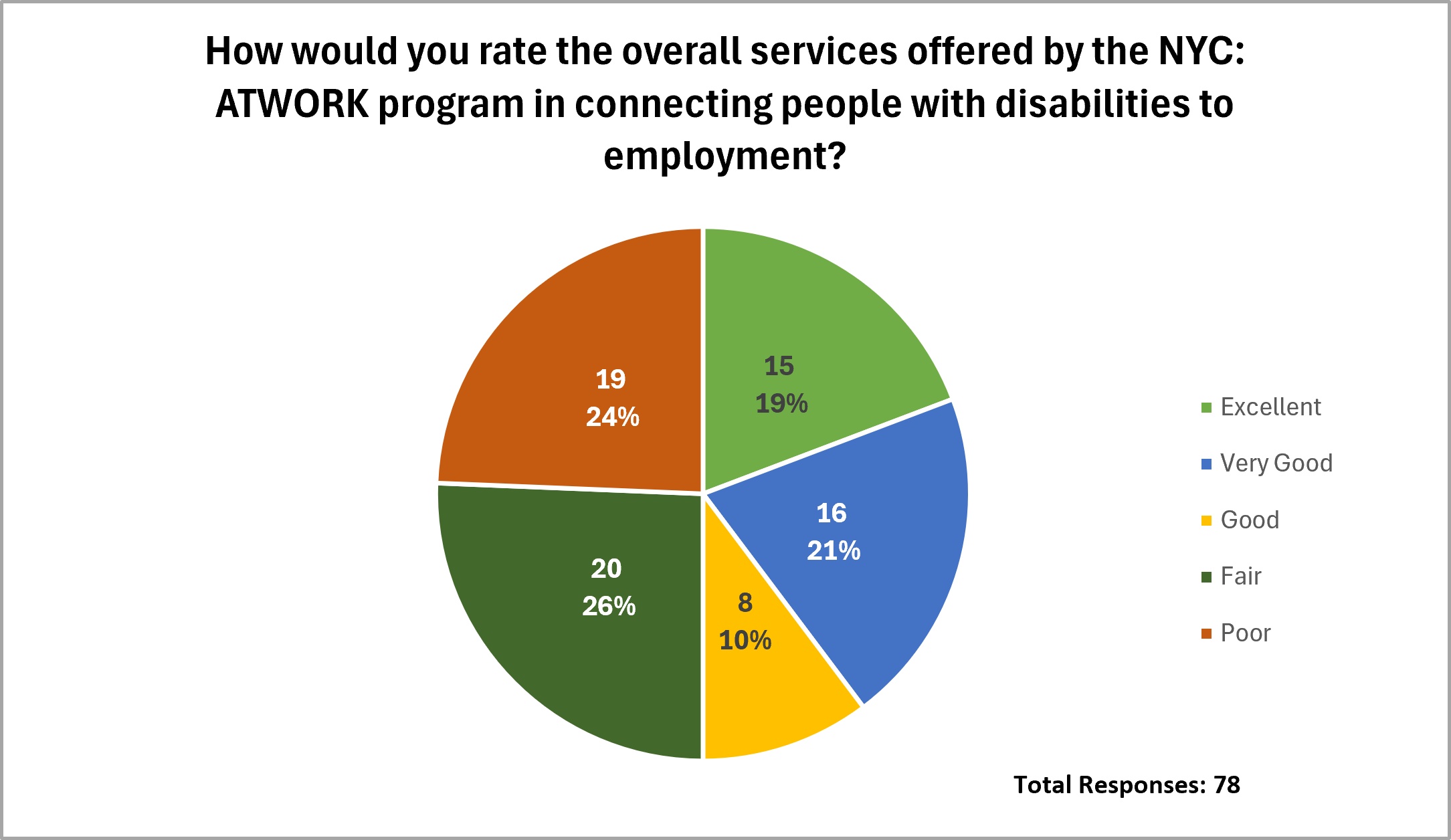
A number of the issues identified by MOPD as challenges to program operations and impact were echoed in responses to a client satisfaction survey distributed by auditors to determine how program participants viewed the services they received. On July 29, 2025, auditors emailed survey questionnaire to all 287 clients who were enrolled in the ATWORK program from January 1, 2022 through June 18, 2025, and received 78 (27%) responses. Responses received were anonymous.
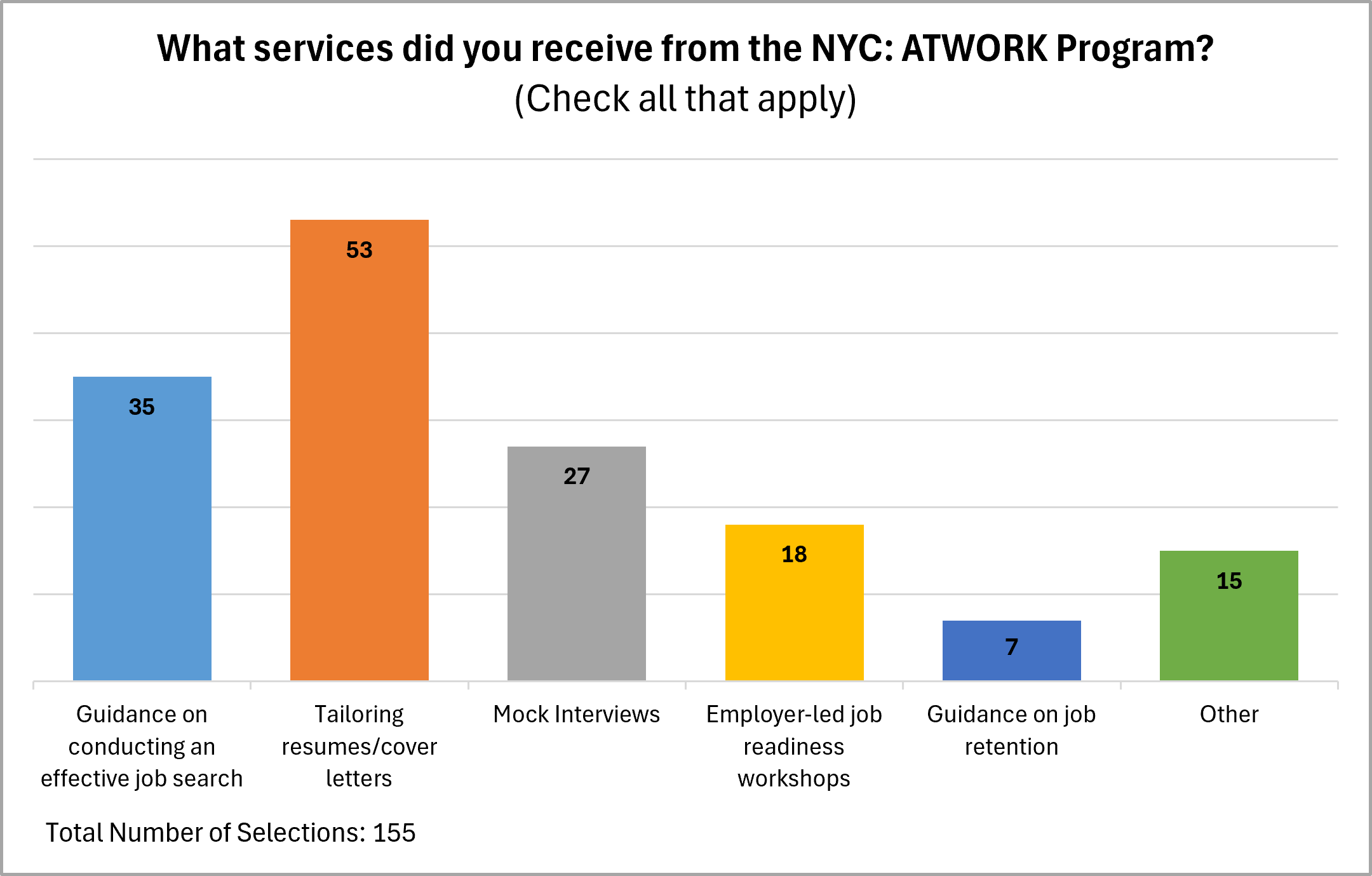
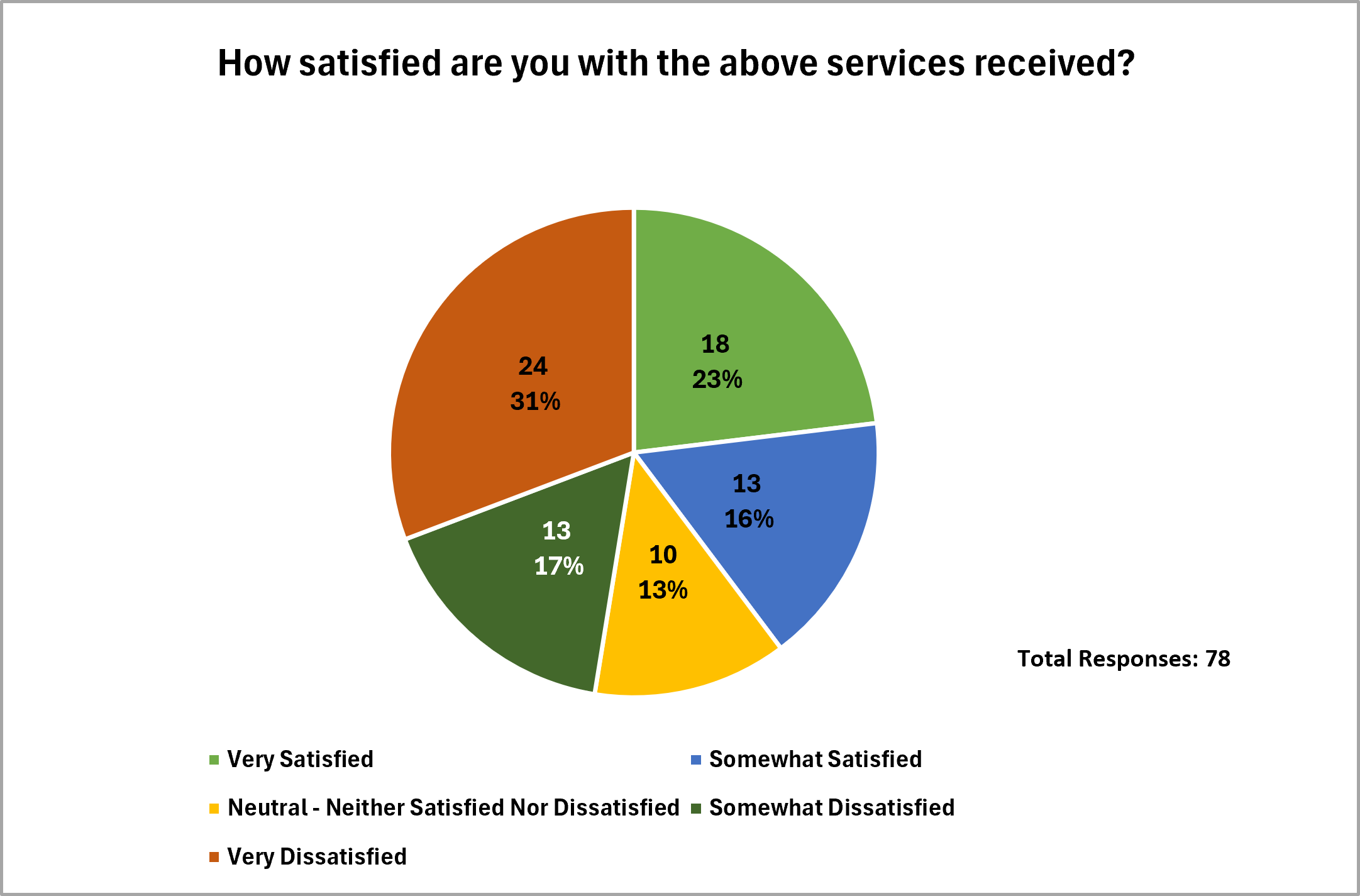
In general, participants’ opinions of the overall quality of services offered by the Program were split, with only 39 (50%) respondents rating the services provided by ATWORK as “good” or “better.” Respondents favored the services offered by the program, including access to the job board, workshops for writing effective targeted cover letters, mock interviews, one-on-one assistance during the job search process, and job fairs. Of those with unfavorable opinions, most concerns were related to ATWORK communication and insufficient staff to meet their needs.
Key points of the survey results are as follows:
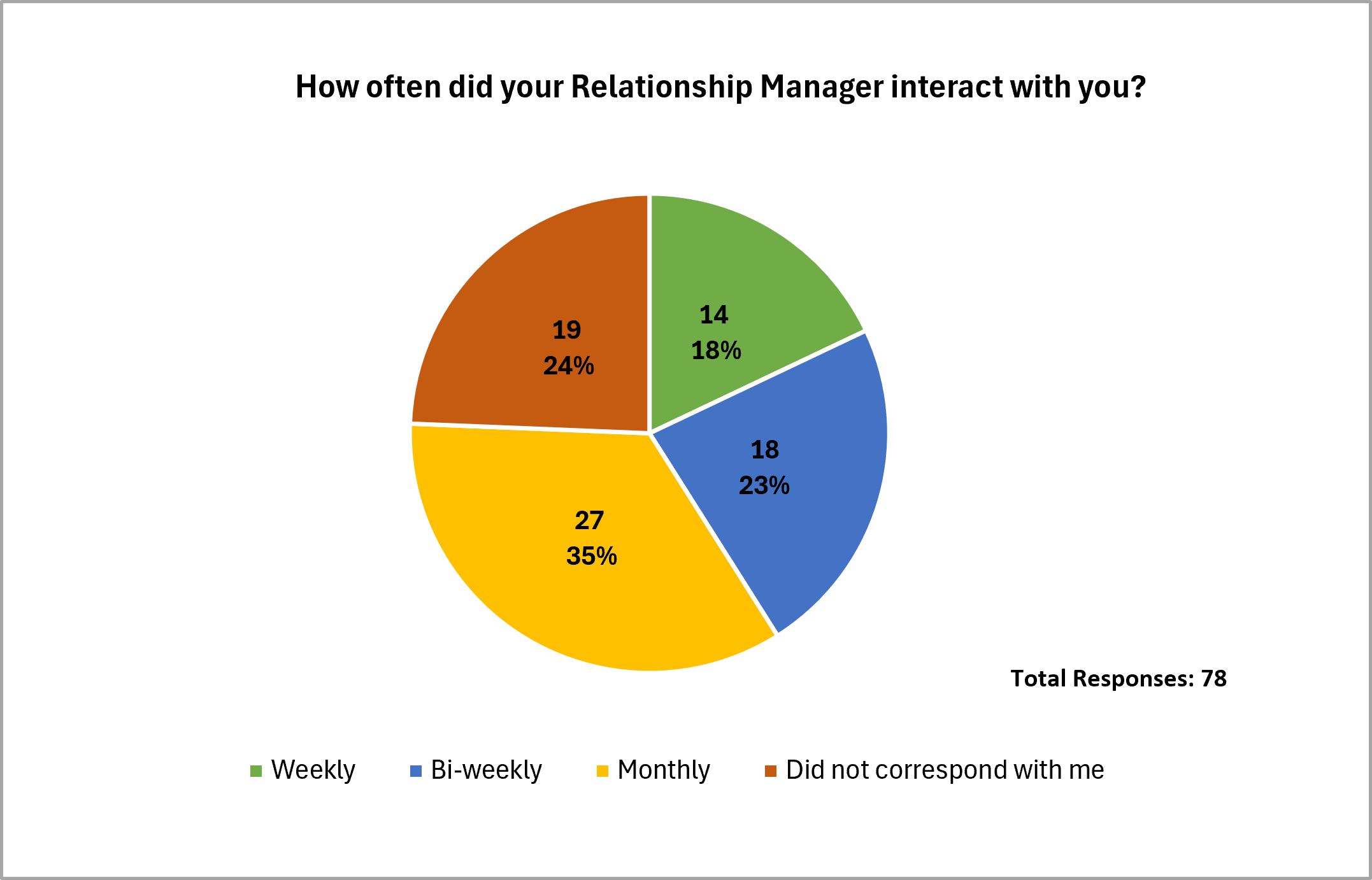
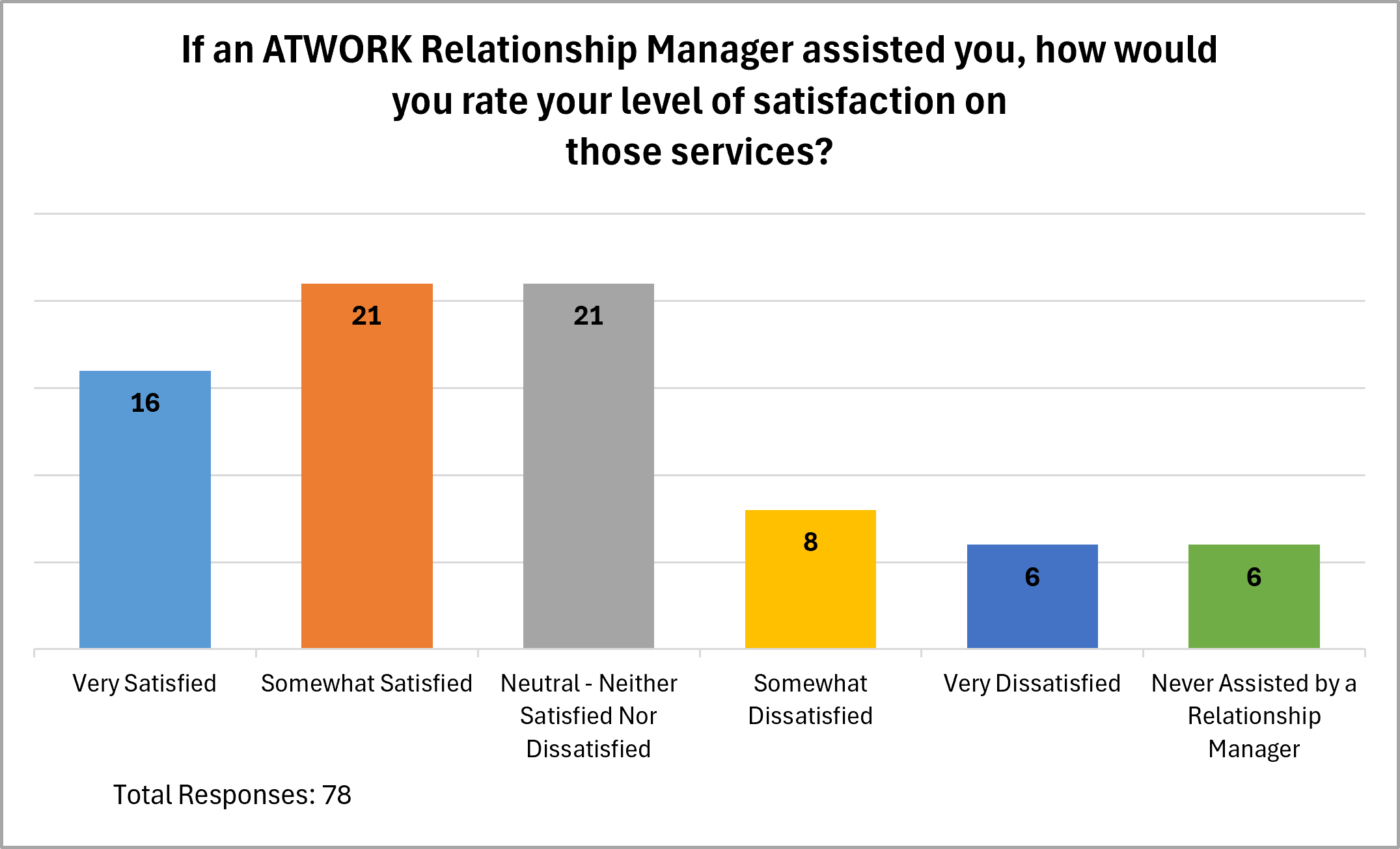
- Regarding satisfaction with services provided by Career Service Advisors/Relationship Managers, 12 respondents stated that they were never assisted by a manager, as they should have been. Of the remaining 66 respondents, 43 (65%) stated that they were somewhat/very satisfied; 10 (15%) had a neutral opinion; and 13 (20%) responded that they were somewhat/very dissatisfied.
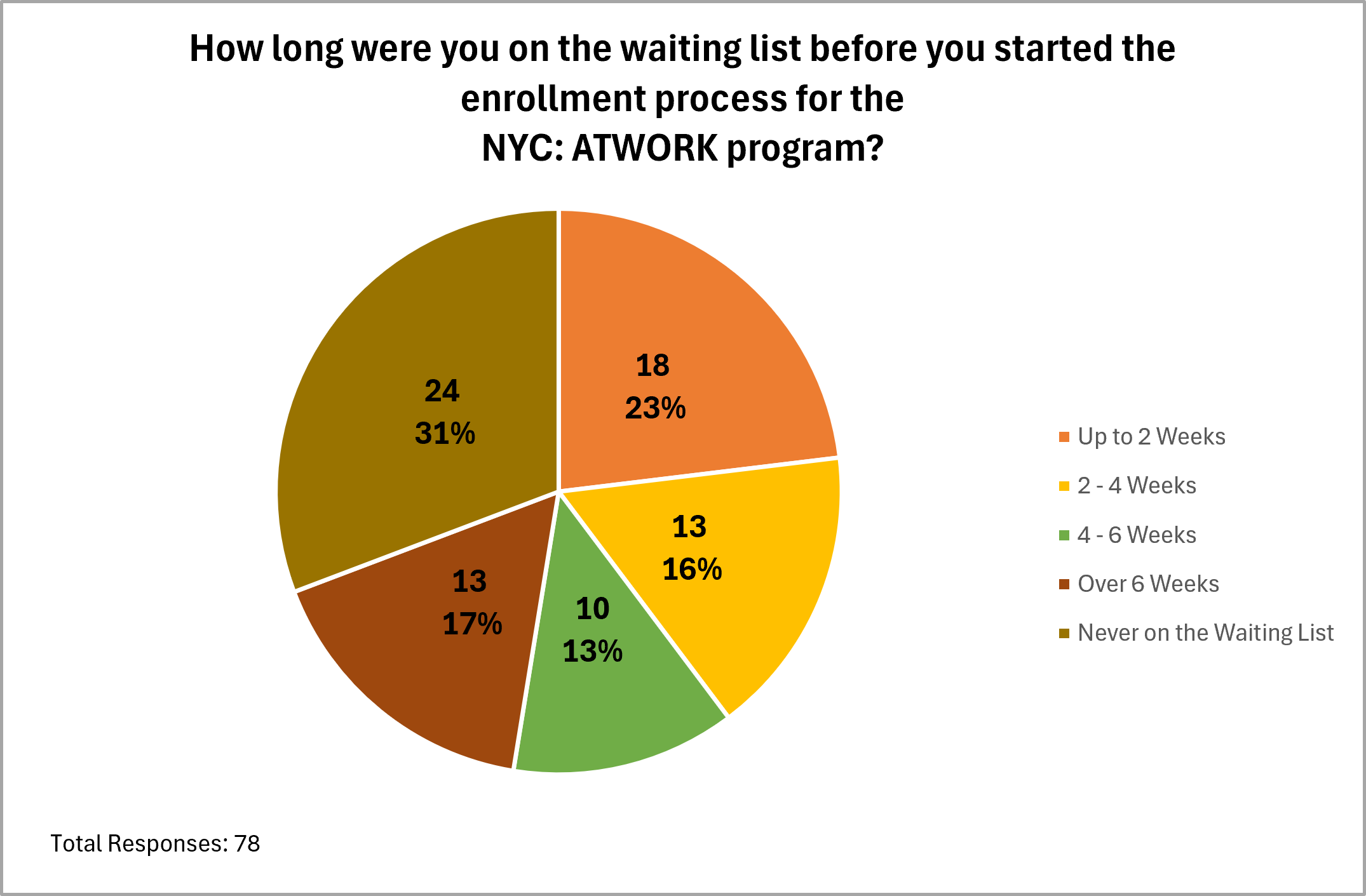
- Regarding time spent on the waiting list before starting the enrollment process, 24 (31%) respondents stated that they were never on the waiting list; 18 (23%) stated that they were on the waiting list for two weeks or less; 13 (17%) stated that they were on the list for two to four weeks; 10 (13%) stated that they were on the list for four to six weeks; and 13 (17%) stated that they were on the list for more than six weeks.
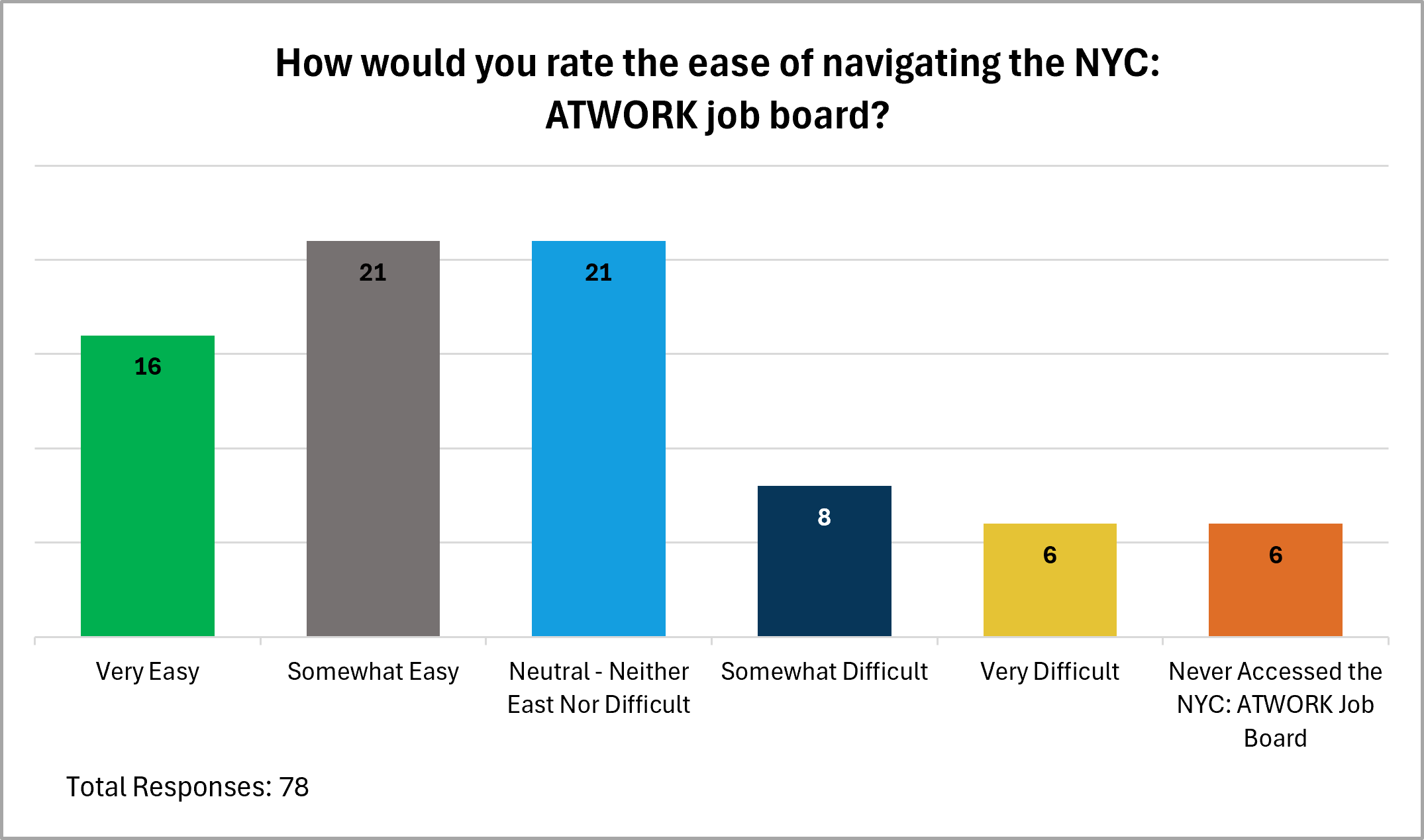
- Regarding the ease of navigating the ATWORK job board, six respondents (1%) stated that they had never accessed the job board. Of the remaining 72 respondents, 37 (51%) stated that the job board was easy to navigate; 21 (29%) had a neutral opinion; and 14 (19%) stated that it was difficult to navigate.
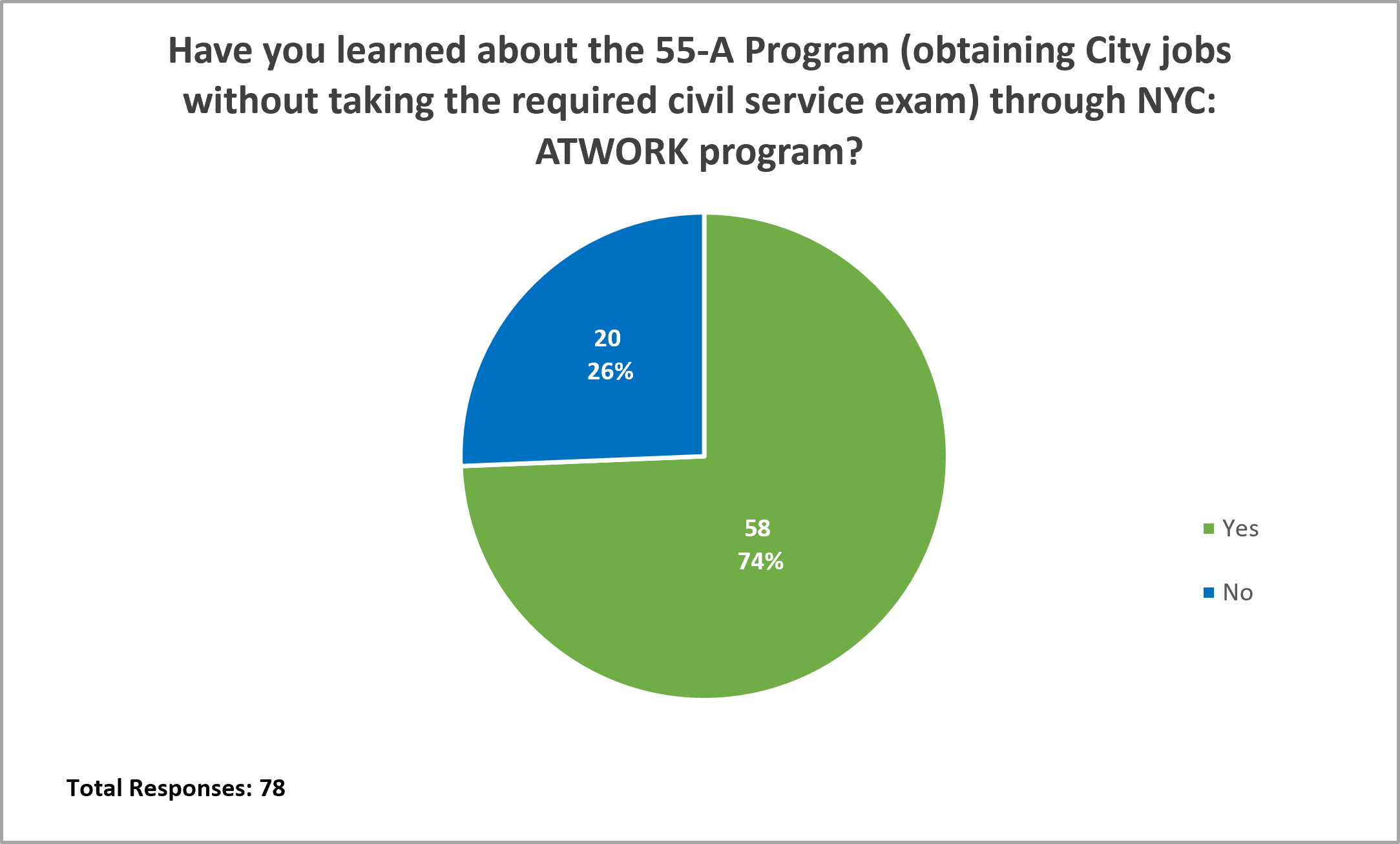
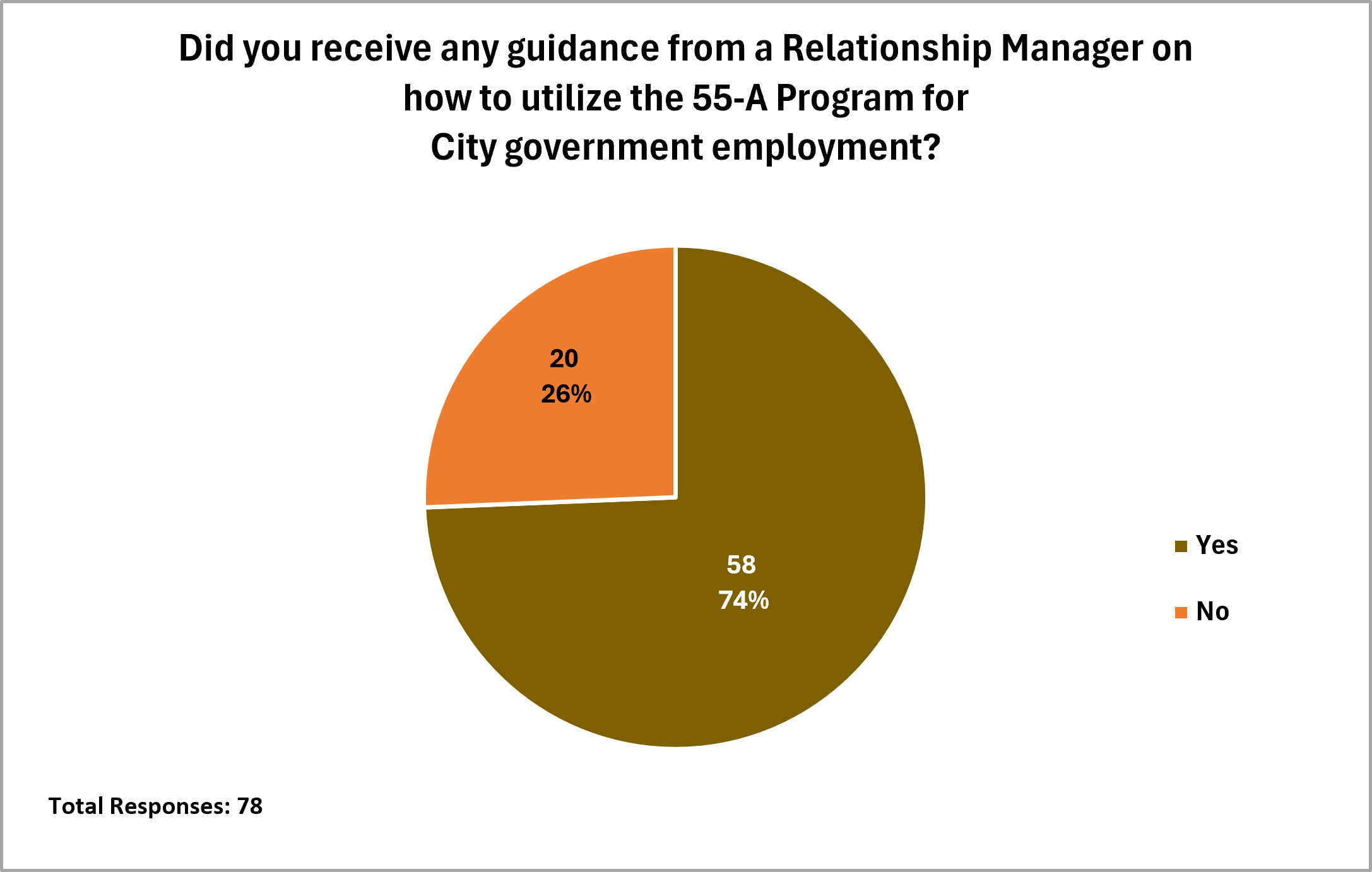
- Regarding the 55-A program, 58 (74%) of the 78 respondents indicated that they learned about the program through ATWORK. Of these, 33 (57%) stated that they received guidance from a Career Service Advisor/Relationship Manager on how to utilize the 55-A program for City government employment.
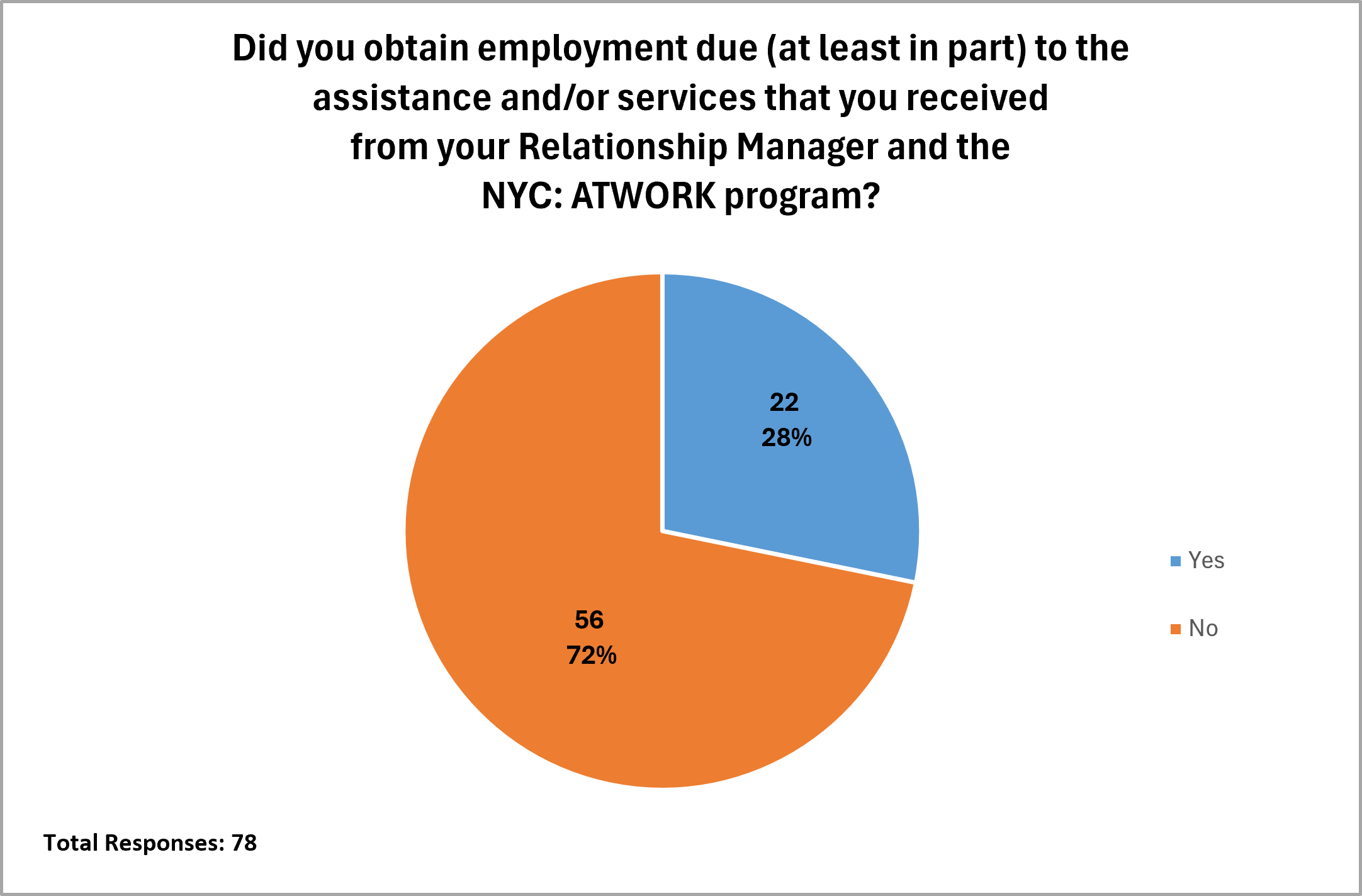
- Regarding employment, 22 (28%) respondents stated that they were able to obtain employment due (at least in part) to assistance provided by ATWORK.
Respondents provided several suggestions for improving the ATWORK program, many of which pertained to interactions with ATWORK staff. Specifically, respondents identified a desire for the following:
- Better and more consistent communication with the ATWORK Career Service Advisor/Relationship Manager.
- More frequent interactions and assistance with the job search and application process.
- More Career Service Advisors/Relationship Managers so that there can be more one-on-one coaching and discussions between applicants and their advisors.
Respondents also provided suggestions to improve worker preparation and job opportunities:
- More training programs that match the specific skills needed for the current job market; adding industry-specific training in fields like technology, healthcare, and trades could better prepare participants for high-demand careers.
- More job opportunities in the IT field.
- More diversity job fairs per year for 55-A program and suggestions that the MOPD team should be more strategic and aggressive in getting feedback from the interviewing agencies and provide more advocacy for 55-A job seekers after related job events.
The following is a breakdown of ATWORK client survey questions/topics and results.
Demographics of ATWORK Hires
As mentioned above, the NYC Comptroller’s Office’s “Spotlight—Disability and Employment in New York City” report found that the City’s disability employment rate was half that of non-disabled New Yorkers. Outcomes were even worse for people with disabilities who were Black, Hispanic, or male, as well as those living with a cognitive, ambulatory, independent living, or self-care disability. The Spotlight report showed that people with disabilities were disproportionately overrepresented in service occupations as well as sales, office, and administrative support roles, while underrepresented in management, business, and financial occupations.
Auditors examined the ethnicities and genders of ATWORK hires as percentages relative to their representation in the community of disabled persons in the City. The findings echo those presented by the Spotlight report, with slight fluctuations. The results are discussed below.
ATWORK Hires by Ethnicity Not Proportionate with Citywide Representation of Disabled Individuals
As stated above, 11.7% of the City’s population live with disabilities. In terms of ethnicity, the proportion of people with disabilities do not fully align with their overall representation in the City as reflected in the ACS 2019-2023, five-year estimate. For example, Whites account for the most represented ethnicity in the City but rank second in terms of people who self-identify as disabled.
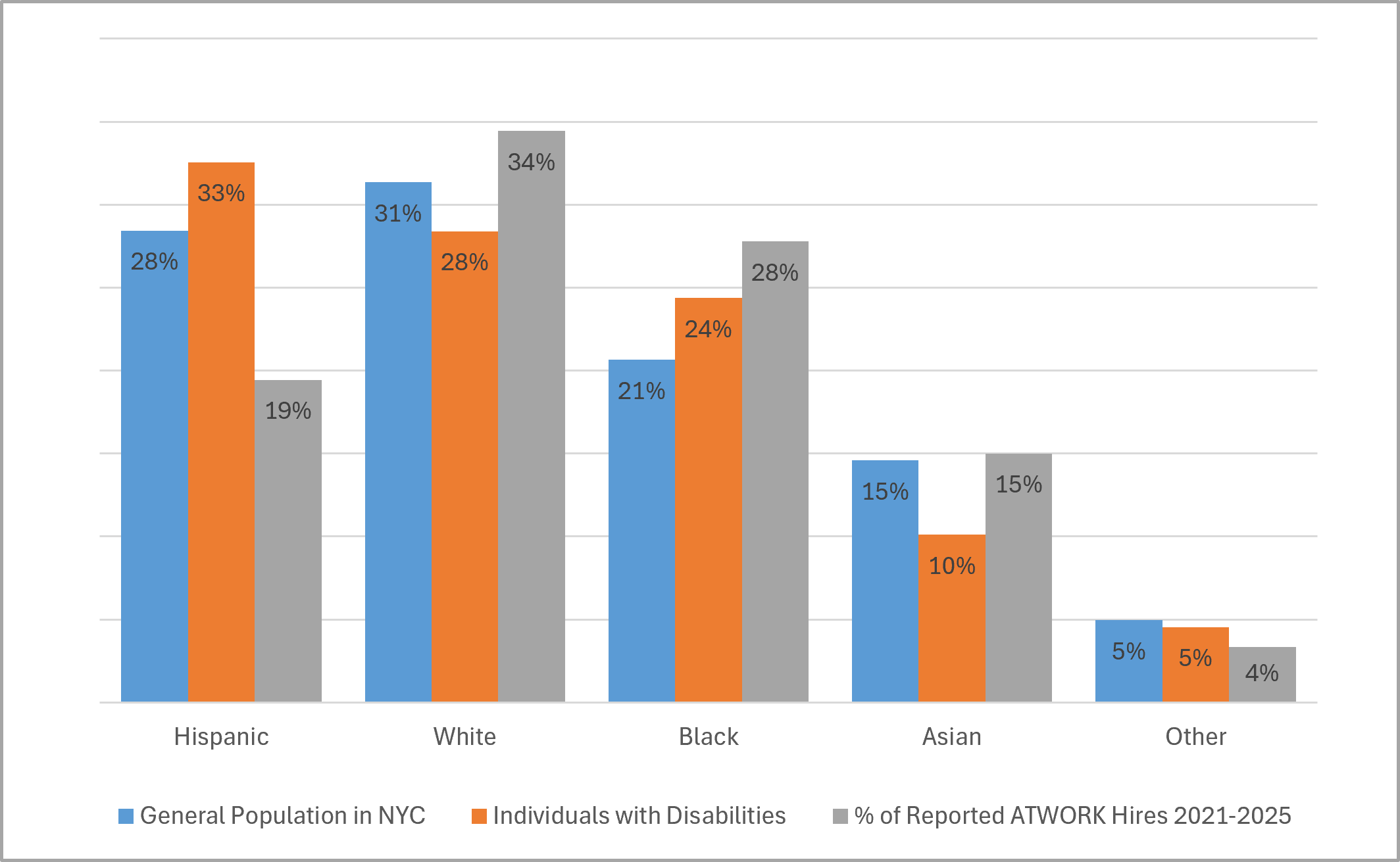
An examination of 186 persons in ATWORK database with the status “hired” from FY2021 through FY2025 shows that the proportion of hires by ethnicity does not fully align with their overall representation of disabled individuals Citywide.[16]
As shown in Chart 3 below, the percentage of ATWORK hires who were Hispanic is lower than the percentage of disabled persons in the City who are Hispanic, accounting for 33% of people with disabilities citywide but only 19% of ATWORK hires. Conversely, the percentages of ATWORK hires who were White, Black, and Asian are greater than their percentages among the disabled community citywide. This suggests ATWORK has not been as successful in reaching Hispanic individuals with disabilities.
Chart 3: Breakdown of General Population and Individuals with Disabilities in NYC by Ethnicity
Women Account for Minority of ATWORK Hires Despite Being the Majority of Those Who Self-Identify as Disabled
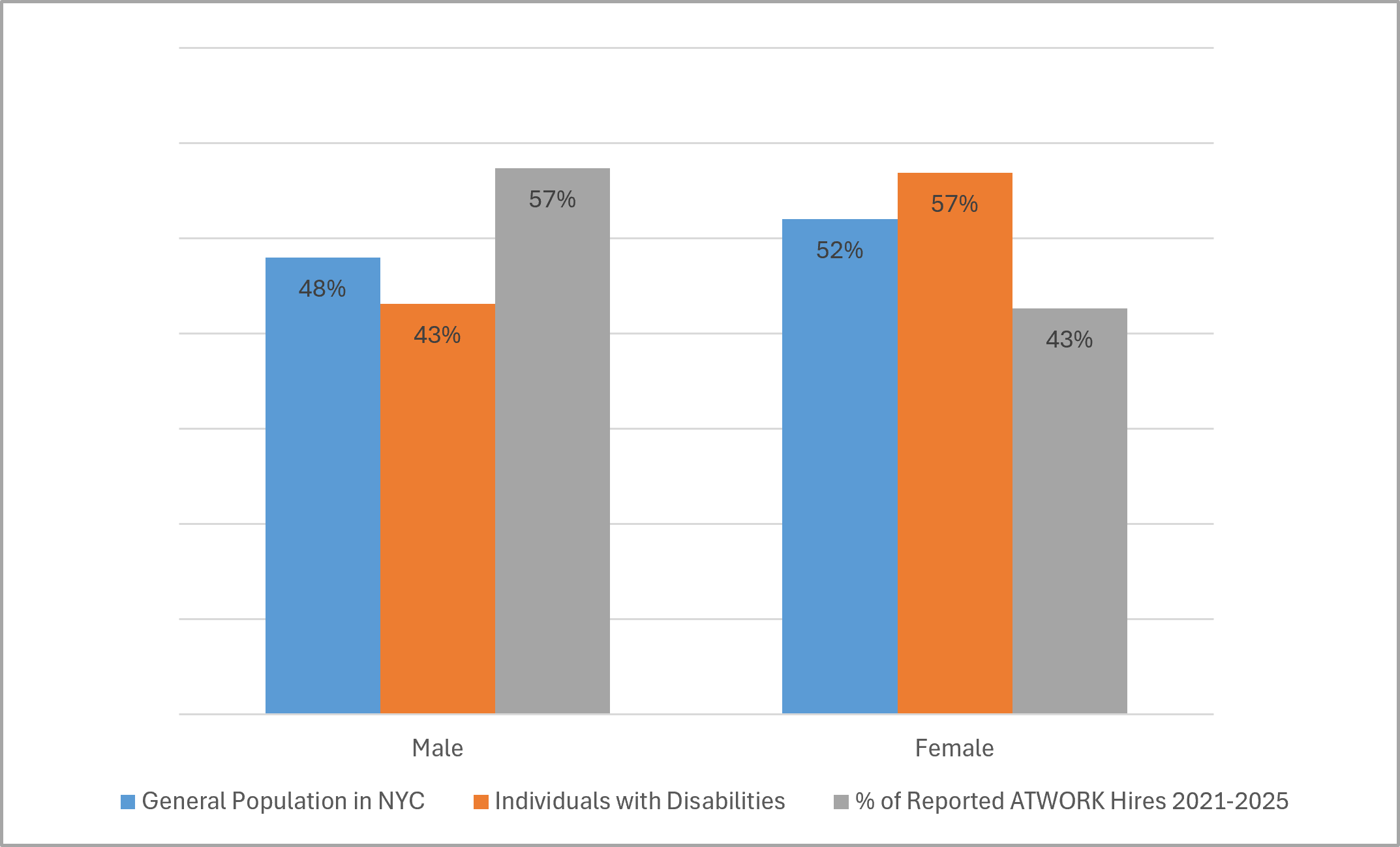
A similar dynamic was identified when examining ATWORK hires by gender. Women make up the majority of people both in terms of overall population and those that self-identify as disabled, but they were in the minority of those hired through ATWORK during the five-year period.
As shown in Chart 4 below, women account for 57% of people who identify as disabled but only 43% of the hires through ATWORK.
Chart 4: Breakdown of General Population and Individuals with Disabilities in NYC by Gender
MOPD officials did not know why Hispanic and female candidates represent a lower percentage of hires relative to the population of the disabled in the City. ATWORK stated that the program recommended job seekers for available openings but was not involved in employers’ hiring decisions.
MOPD’s Efforts to Address Program Challenges
According to MOPD, it is attempting to address the Program’s most significant challenge—the disconnect between current staffing levels and job seeker demands—in several ways. These include:
- Submitting requests for additional lines in an upcoming New Needs request and exploring ways to expand into additional Workforce1 Career Centers. Specifically, the program submitted new needs requests for a Career Advisor/Relationship Manager position as well as several other positions to support both the job seeker services and business development work of the program.
- Onboarding a volunteer to provide support for community engagement and administrative needs through NYC Service.
- Interviewing candidates for a mayoral intern and fellow through the Partnership for Inclusive Internships (PII) program.
- Continuing to collaborate with Workforce1 to share resources and services, including a request for marketing/promotional support in the most recent New Needs request, and exploring options for private funding.
ATWORK officials believe that many of the challenges at the City level can be addressed through the continued operation and growth of the ATWORK program and other initiatives that are part of the 2023 Mayoral plan.
Although not stated by ATWORK officials, the new administration also offers opportunities to re-evaluate the program.
Recommendations
Based on this review, the auditors recommend that MOPD should:
- Work with the City Council to obtain additional funding to enhance the effectiveness of the ATWORK program and provide additional services to meet the needs of job seekers with disabilities.
MOPD Response: MOPD agreed with this recommendation.
- Ensure that the newly adopted Worksource1 database captures key performance indicators to evaluate the effectiveness of the program.
MOPD Response: MOPD agreed with this recommendation.
- Minimize any misunderstanding between job seekers’ expectations and program services by adding the following statement to the Job Seeker Acknowledgement form: “I understand that interviews with prospective employers and/or employment are not guaranteed.”
MOPD Response: MOPD agreed with this recommendation.
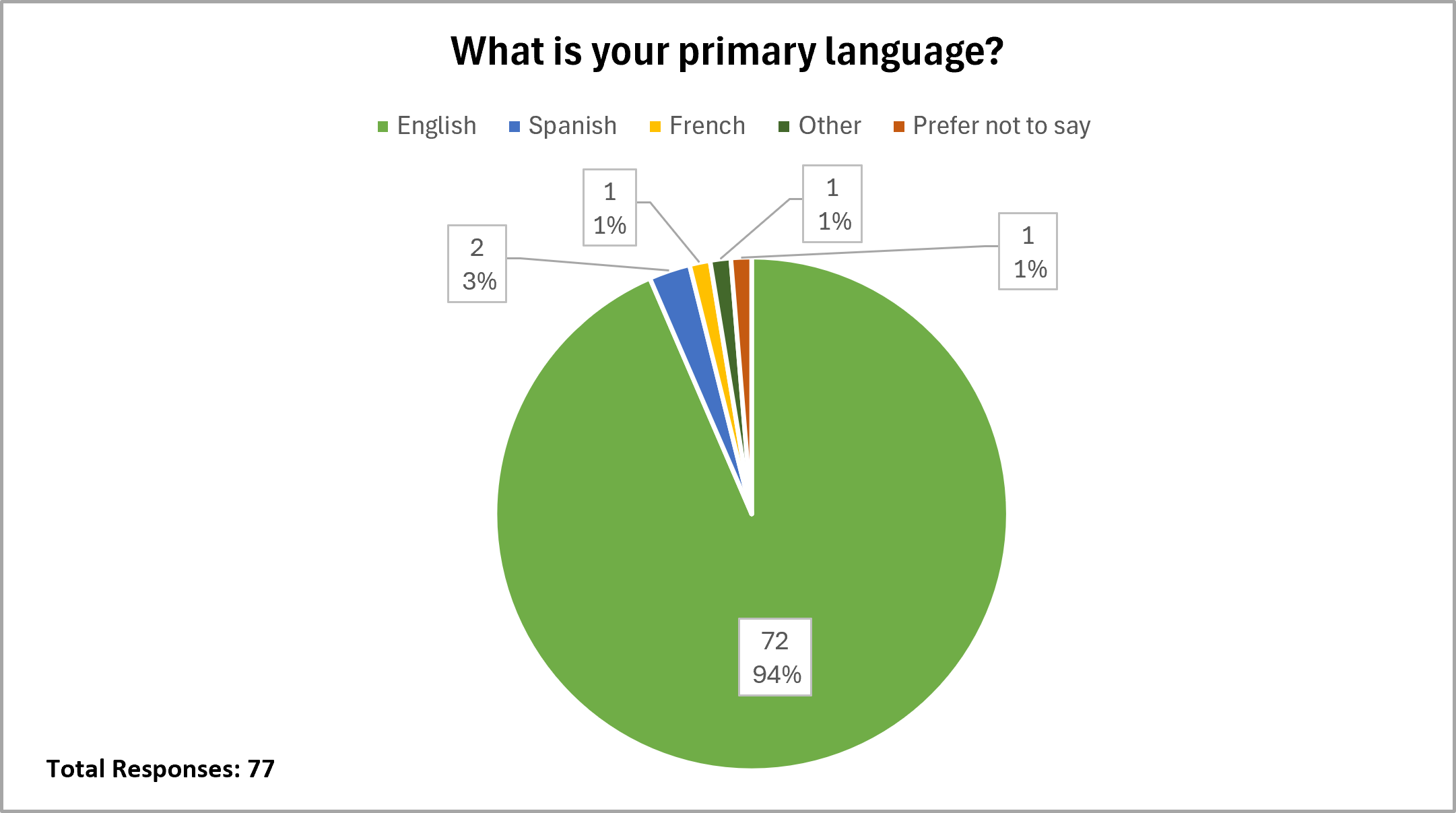
- Increase Spanish language outreach to relevant job seekers.
MOPD Response: MOPD agreed with this recommendation.
- Conduct annual surveys of participants to assess success from their perspectives.
MOPD Response: MOPD agreed with this recommendation.
- Analyze skills gaps between job opportunities and job seeker skills and develop a strategy for addressing them.
MOPD Response: MOPD agreed with this recommendation.
- Work with other city agencies and employer partners to effectively reduce identified barriers to employment for job seekers with disabilities.
MOPD Response: MOPD agreed with this recommendation.
Recommendations Follow-up
Follow-up will be conducted periodically to determine the implementation status of each recommendation contained in this report. Status updates are reported in the Audit Recommendations Tracker available at: https://comptroller.nyc.gov/services/for-the-public/audit/audit-recommendations-tracker/
Appendix
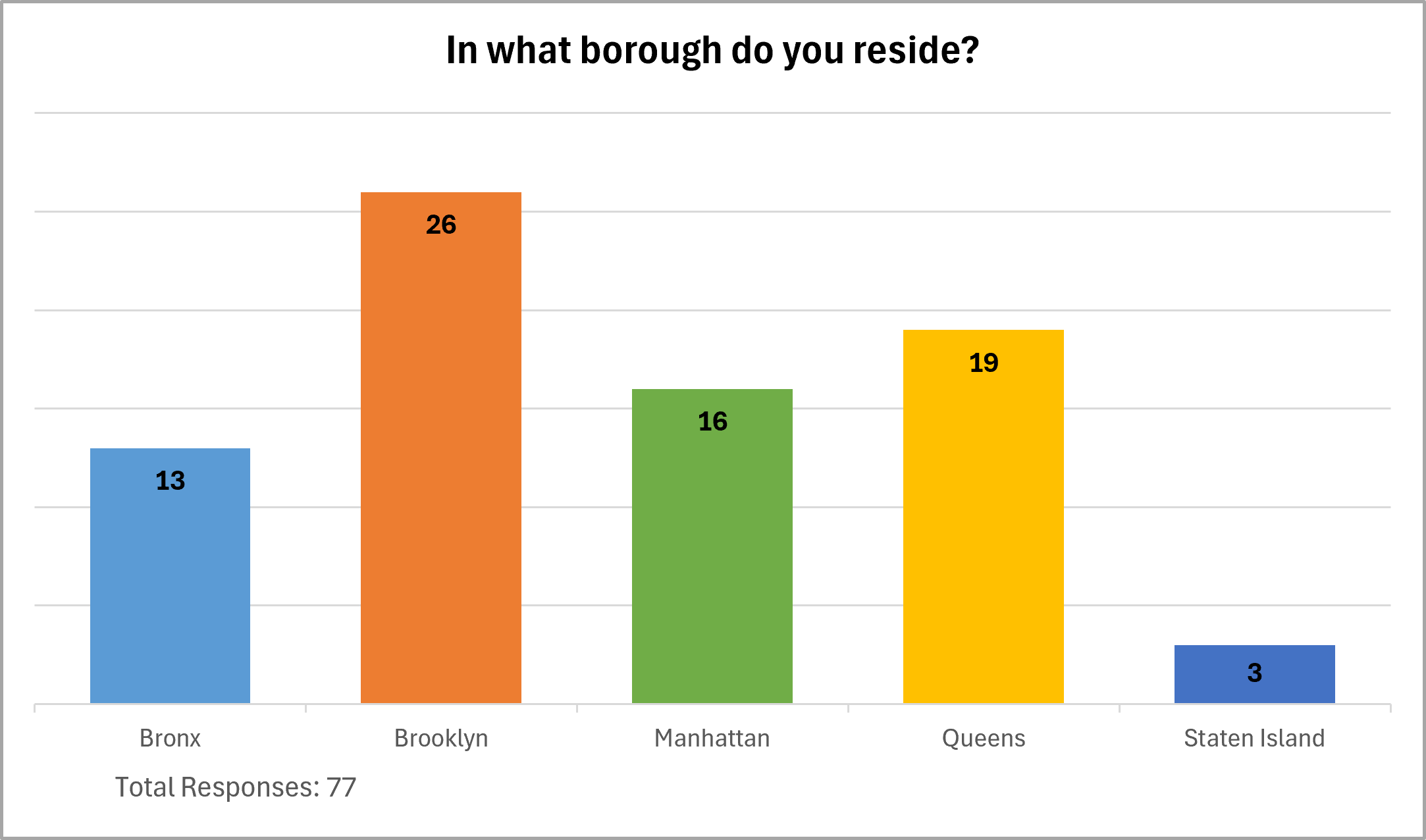
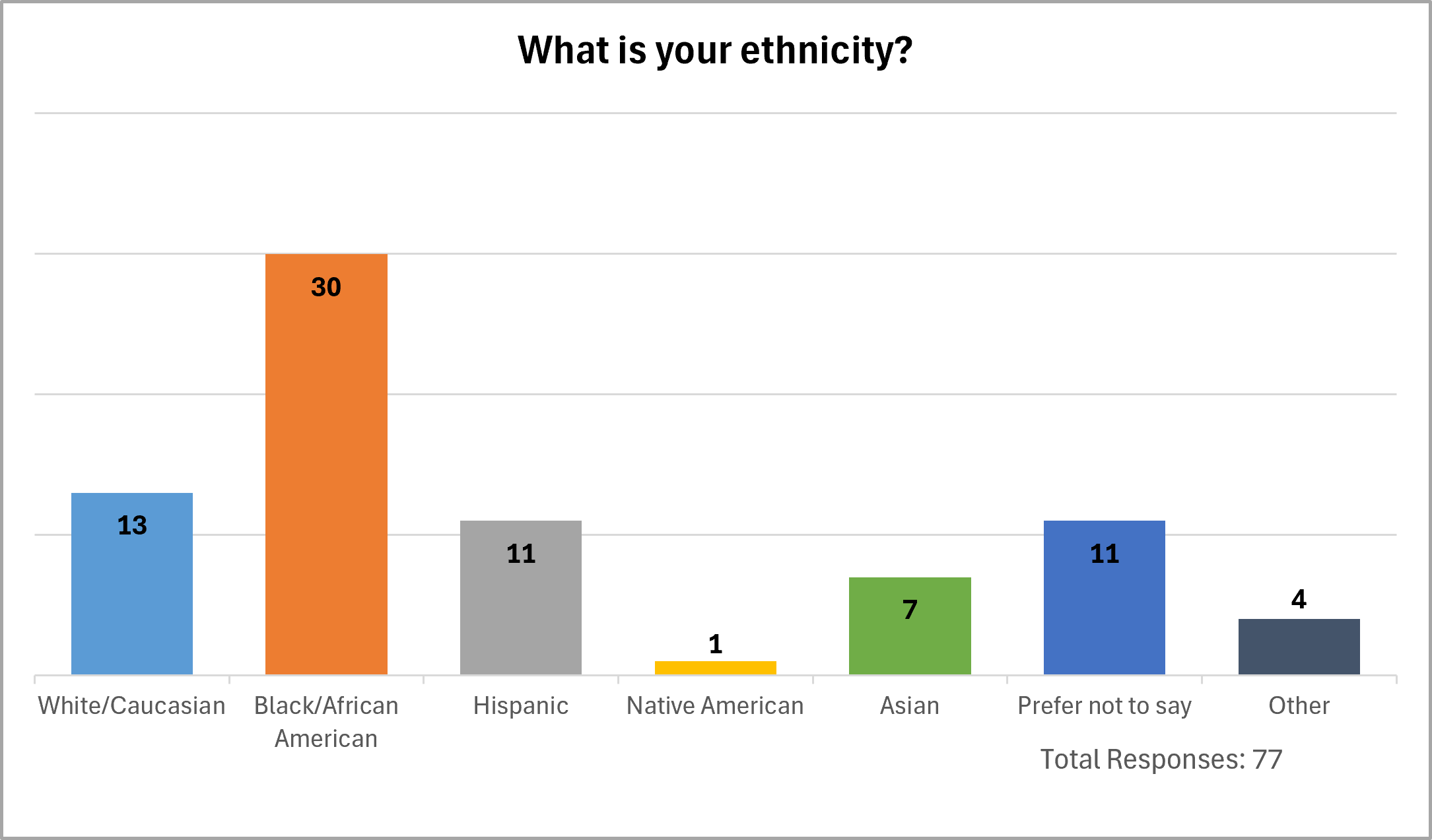
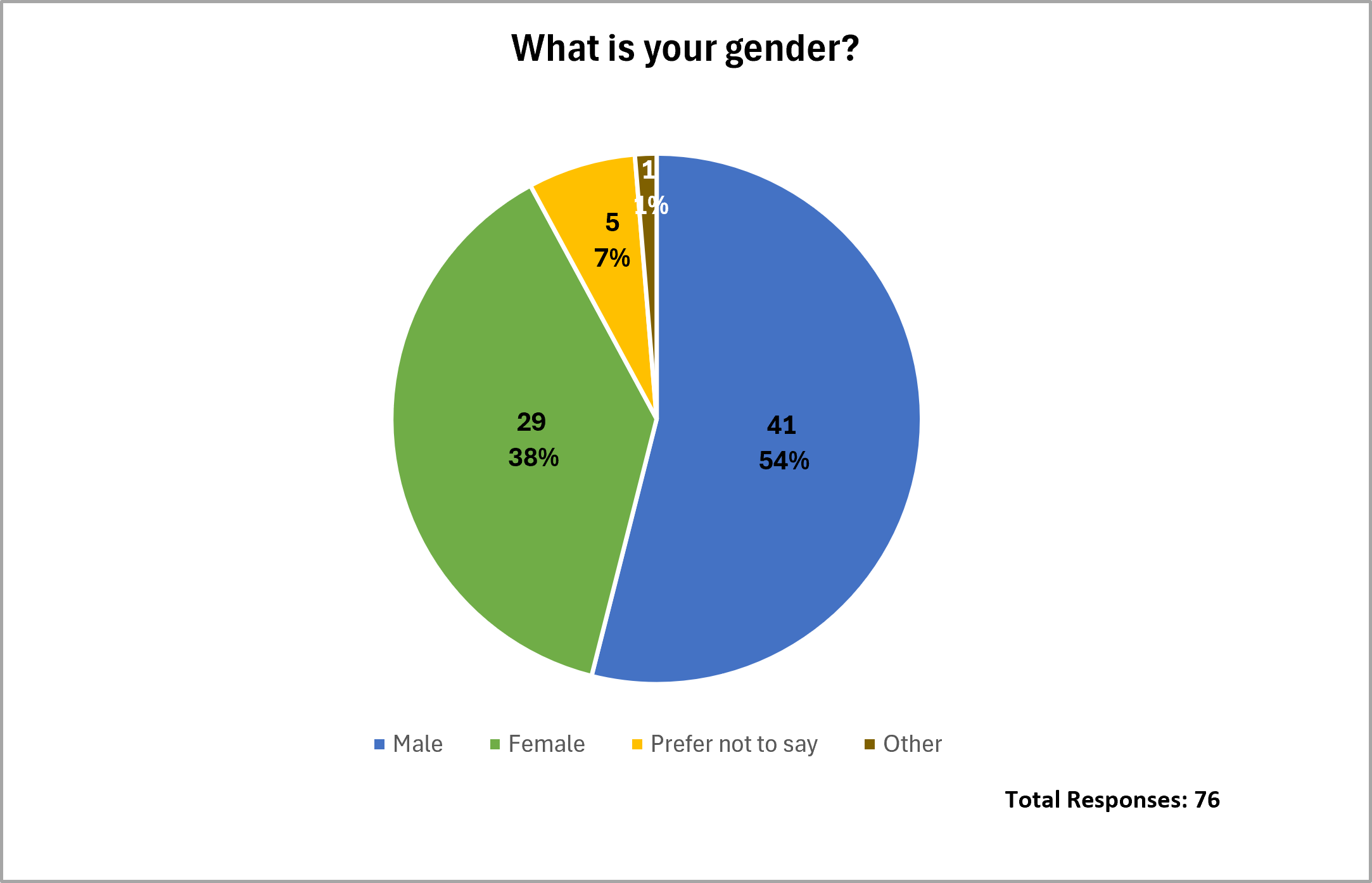
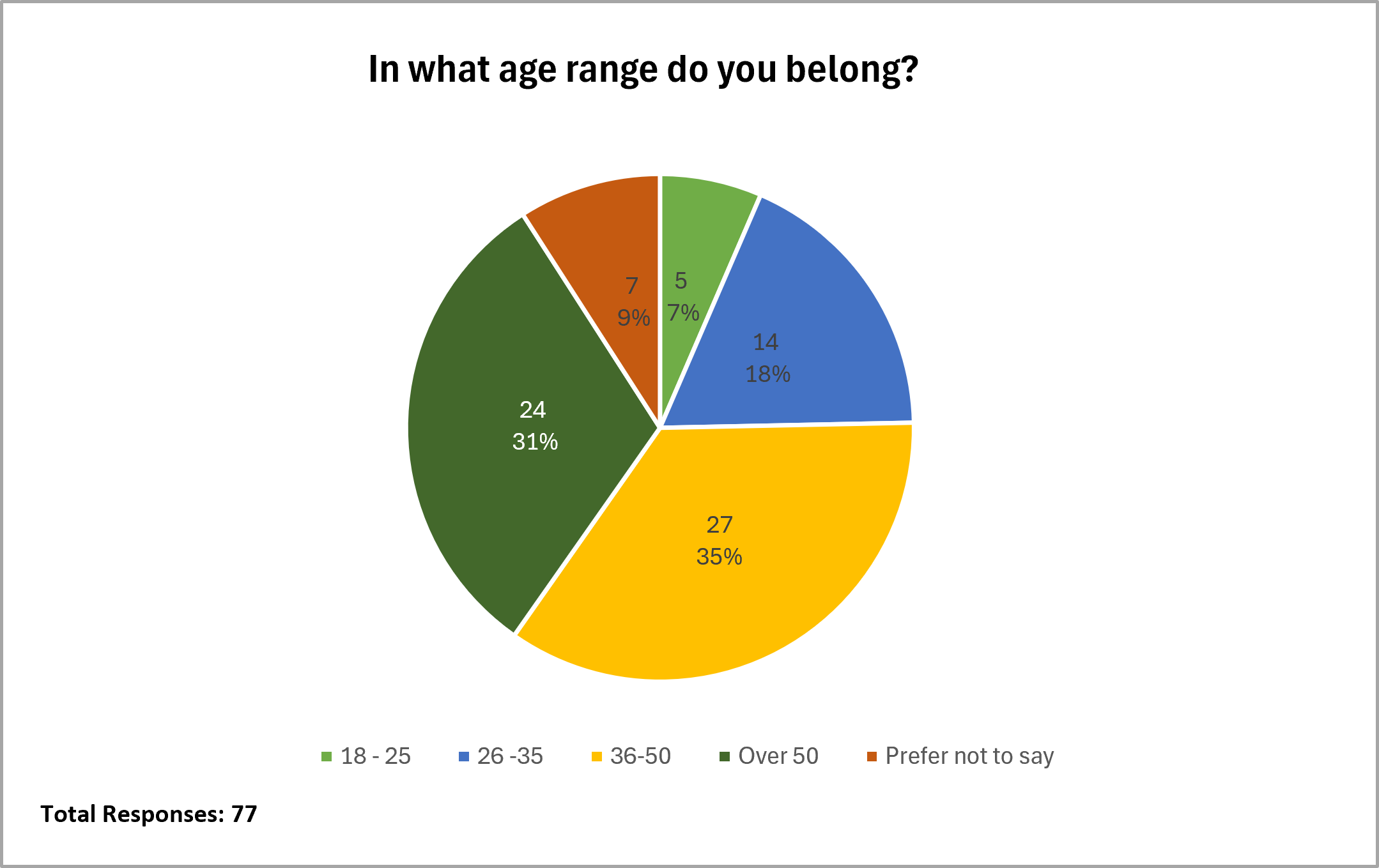
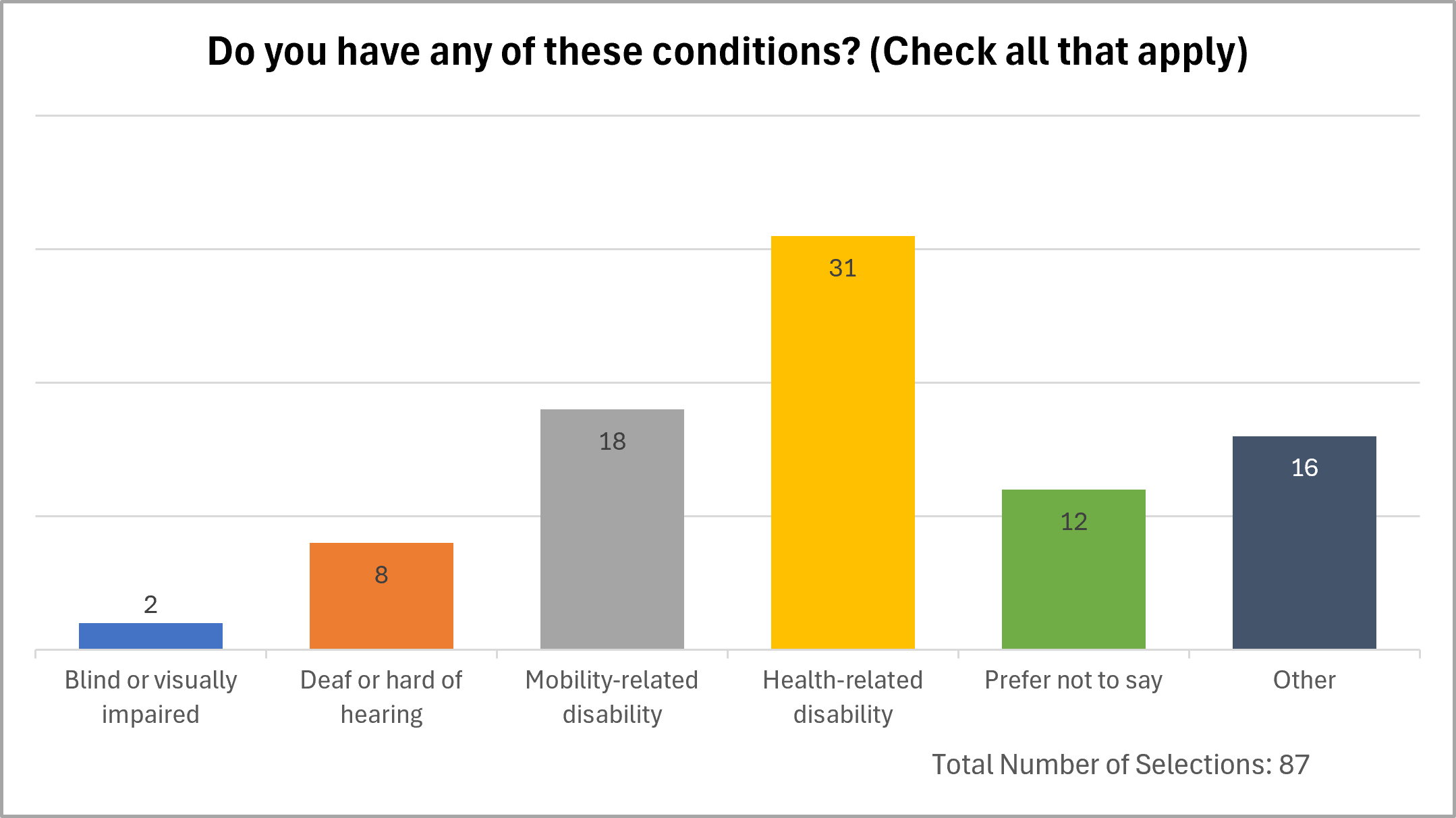
Demographics of Survey Respondents
Endnotes
[1] The labor force represents all individuals who are 16 years of age or older and who are either employed or actively seeking work. Employed refers specifically to those currently working. Unemployed refers to those actively looking for jobs.
[2] Section 55-A requires that a certain number of positions be identified the duties of which can be performed by persons with disabilities, that those positions be classified as non-competitive, and that persons with disabilities appointed to them be treated “as if” they were employed in the competitive class. 55-a Program – Department of Citywide Administrative Services
[3] ACCES-VR services are offered through the New York State Education Department to assist people with disabilities to achieve and maintain employment and to support independent living. Goodwill/GoodTemps is a nonprofit organization that helps individuals with disabilities and other barriers to employment to gain independence through the power of work.
[4] Workforce1 is a service that connects qualified candidates 18 and older to job opportunities across New York City.
[5] MOPD has a tracker to track job seekers on the waiting list.
[6] MOPD pre-screens candidates’ qualifications to determine if they meet job criteria. This determination is based on jobseekers’ skills, experience, and educational background. Career advisors also review the application materials (resume and cover letter) and compare it to the job description provided by the employer for an additional assessment.
[7] NY SCION staff were tasked with training staff at SBS’ 18 Workforce1 Career Centers to better serve and prepare individuals with disabilities for careers. In November 2024, NY SCION staff were transferred from MOPD to SBS.
[8] Many agencies contribute directly and indirectly towards this goal. For example: the Department of Youth and Community Development (DYCD) have its own workforce development programs; the Department of Citywide Administrative Services (DCAS) administers the 55-A program; and the Mayor’s Office for Economic Opportunity (NYC Opportunity), in partnership with MOPD, SBS, and NYC Talent, recently issued a request for proposals for co-designing and delivering inclusive employment programs with and for people with disabilities.
[9] WeCare program offers services to cash assistance clients with barriers to self-sufficiency.
[10] The auditors also reviewed information from FY2021 through FY2023 to perform trend analysis.
[11] This initiative exceeded its original target of placing 2,500 individuals with disabilities.
[12] Center for an Urban Future. Access Opportunity Expanding Economic Opportunity for New Yorkers with Disabilities for the Post-Pandemic City, issued March 2022.
[13] These figures are self-reported by MOPD and could not be verified by auditors.
[14] This is the most recent publicly available information obtained by the auditors for this review.
[15] The audit team did not test this new system.
[16] Demographic information was obtained from ATWORK database.