Executive Summary
New York City’s urban forest, comprising more than 7 million trees across streets, parks, and private land, is foundational to the City’s climate resilience, public health, economy and quality of life. As extreme heat intensifies and climate risks accelerate, tree canopy is increasingly recognized not as an amenity, but as essential infrastructure.
Over the past two decades, New York City has made measurable progress in expanding its tree canopy, reaching approximately 23 percent coverage citywide as of 2021. In NYC, tree canopy is defined as the layer of leaves, branches, and stems from trees that cover and shade the ground when viewed from above.[1] Landmark initiatives such as MillionTreesNYC, a campaign led by NYC Parks and New York Restoration Project, demonstrated that coordinated public investment, mayoral leadership, and partnerships can deliver large-scale gains. More recently, Local Law 148 of 2023 established a framework for a comprehensive Urban Forest Plan and set a goal of achieving 30 percent canopy coverage.
However, current conditions suggest an opportunity to better align the City’s long-term ambitions, as spelled out in the 2026 Urban Forest Plan, with the resources and systems needed to achieve them. Recent gains in canopy coverage have been driven largely by the growth and maturation of existing trees, underscoring the importance of sustained maintenance alongside new planting efforts. At the same time, evolving needs around maintenance capacity, interagency coordination, and stewardship of trees on private land will play an important role in supporting continued progress. Critically, neighborhoods with the lowest canopy coverage continue to face the highest levels of heat vulnerability and associated health risks.
From a fiscal and risk perspective, treating trees as infrastructure ensures that every dollar spent generates tangible returns, reducing stormwater management costs, energy demand, and health impacts, while also safeguarding property and public safety.
As New York City advances a long-term vision for expanding to 30% tree canopy, this report complements that work by centering on implementation: what will it take to meet those goals in practice. This report underscores the resources, staffing levels, and sustainable funding mechanisms necessary to ensure canopy expansion is not only aspirational, but achievable.
This report finds that:
- New York City’s urban forest has expanded in recent years, reflecting sustained investment and prior initiatives, though additional progress and resources will be needed to fully align with the City’s long-term climate and equity goals as set in LL 148, Cool Neighborhoods NYC, the 2026 Urban Forest Plan, and broader climate commitments.
- Long-term canopy growth depends not only on planting new trees, but also on consistent maintenance and the protection of existing trees across the five boroughs.
- Patterns of urban heat and tree canopy distribution are closely related, highlighting equity issues and opportunities to further target investments in neighborhoods facing the greatest climate risks. Extensive-canopy areas are two times or more above the City average; whereas least-canopy areas are well below half the average – difference between neighborhoods can exceed 30–40 percentage points of canopy cover.[2]
- As the urban forest continues to grow, existing funding and governance structures may need to evolve to support expanded maintenance needs and cross-agency coordination.
- To build on recent progress and advance toward the City’s 30 percent canopy goal, New York City can continue to shift toward a comprehensive stewardship approach, one that pairs tree planting with sustained maintenance, coordinated planning across agencies, and long-term investment aligned with the scale of the urban forest.
Key Findings
- Canopy growth has been driven primarily by existing trees, not new planting.
While tree planting programs remain important, recent data indicate that increases in canopy coverage are largely attributable to the maturation of existing trees.[3] This reflects both the long-term nature of canopy growth and the importance of early-stage survival. Without sufficient maintenance, newly planted trees do not contribute meaningfully to canopy expansion. Further, new plantings below a certain height are not yet tall enough to be captured in LiDAR based canopy data. - Maintenance gaps are undermining the health and longevity of the urban forest.
Tree care, including pruning, watering, and soil management, is essential, particularly in the first years after planting. Yet chronic underfunding and staffing reductions have limited the City’s ability to provide consistent care. Backlogs in pruning and inspection requests, as well as elevated early tree mortality rates, indicate that current maintenance capacity is insufficient to sustain canopy growth. - Tree canopy is unevenly distributed and closely aligned with heat vulnerability.
Neighborhoods with less canopy coverage, particularly in parts of the South Bronx and Central Brooklyn, experience higher surface temperatures, greater exposure to extreme heat, and elevated rates of heat-related illness. These disparities reflect longstanding inequities in land use, investment, and environmental conditions. - A significant share of canopy is located on private land with minimal protections.
The NYC Department of Parks & Recreation manages only 53% of the city’s 42,656-acre tree canopy. Approximately one-third of New York City’s tree canopy is located on private property. However, there are few regulatory requirements or technical assistance to preserve or replace trees, particularly in the context of new development. This creates a structural risk of canopy loss that is not offset by public planting efforts. - Governance of the urban forest is fragmented across agencies.
Multiple agencies, including NYC Parks, DOT, DEP, DOE, and NYCHA, manage different components of the urban forest, often without shared metrics or coordinated planning. This fragmentation contributes to inefficiencies in planting, maintenance, and capital planning. - Funding levels are not aligned with canopy goals.
While the City has committed capital funding for tree planting and green infrastructure, baseline operating funding for maintenance and staffing has not kept pace. As the urban forest grows, the cost of maintaining it increases, requiring a commensurate expansion in resources to ensure progress is durable and equitable
Background
New York City’s urban forest has evolved from a largely aesthetic feature to a core component of the City’s environmental and public health infrastructure. Historically characterized as a “concrete jungle,” the City has, over the past two decades, made significant investments in greening initiatives that have expanded tree cover and improved ecological performance. As of 2021, New York City has 23.4% canopy cover, according to The Nature Conservancy. From 2017-2021, New York City saw a 1.2% total increase in tree canopy cover. Most of this growth came from existing trees. (Fig. 1)
The MillionTreesNYC initiative,[4] launched in 2007, marked a turning point by establishing a clear, measurable goal and mobilizing both public and private resources. By 2017, the City had successfully planted one million trees, demonstrating the feasibility of large-scale canopy expansion when supported by strong leadership and funding. Building on this legacy, the city’s Borough Presidents, led by then-Manhattan Borough President and current NYC Comptroller Mark Levine, called for a “Million More Trees” initiative in 2022. This expanded vision sought to reach 30% canopy cover by 2030, specifically targeting heat equity by prioritizing new plantings in historically underserved neighborhoods most vulnerable to the urban heat island effect.
Today, the urban forest is typically understood across three categories: street trees in the public right-of-way, natural area forests in parks, and trees on private and institutional land. Together, these systems provide a wide range of ecosystem services, including air pollution removal, stormwater absorption, carbon storage, and temperature regulation.
Local Law 148 of 2023[5] builds on this legacy by requiring the development of a comprehensive Urban Forest Plan and establishing a pathway toward 30 percent canopy coverage. More recently, with the release of the 2026 Urban Forest Plan, the City has shifted the canopy goal from 2030, as outlined in PlaNYC (2023), back by ten years to 2040. However, these guidelines are primarily procedural and do not on their own guarantee the funding, staffing, or enforcement mechanisms needed to achieve the goals.
Figure 1: Vegetative Cover
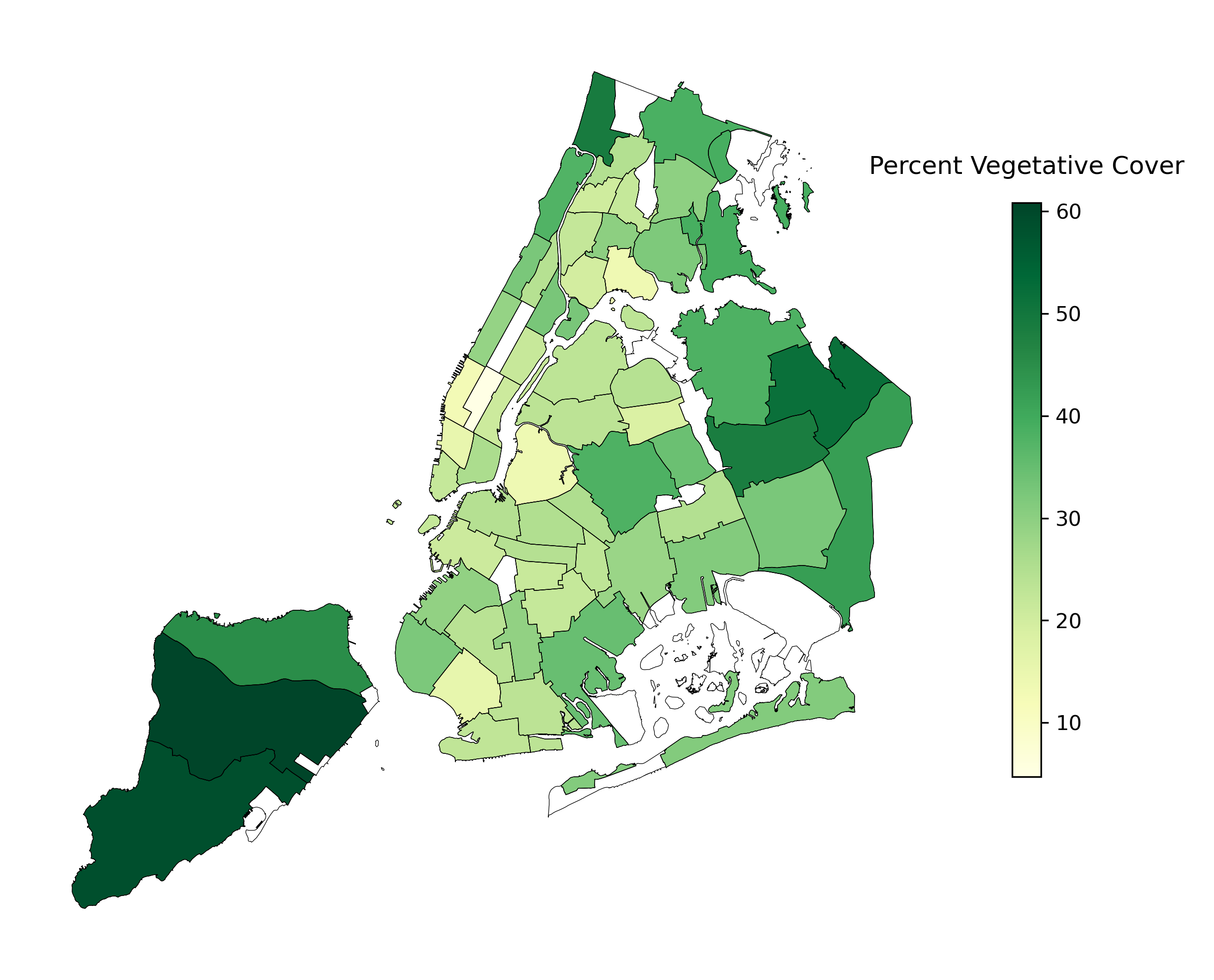
Portion of land covered by trees, grass, or other plants.
Source: NYC Environmental Health and Data Portal. https://a816-dohbesp.nyc.gov/IndicatorPublic/data-explorer/active-design/?id=2143
The Role of Tree Canopy in Climate and Public Health
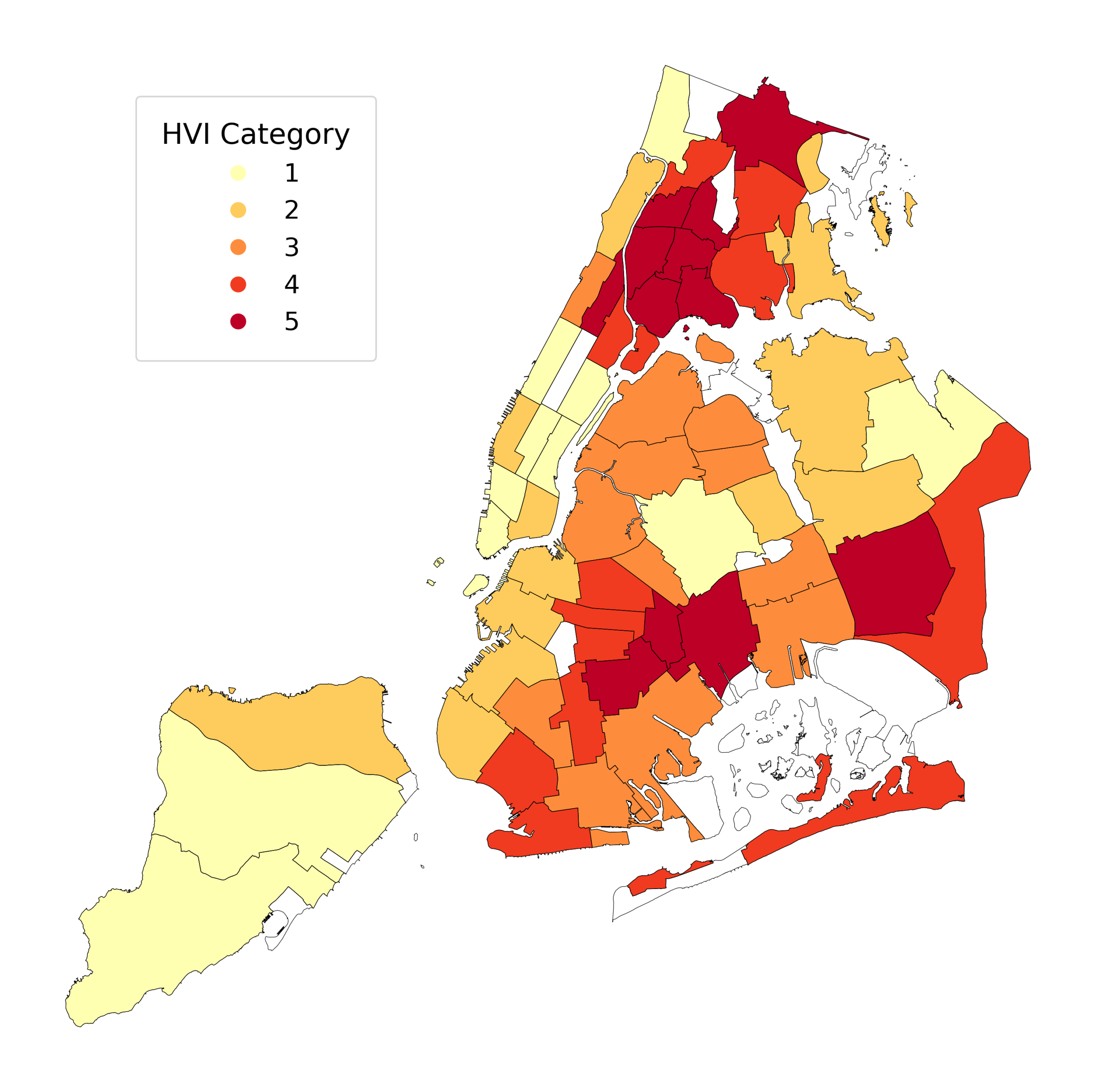
Tree canopy is one of the most effective tools available to cities to mitigate the impacts of extreme heat. In densely built environments, the urban heat island effect can drive temperatures significantly higher than in surrounding areas, with serious implications for public health. This is reflected in the Heat Vulnerability Index (HVI), which measures a community’s risk to heat-related illness or death, combining environmental exposure (temperature, lack of green space) with social factors (poverty, age, isolation). It identifies neighborhoods with high vulnerability by assessing the interaction of heat exposure, sensitivity, and adaptive capacity (Fig. 2)
Figure 2: Heat Vulnerability Index (HVI)
Source: NYC Department of Mental Health and Hygiene. https://a816-dohbesp.nyc.gov/IndicatorPublic/data-explorer/climate/?id=2411
Research on urban heat island effects shows that neighborhoods with abundant tree canopy can be dramatically cooler than those with little vegetation, often by double-digit temperature differences on hot days, amplifying heat stress in less shaded areas of New York City.[6] Trees provide cooling through shade and evapotranspiration, reducing ambient temperatures and improving thermal comfort at the street level. These benefits are particularly important in neighborhoods with high concentrations of heat-vulnerable populations, including older adults, low-income residents, and communities of color.
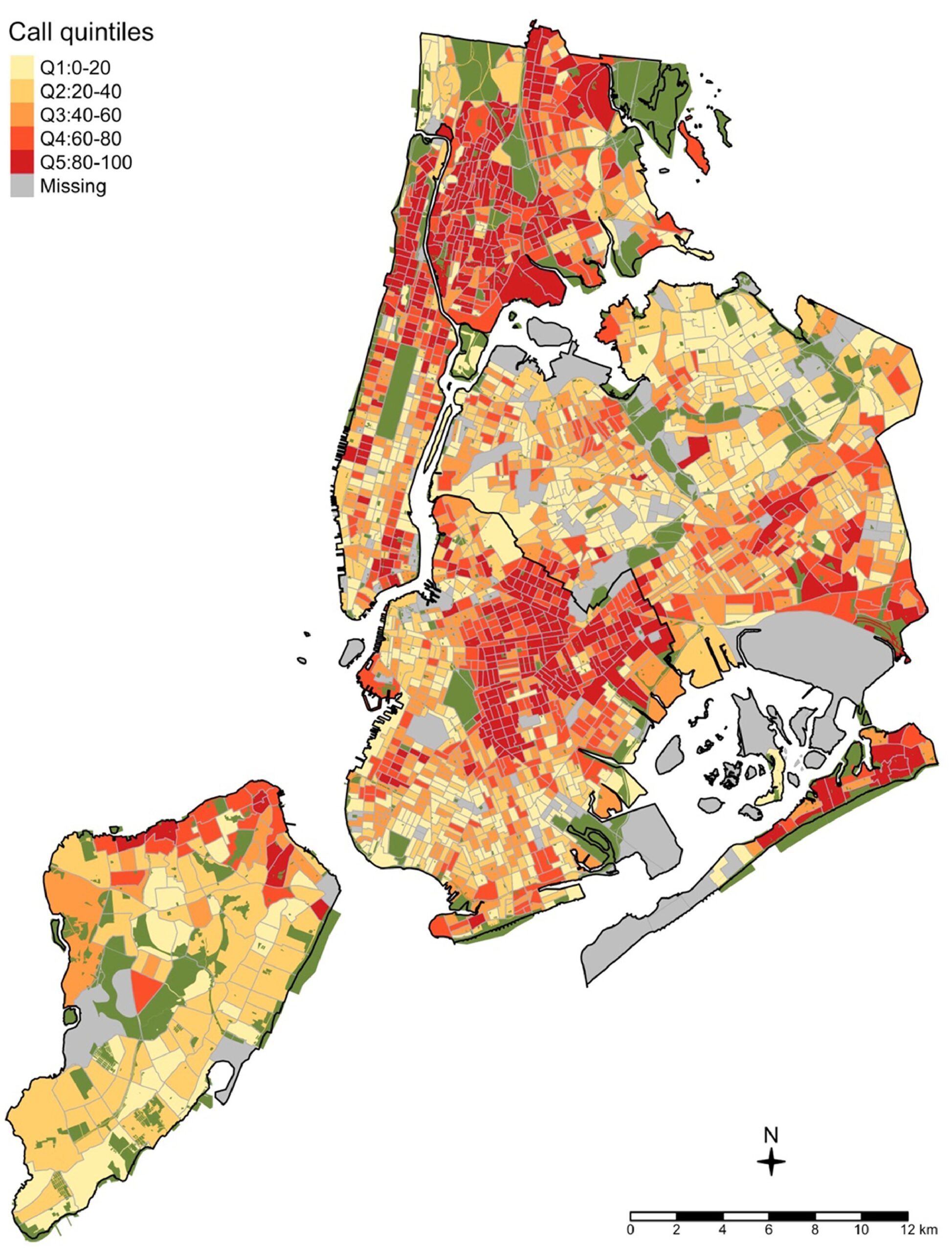
The threat of brownouts in neighborhoods with a high HVI further highlights the necessity of protecting the urban tree canopy. In these areas, air conditioning surges during heatwaves create concentrated loads that strain the electrical grid. Analysis of NYC’s 311 data from 2014 to 2022 reveals that spatial clusters of power outage complaints are most prevalent in census tracts with high energy burdens, lower-income households, and high percentages of people of color. The areas with a high number of calls, represented in dark red, are located in Northern Manhattan, Southern Bronx, Northern and Central Brooklyn, Southeastern Queens and Northern Staten Island.[7] (Fig. 3)
Strategic shading can reduce a single home’s cooling costs by 20% to 30%. If an entire neighborhood has a dense canopy, the “peak demand” (the highest amount of electricity used at once) can drop by up to 10%, which is often the difference between a stable grid and a brownout.[8]
Beyond heat mitigation, trees contribute to improved air quality, reduced stormwater runoff, and enhanced mental health outcomes. As climate change intensifies, these benefits will become increasingly critical, underscoring the need to integrate tree canopy into broader resilience, air quality and public health strategies.
Figure 3: Concentration of 311 calls for power outages
Source: Marcotullio et al. analysis of NYC 311 dataset. https://www.sciencedirect.com/science/article/pii/S2210670723005437
Disparities in Tree Canopy, Urban Heat, and Asthma
South Bronx, Central Brooklyn, and Southeast Queens consistently have the highest heat vulnerability. These areas align with those with less canopy cover and more impervious surfaces. In the South Bronx, tree canopy ranges from 8-12% and in Central Brooklyn, it ranges from 11-15%. Urban heat worsens air pollution and particulate exposure, and several of the neighborhoods with the highest HVI are also the epicenters of the youth asthma crisis in New York, including East and Central Harlem, Hunts Point/Mott Haven, and Highbridge/Morrisania (Fig. 4 and Fig. 5).[9]
Figure 4: Top Neighborhoods with Asthma Emergency Department Visits per 10,000 children (Ages 5–17) – 2023
| Rank | Neighborhood | Borough | Asthma ED Visits per 10,000 children (Ages 5–17) |
|---|---|---|---|
| 1 | East Harlem | Manhattan | 355.8 |
| 2 | Central Harlem | Manhattan | 345.8 |
| 3 | Highbridge / Morrisania | Bronx | 287.9 |
| 4 | Hunt Point/Mott Haven | Bronx | 266.2 |
| 5 | Bedford Stuyvesant/Crown Heights | Brooklyn | 259.1 |
Source: New York City Department of Health, Environment & Health Data Portal. Asthma data. Asthma emergency department visits (age 5 to 17)
Figure 5: Asthma Emergency Department Visits (age 5-17) – 2023
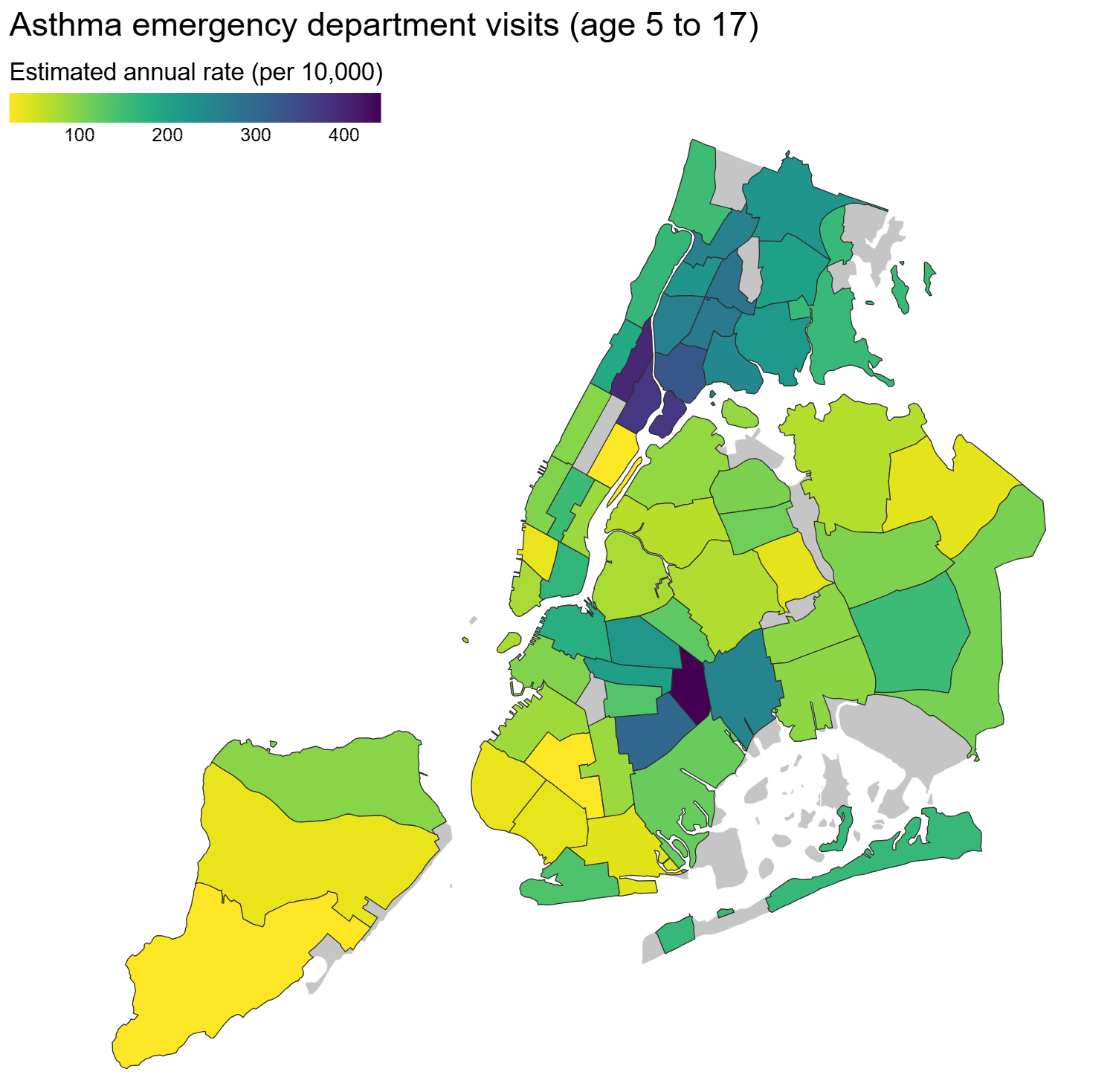
Source: New York City Department of Health, Environment & Health Data Portal. Asthma data. Asthma emergency department visits (age 5 to 17)
Case Study: East Harlem – Coordinated Investment and Canopy Growth
East Harlem demonstrates how sustained, place-based investment can support meaningful gains in urban canopy over time. Over the past two decades, the neighborhood has benefited from targeted street tree planting, the preservation and expansion of community gardens, and major shoreline investments, including improvements to the Harlem River Greenway.
Tree canopy in East Harlem remains below the citywide average of approximately 23 percent, but has grown from roughly 12-15 percent in the early 2000s to closer to 18-20 percent today,[10] reflecting steady, incremental progress. The neighborhood is also home to dozens of community gardens, which contribute to localized cooling, green space access, and community stewardship. Community-based stewardship has been critical to rebuilding tree canopy and neighborhood green space. Organizations like Harlem Grown have transformed vacant lots into urban farms and green hubs that engage youth and residents in hands-on environmental care, while New York Restoration Project expands and maintains tree canopy and public green spaces, mobilizing volunteers and planting thousands of trees in underserved neighborhoods
Despite these gains, East Harlem continues to face elevated heat vulnerability, underscoring the need for continued investment in both canopy expansion and long-term maintenance. At the same time, its trajectory highlights how coordinated public investment and community-led stewardship can improve environmental conditions in historically underserved neighborhoods.
The Economic Value of Tree Canopy
Beyond their environmental and public health benefits, New York City’s trees provide substantial and measurable economic value. According to analysis by the U.S. Forest Service, the City’s urban forest currently stores approximately 1.2 million tons of carbon, equivalent to 4.2 million tons of carbon dioxide, representing an estimated value of $153 million.[11] This is calculated using a metric knows as the “Social Cost of Carbon.” This is an estimate, in dollars, of the economic damage caused by emitting one additional ton of carbon dioxide into the atmosphere. When trees store or sequester carbon, they are essentially providing a free service by keeping that CO2 out of the air. The value of the tree is the cost of the damage it prevented.
The urban forest also plays a critical role in improving air quality. Trees in New York City remove approximately 1,100 tons of air pollutants annually, delivering an estimated $78 million in public health and environmental benefits each year. These improvements are particularly significant in densely populated neighborhoods where air pollution contributes to respiratory illness and other adverse health outcomes.
in direct savings…
According to calculations based on the U.S. Forest Service, New York City’s urban forest provides substantial annual environmental and financial benefits. Trees in the city intercept over 1.26 billion gallons of stormwater each year, valued at approximately $12.5 million, helping reduce flooding and pressure on the sewer system. They also conserve roughly 758 million kWh of energy annually, worth about $95.6 million, by shading buildings and reducing cooling costs. In addition, trees remove over 1.4 million pounds of air pollutants each year, a service valued at $7.5 million. Taken together, these ecosystem services provide an estimated $120.6 million in total annual benefits for New York City.[12] That is the value for trees maintained by NYC Parks on streets and in City parks. The ecosystem services value for the full urban forest, on public and private lands, is closer to $260 million.[13]
$5.7 billion
Factoring in carbon storage, air pollution removal, energy savings, and runoff reduction, the compensatory value of New York City’s urban forest is estimated at $5.7 billion.[14] These figures underscore that tree canopy is not only a climate and public health asset, but also a significant economic resource. Strategic investment in the protection and maintenance of the urban forest can yield substantial returns, supporting both fiscal efficiency and long-term resilience.
Public Perception and Community Engagement
Public engagement conducted as part of the City’s Urban Forest Plan process, and related initiatives, indicates strong and consistent support among New Yorkers for expanding and maintaining tree canopy. The Mayor’s Office of Climate and Environmental Justice, NYC Parks, City Parks Foundation/Partnership for Parks, Natural Areas Conservancy, and The Nature Conservancy organized community engagement activities for the Urban Forest Plan, along with promoting a citywide questionnaire. They foundthat residents prioritized not only increased tree planting, but also improved maintenance, equitable distribution, and long-term stewardship of the urban forest.
At the same time, participatory efforts such as the City’s decennial tree census and digital tools like the NYC Tree Map demonstrate a high level of public engagement, with thousands of residents contributing to tree inventories and stewardship activities. These efforts suggest that New Yorkers view trees as integral to neighborhood quality of life and are willing to play an active role in their care. However, the City does not currently maintain a standardized, recurring survey of public perceptions related to tree canopy, maintenance, or access. Establishing such a tool could help better align policy, funding, and operations with community needs.
How New York Measures Up Globally
Cities around the world illustrate how tree canopy directly shapes urban heat outcomes. Atlanta, often called the “city in a forest,” has one of the most extensive urban tree canopy coverages in the U.S. (around 45–50%), helping moderate extreme heat despite a warming climate. Singapore has taken this further with a deliberate “City in Nature” strategy, integrating dense greenery, green roofs, and vertical forests to reduce heat island effects in a highly built environment. Medellín has pioneered “green corridors,” planting thousands of trees and vegetation along streets and waterways, reducing local temperatures by 3.6 degrees Fahrenheit in targeted neighborhoods.[15] By contrast, New York City has a more uneven canopy, with lower coverage in historically disinvested areas that experience the highest heat vulnerability, highlighting both the equity and climate opportunity of expanding urban forestry.
Barriers to Sustained Canopy Growth
1. Maintenance and Workforce Constraints
The long-term success of tree planting efforts depends on sustained maintenance, particularly in the early years of a tree’s life. However, current maintenance capacity is constrained by staffing shortages and limited funding. In fact, in recent fiscal years, the Department of Parks and Recreation has missed its annual target of 65,000 street trees pruned, with around 54,000 trees pruned in Fiscal Year 2024. While the target improved in Fiscal Year 2025, currently, 274 positions in forestry, horticulture, and park enforcement are funded only by temporary, one-year contracts which can make it challenging to meet maintenance backlogs.
Multiple storm events in recent years have led to an elevated number of fallen and hazardous trees, which takes priority away from routine maintenance and new planting requests. The last six years have seen more than 200,000 requests for damaged trees (Fig. 6), with the greatest number of requests coming from Queens and Brooklyn (Fig. 7). NYC Parks has efficiently responded to damaged trees within a median time of eight days; however, new plantings take considerably longer (Fig. 8). This is a reflection of a shifting strategy for NYC Parks for new tree planting. New street trees are planted on a cyclical basis, prioritizing the most heat-vulnerable neighborhoods first. Parks does not take requests for new street trees; alternatively, each neighborhood is inspected and planted sequentially. NYC Parks’ Neighborhood Tree Planting program aims to plant the entire city on a 9-year cycle.
Figure 6: 311 Tree-Related Service Requests by Problem Type, 2020-2026 (April)
Source: NYC Open Data – 311 Service Requests from 2020 to Present https://data.cityofnewyork.us/Social-Services/311-Service-Requests-from-2020-to-Present/erm2-nwe9
Figure 7: 311 Tree-Related Service Requests by Borough, 2020-2026 (April)
Source: NYC Open Data – 311 Service Requests from 2020 to Present. https://data.cityofnewyork.us/Social-Services/311-Service-Requests-from-2020-to-Present/erm2-nwe9
Figure 8: Median NYC Parks Response Times
Source: NYC Open Data – 311 Service Requests from 2020 to Present. https://data.cityofnewyork.us/Social-Services/311-Service-Requests-from-2020-to-Present/erm2-nwe9
2. Fragmented Governance and Coordination
The absence of a centralized management framework for the urban forest results in inconsistent practices and missed opportunities for coordination. For example, tree planting is often not integrated into early stages of capital project planning, leading to higher costs and delays. Similarly, permitting processes for street trees can be complex and time-consuming due to overlapping agency responsibilities. It is important to note that zoning requirements have evolved providing a clear framework supporting the expansion of the urban forest. Under the Street Tree Planting Text Amendment (2008), any new building construction or substantial enlargement, defined as an increase of more than 20% of floor area, must include the installation of street trees along the sidewalk fronting the property. This requirement ensures that private development contributes directly to the city’s tree canopy, enhancing neighborhood greenery, improving air quality, mitigating stormwater runoff, and creating more shaded, pedestrian-friendly streets.
3. Limited Protection for Existing Trees
Protection for existing trees, particularly on private land, remains limited. Development activity can result in the removal of mature trees without adequate replacement, reducing overall canopy coverage and undermining long-term goals. Roughly one-third of New York City’s tree canopy, about 35 percent, is located on private property, including single-family homes, multifamily buildings, and institutional land. There is no broad requirement for private property owners to preserve or replace trees removed during development (outside of certain zoning, waterfront, or natural area protections). This is an opportunity for the City to consider a framework of incentives and enforcement to ensure long-term stewardship of trees on private property.
4. Funding Gaps and Structural Constraints
The cost of planting a single street tree can exceed $3,000, with additional costs for maintenance over time. While capital funding has supported planting initiatives, operating funding for maintenance has not kept pace. This imbalance creates a structural challenge: as the number of trees increases, so too does the maintenance burden.
New York City is a low proportional investor in parks, especially in operations and maintenance, where the gap with peer cities is very apparent (Fig. 9). New York City currently does not have a dedicated funding stream, unlike other major U.S. cities. Chicago for example has a separate taxing authority via the Chicago Park District and Los Angeles has strong dedicated funding streams through voter approved bonds. Some cities treat parks, and as such trees, like a core public utility with its own revenue stream, whereas NYC historically treats parks like a discretionary agency competing for funds every year.[16]
Figure 9: Parks Spending as Share of City Budgets
Source: City budget documents and park agency reports for New York City, Los Angeles, Chicago, San Francisco, Seattle, and Minneapolis; author’s analysis
Recommendations
1. Establish Maintenance as a Core Budget Priority
The City should align funding with the full lifecycle costs of the urban forest by significantly increasing baseline operating support for NYC Parks. This includes a focus on workforce stabilization such as baselining temporary contracts in order to retain staff long-term and rehiring frontline maintenance workers, allowing the city to clear the backlog of uninspected tree conditions and open work orders that compromise tree health and safety around damaged trees. Further, this report recommends expanding staffing for pruning, inspection, and care, as well as investing in workforce development programs to build long-term capacity in forestry and horticulture. These pillars are articulated in the “1% for Parks” campaign as laid out by the Play Fair for Parks Coalition, a coalition of environmental and labor advocates.[17] The shift from 2030 to 2040 canopy goal reinforces the need for dedicated baseline funding, ensuring that long terms goals are met with year-over-year investment.
2. Integrate Urban Heat into Canopy Planning
Tree planting and maintenance efforts should be explicitly guided by heat vulnerability data, with priority given to neighborhoods facing the greatest climate risks. Establishing “cooling corridors” and targeting investments in high-heat areas can maximize public health benefits and advance equity goals.
3. Strengthen Protections for Existing Trees
The City should explore policy mechanisms to preserve mature trees, including requirements for replacement or mitigation when trees are removed during development. Expanding protections to private land will be critical to preventing net canopy loss.
4. Create a Coordinated Governance Framework
A centralized urban forest management strategy should be established to align the work of multiple agencies. This includes standardizing data collection, integrating canopy goals into capital planning, and streamlining permitting processes. This level of coordination could address disparities by ensuring that climate budgeting examines which investments and interventions are present and in what forms, and to discern which neighborhoods remain more exposed and may be in need of additional intervention.
5. Develop Sustainable and Equitable Funding Models
In addition to advancing the critical goal of dedicating greater resources in the City budget to parks operations and maintenance, the City should explore complementary funding mechanisms, such as dedicated fees, bonds, or development contributions, while ensuring that these tools supplement, rather than replace, baseline public investment. The Center for an Urban Future (CUF) has proposed modernizing New York City’s park concessions system to generate more revenue by simplifying the bureaucratic approval process and allowing for more diverse, community-scale businesses like local cafes or recreational rentals. CUF argues for several measures to create more sustainable funding such as reducing the time it takes to launch a concession (which can currently take years), expanding the scope of concessionaires, and directing a portion of new and existing parks concessions revenue be directed into a dedicated parks maintenance fund.
6. Expand Workforce Development in Urban Forestry and Horticulture
Sustaining and expanding New York City’s urban forest will require a stronger and more specialized workforce, particularly in horticulture, arboriculture, and ecological stewardship.
To ensure the long-term health of NYC’s urban forest, the City should avoid undercutting safety and professional standards, as well as acknowledge that chronic understaffing creates its own risks. A strategic balance can be found by expediting the hiring process to fill critical vacancies more quickly, while simultaneously expanding “bridge programs” and vocational partnerships. These programs serve as a vital pipeline, providing rigorous, specialized training that equips entry-level workers to meet the city’s high technical standards without compromising on the quality of care or public safety.
The City can build long-term capacity by investing in workforce development pipelines that introduce students and young people to careers in tree care and green infrastructure. This includes expanding partnerships with public schools to incorporate hands-on learning in gardening, forestry, and environmental science, as well as strengthening pathways through programs such as summer youth employment and career and technical education. Providing early exposure to these fields can both support maintenance needs and create accessible, place-based career opportunities, particularly for young people in neighborhoods with high climate vulnerability.
Over time, a more robust and locally rooted workforce can improve tree health outcomes while advancing the City’s broader goals around equity, climate resilience, and green job creation.
Conclusion
New York City’s urban forest is not just a collection of trees, it is critical infrastructure that provides measurable cost savings, mitigates environmental and public health risks, and strengthens the City’s resilience. The policy framework to expand and maintain canopy, including the 2026 Urban Forest Plan and advocacy by some Forest for All NYC members, establishes a strong foundation. Yet without sustained long-term investment, coordinated governance, milestones, and strategic long-term planning, the City risks leaving these benefits unrealized and unevenly distributed across neighborhoods.
A resilient, equitable urban forest requires a comprehensive approach that prioritizes sustained baseline funding, adequate staffing, planning across agencies, stewardship on private lands, and ensures all New Yorkers share in the protection and benefits of this vital system.
Methodology
This report synthesizes quantitative data, policy analysis, and stakeholder input to assess the current state of New York City’s urban forest and identify strategies to expand and sustain tree canopy. The analysis focuses on three core dimensions: (1) canopy extent and distribution, (2) maintenance demand and system performance, and (3) climate risk, with a particular emphasis on extreme heat.
To evaluate spatial relationships between canopy and climate vulnerability, the report compares neighborhood-level tree canopy coverage with the City’s Heat Vulnerability Index (HVI). Maintenance demand is assessed using 311 service request data related to tree pruning, inspection, and damage. These datasets are analyzed at the community district or neighborhood tabulation area level to identify patterns and disparities.
Qualitative insights were incorporated from stakeholder meetings with environmental organizations, urban forestry practitioners, and advocacy groups. These discussions informed the report’s assessment of operational constraints, governance challenges, and workforce needs. Policy analysis includes a review of relevant local laws, including Local Law 148 of 2023, and prior City initiatives related to tree planting and maintenance.
Where available, the report draws on longitudinal comparisons to assess trends over time, including changes in canopy coverage and service demand. While the analysis highlights correlations between canopy, heat, and maintenance needs, it does not attempt to establish causal relationships.
Data Sources
The report relies on publicly available datasets and prior research from City agencies, academic institutions, and nonprofit organizations. Key sources include:
- NYC Department of Health and Mental Hygiene (DOHMH): Heat Vulnerability Index (HVI) data used to identify neighborhoods at greatest risk of heat-related impacts.
- NYC Parks: Street tree census data (TreesCount), tree maintenance records, and programmatic information on planting and care.
- NYC Open Data (311 Service Requests): Data on tree-related complaints, including pruning, inspection, and damage reports, used as a proxy for maintenance demand and system stress.
- NYC Mayor’s Office of Climate & Environmental Justice (MOCEJ): Materials related to the Urban Forest Plan and Local Law 148 implementation.
- S. Forest Service: Urban forest ecosystem services and economic valuation data, including carbon storage, air pollution removal, energy savings, and stormwater benefits.
- The Nature Conservancy and Natural Areas Conservancy: Research on canopy coverage, forest health, and spatial distribution of urban forest resources.
- Stakeholder Input: Notes and perspectives from meetings with nonprofit organizations and practitioners, including insights on governance, funding, and workforce development.
All monetary values are presented in nominal terms as reported by source agencies. Data limitations include differences in collection methodologies across sources, time lags in canopy measurement, and the use of service requests as an imperfect proxy for maintenance need. Despite these limitations, the combined datasets provide a robust foundation for understanding the scale, distribution, and performance of New York City’s urban forest.
Acknowledgments
This report was primarily authored by Karen Imas, Director of Climate and Resiliency Policy, with research and writing support provided by Jordan Stockdale, Deputy Comptroller for Policy, Jacob Bogitsh, Policy Data Analyst, and Daniel Levine, Director of Data Analytics. Report design was completed by Archer Hutchinson, Creative Director and Danbin Weng, Multimedia Designer.
Endnotes
[1] NYC Parks Existing Tree Canopy: https://storymaps.arcgis.com/stories/59429ee9115544f7a9d9269bd69a8821
[2] RPA June 2024 Expanding NYC’s Urban Forest: https://rpa.org/news/lab/expanding-nycs-urban-forest?utm_source=chatgpt.com
[3] State of the Urban Forest in NYC p. 39, the Nature Conservancy. i. Treglia, M.L., Acosta-Morel, M., Crabtree, D., Galbo, K., Lin-Moges, T., Van Slooten, A., and Maxwell, E.N. (2021) https://forestforall.nyc/wp-content/uploads/2021/11/State_of_the_Urban_Forest_NYC.pdf#page=41
[4] NYC Parks: https://www.nycgovparks.org/trees/milliontreesnyc
[5] Local Laws of the City of NY 2023: https://intro.nyc/local-laws/2023-148
[6] US EPA: Reducing Urban Heat Islands: Compendium of Strategies: https://www.epa.gov/sites/default/files/2017-05/documents/reducing_urban_heat_islands_ch_1.pdf
[7] Sustainable Cities and Society: Local power outages, heat, and community characteristics in New York City – https://www.sciencedirect.com/science/article/pii/S2210670723005437
[8] International Society of Arboriculture An Experimental Analysis of the Impact of Tree Shade on Electricity Consumption: https://auf.isa-arbor.com/content/35/4/197
[9] NYC Environmental and Health Data Portal: https://a816-dohbesp.nyc.gov/IndicatorPublic/data-explorer/asthma/?id=2414#display=summary
[10] Hunter College Food Policy Center: https://www.nycfoodpolicy.org/foodscape-east-harlem/
[11] US Department of Agriculture: The Urban Forest of New York City: https://research.fs.usda.gov/download/treesearch/57234.pdf
[12] NYC PARKS: https://tree-map.nycgovparks.org/
[13] NYC Urban Forest Agenda, page 29: https://forestforall.nyc/wp-content/uploads/2021/06/NYC-Urban-Forest-Agenda-.pdf
[14] US Department of Agriculture: The Urban Forest of New York City: https://research.fs.usda.gov/download/treesearch/57234.pdf
[15] World Economic Forum: Cities are using nature to cut urban temperatures – by 2°C in one case: https://www.weforum.org/stories/2024/01/nature-positive-cities-tackle-extreme-heat/
[16] Adopted FY budgets and park agency financial reports for New York City (NYC Parks), Los Angeles (Dept. of Recreation & Parks), Chicago (Chicago Park District), San Francisco (Recreation & Park Department), Seattle (Parks & Recreation), and Minneapolis (Minneapolis Park & Recreation Board). Percentages reflect parks operating budgets as a share of total municipal or park district budgets; methodology varies by city.
[17] New Yorkers for Parks Play Fair Coalition: https://www.ny4p.org/what-we-do/play-fair#:~:text=Play%20Fair%20for%20Parks%20is,Play%20Fair%20Members